> For the complete documentation index, see [llms.txt](https://docs.datasaur.ai/llms.txt). Markdown versions of documentation pages are available by appending `.md` to page URLs; this page is available as [Markdown](https://docs.datasaur.ai/data-studio-projects/lets-get-labeling/multiple-label-sets.md).
# Multiple Label Sets
A single project may require multiple labeling focuses. Datasaur supports this by allowing multiple label sets within the same project.
Multiple label sets lets you apply different labeling focuses to the same data. For more details about label sets, see the [documentation](/data-studio-projects/lets-get-labeling/label-sets.md#span-based-labeling).
You can create multiple label sets in the same way as a single label set—either manually or by uploading a label set file during project creation or from the **Labels** extension.
### Add multiple label sets during project creation
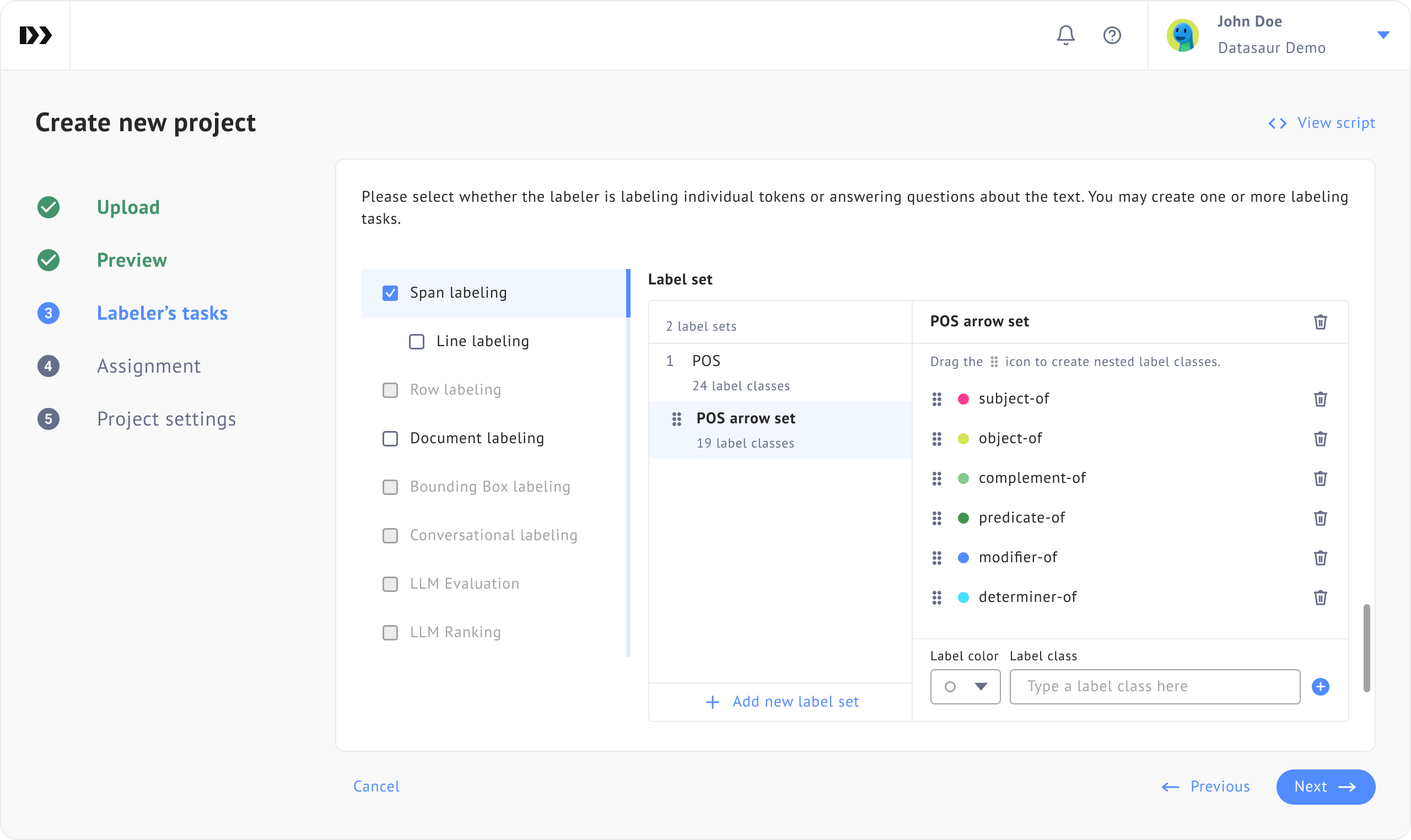
In step 3, Datasaur automatically creates `Untitled Label Set 1`.\
You can rename, add, remove, and reorder label sets as needed. You can also drag labels to the right to nest them under other labels.
To add a new label set, click the **Add new label set** button in the label set list. A project can have up to 10 label sets.
Select the [ + ] icon to add an additional label set
### Add multiple label sets from Labels extension
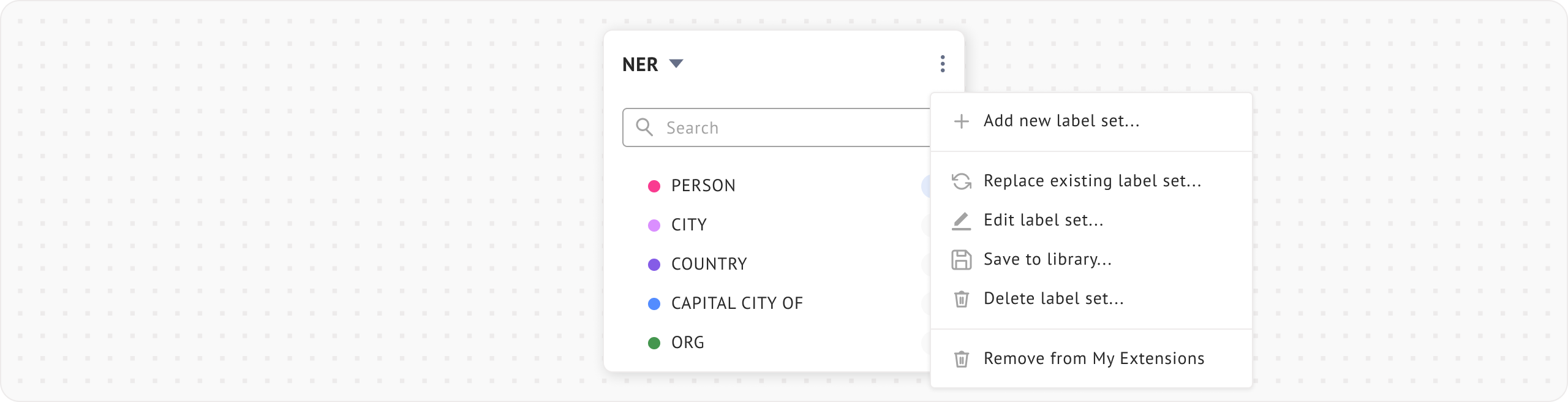
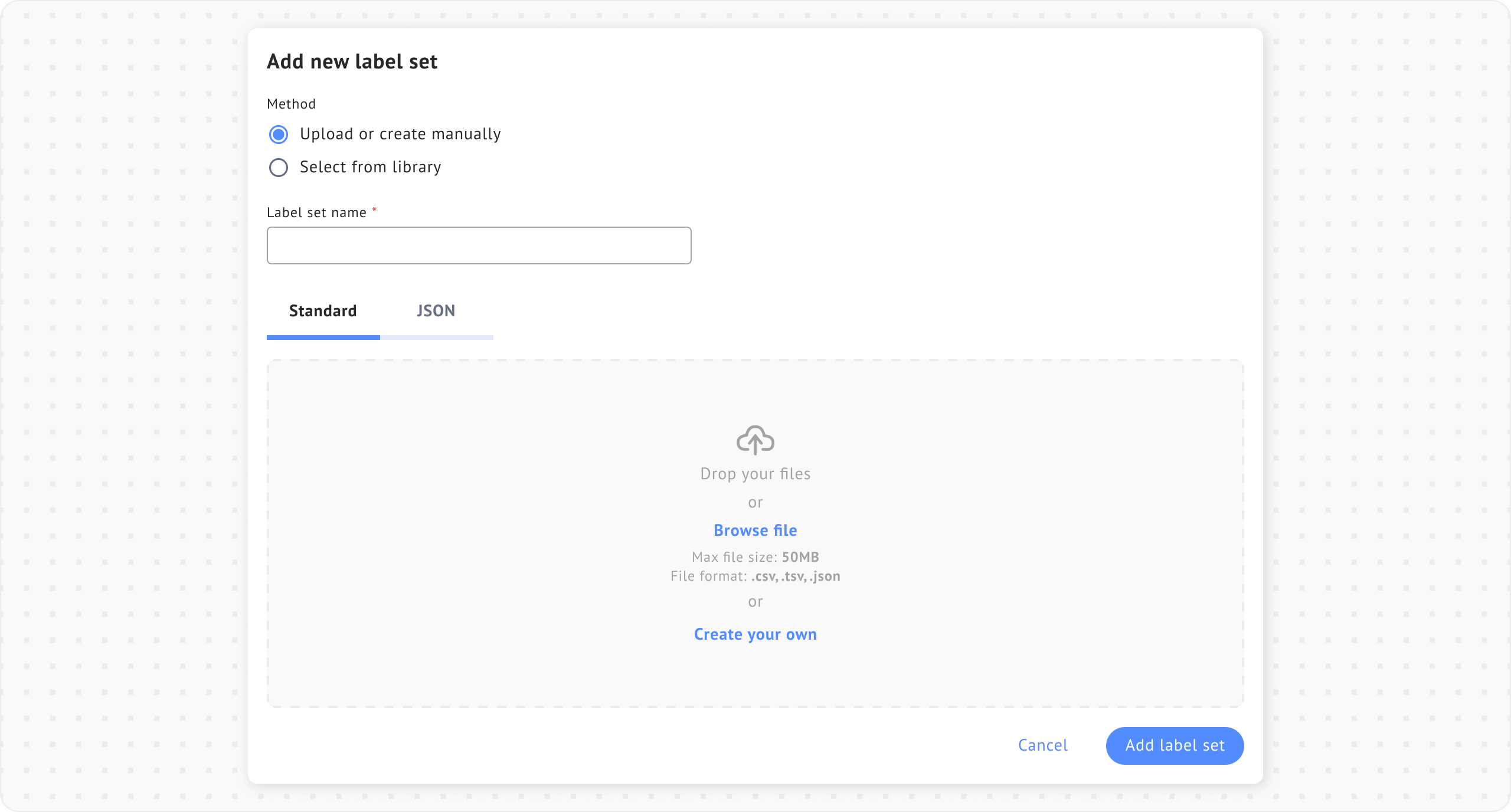
After the project is created, you can still add, edit, or remove label sets from the **Labels** extension. To add a new label set, click the three-dot menu and select **Add new label set.**
You can create the label set manually or upload the label set file there.
{% hint style="warning" %}
Deleting a label set removes all applied labels from that label set in the project.
{% endhint %}
## Active label set
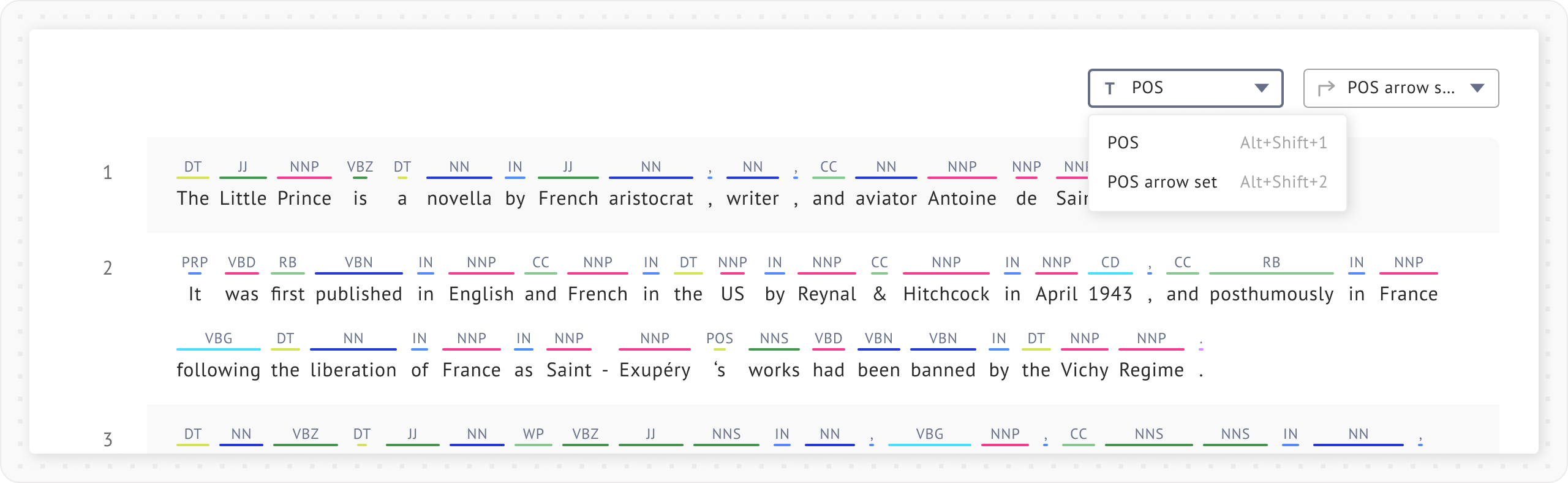
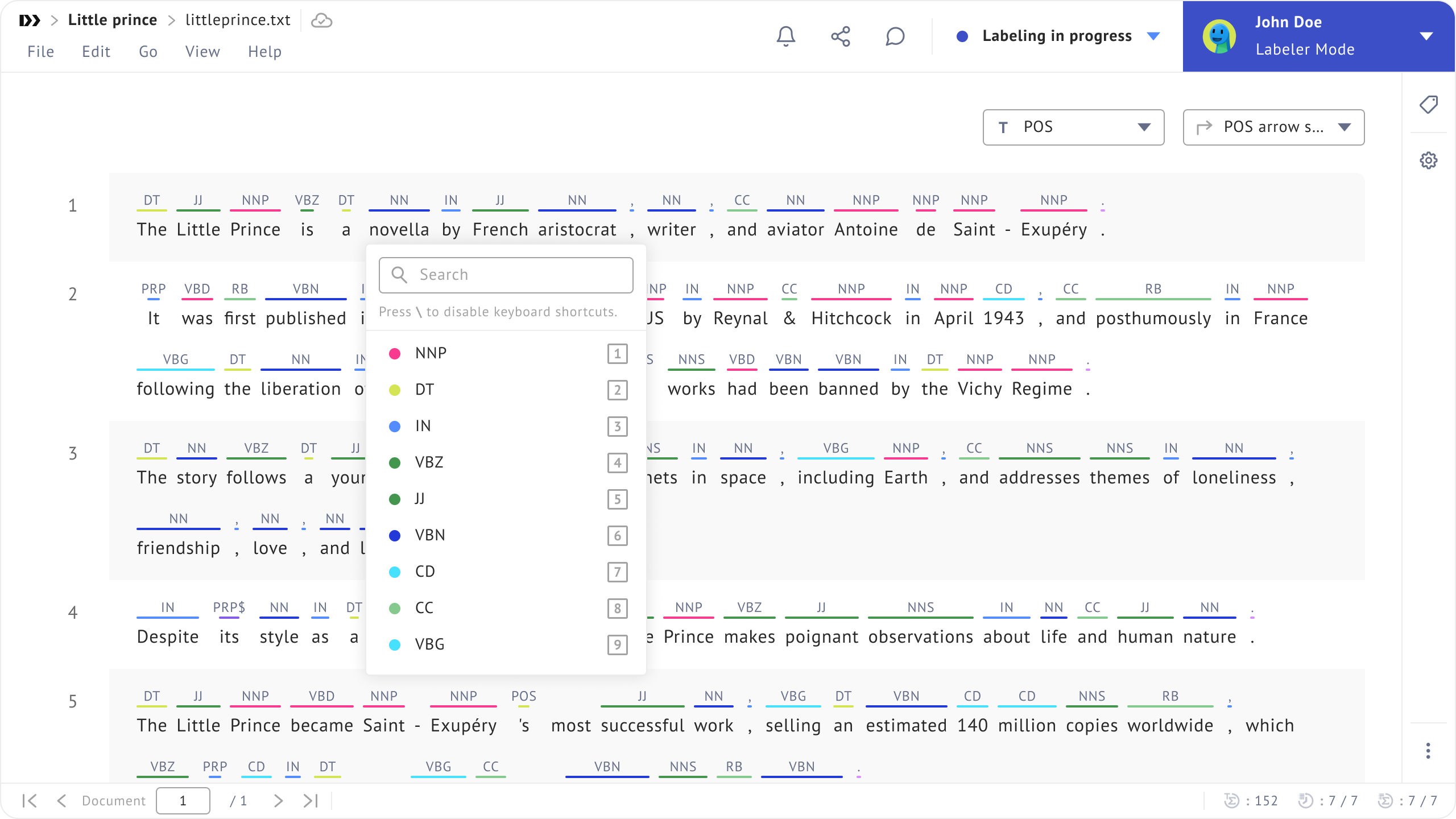
The active label set is the one currently selected for use in the project. You can change it from the dropdown above the labeling area.
For example, if you have both `NER` and `Stanford` label sets, you can switch between them by selecting the desired label set.
After switching label sets, you can start labeling using the active label set.
## Multiple label sets in a span labeling project with arrows
In span labeling project, you can draw relational arrows between labeled spans. Some projects require labeling both spans and the relationships between them.
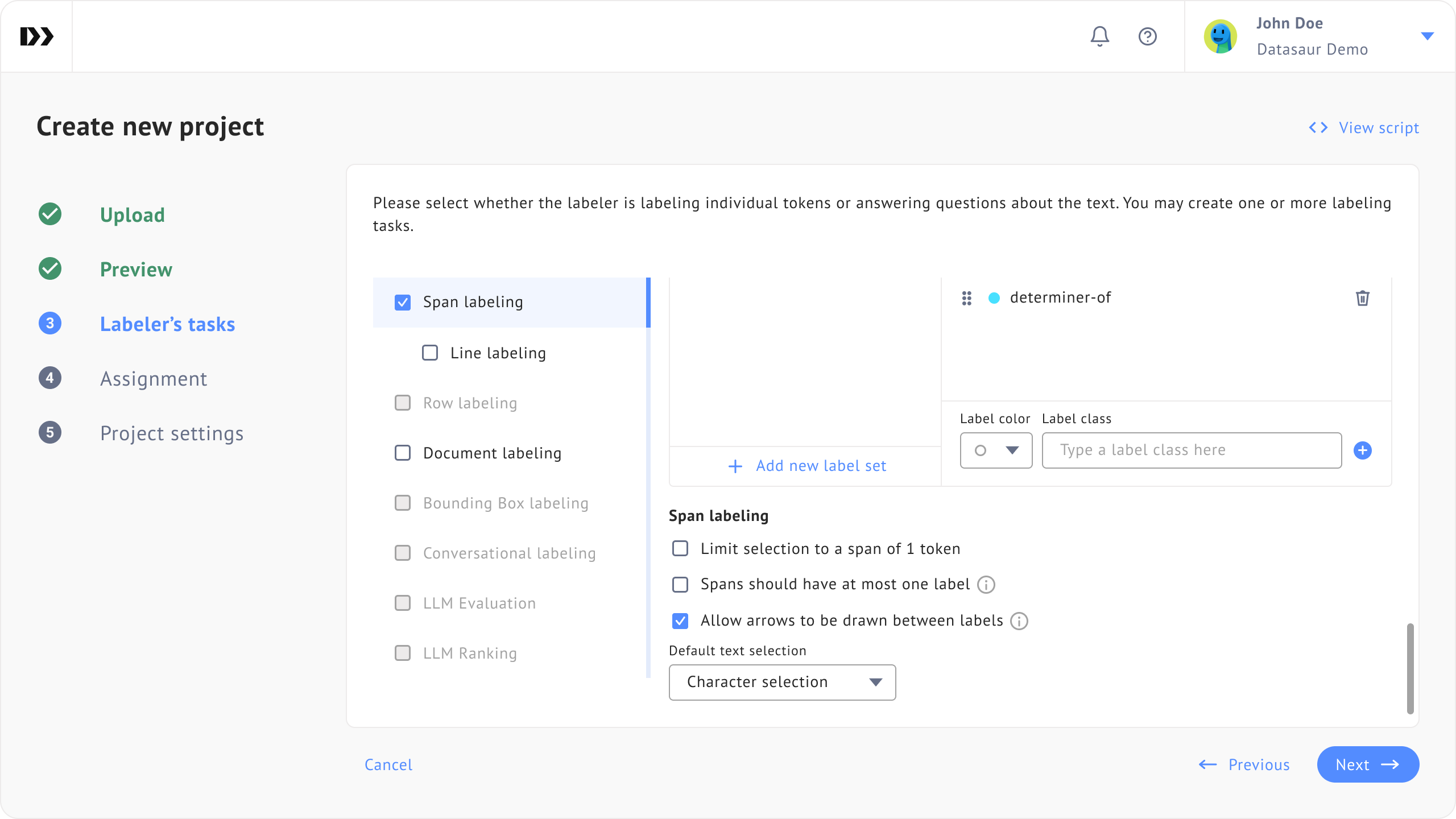
To enable this, turn on **Allow arrows to be drawn between labels** in step 3 during project creation or from the project settings. You can then add both span label sets and arrow label sets. If you do not need to label arrows, an arrow label set is not required.
After the project is created, the interface shows a separate label set dropdown (with an arrow icon) for relationship labels.
Click the dropdown and select the appropriate label set.
You can now draw arrows and apply the corresponding labels.
## Export
Projects with multiple label sets can be exported to [.json\_advanced](/compatibility-and-updates/supported-formats.md#json_advanced) and [.tsv\_non\_iob](/compatibility-and-updates/supported-formats.md#tsv_non_iob).
.png?alt=media)
.png?alt=media)
.png?alt=media)