> For the complete documentation index, see [llms.txt](https://docs.datasaur.ai/llms.txt). Markdown versions of documentation pages are available by appending `.md` to page URLs; this page is available as [Markdown](https://docs.datasaur.ai/integrations/external-object-storage/google-drive.md).

# Google Drive

### Overview

This guide explains how to connect your Google Drive account as an external object storage service in LLM Labs. Once connected, you can access and use files from Google Drive directly within your LLM Labs projects and workflows.

{% hint style="info" %}
**Google Drive** external object storage is currently available only for [LLM Labs](/llm-projects/llm-introduction.md).
{% endhint %}

### Prerequisites

You need the **Shared Drive ID** before starting.

1. Open [Google Drive](https://drive.google.com/).
2. In the left-hand menu, click **Shared drives** and open the specific drive you want to connect.
3. Copy the Drive ID from the URL. The ID is the long string of characters at the end.

   * Example URL:

   ```
   https://drive.google.com/drive/u/0/folders/0A-bCdEfGhIjKlMnOpQrStUvWxYzC
   ```

   * In this example, the Shared Drive ID is:

   ```
   0A-bCdEfGhIjKlMnOpQrStUvWxYzAbC
   ```
4. Save this ID. You will need it later.

### Get started

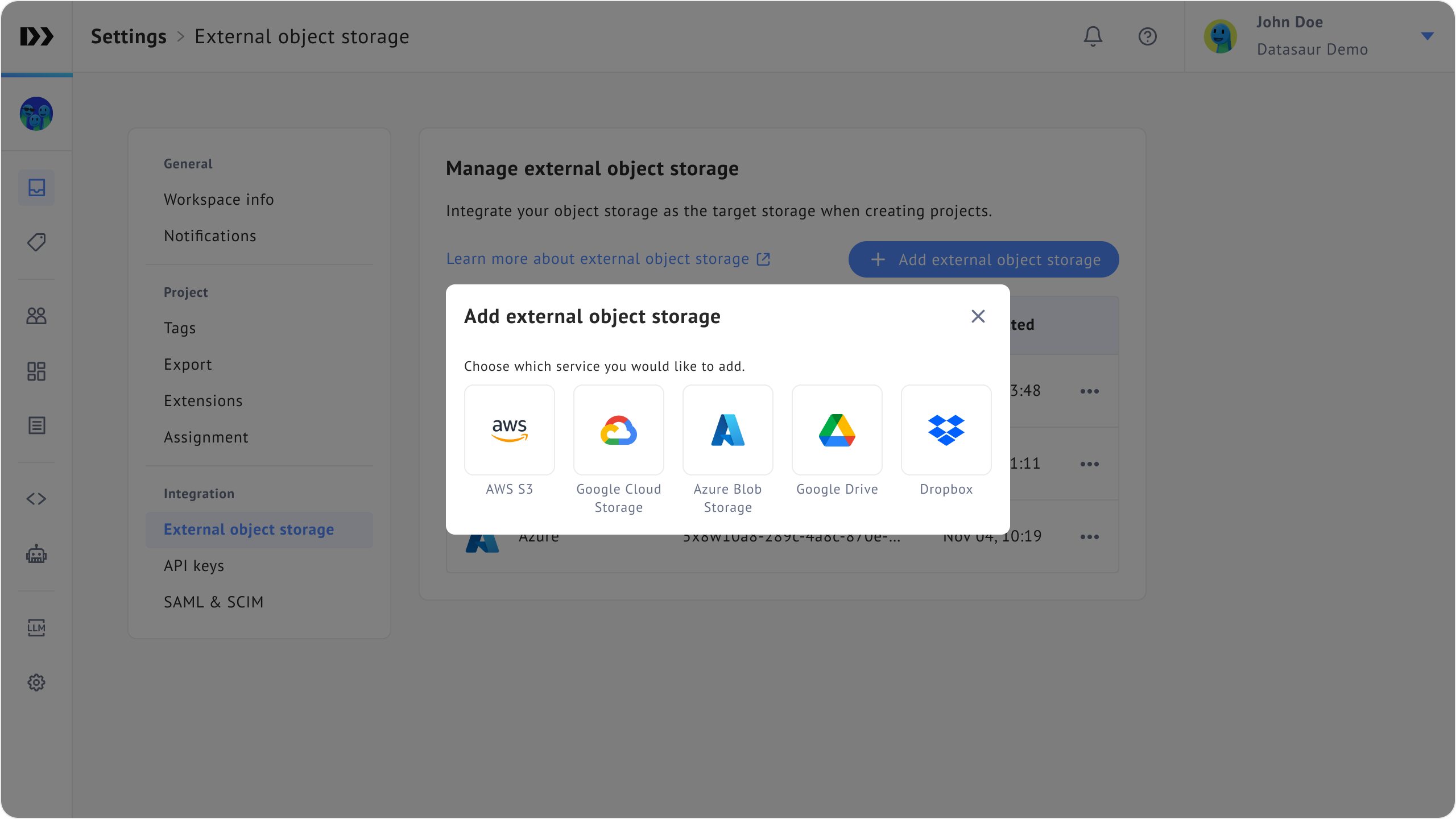
1. Open the **Settings** page from the sidebar.
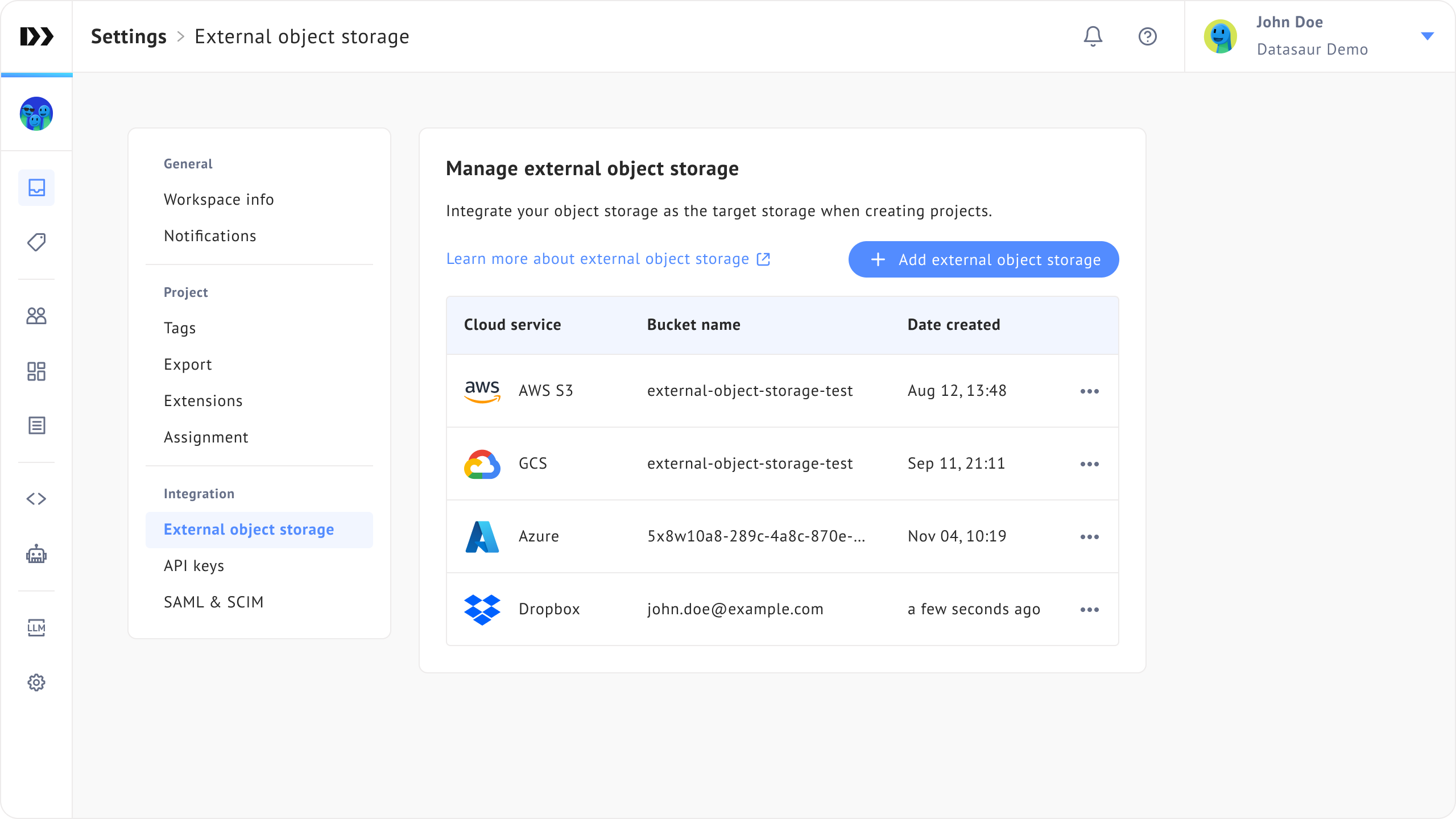
2. Go to the **External object storage** section and click **Add external object storage**.

   <figure><img src="/files/w9ThoMiHOb2aTpZASB6F" alt=""><figcaption></figcaption></figure>
3. Select **Google Drive**.

   <figure><img src="/files/5RN39tfSkPQX4hud0rf0" alt=""><figcaption></figcaption></figure>
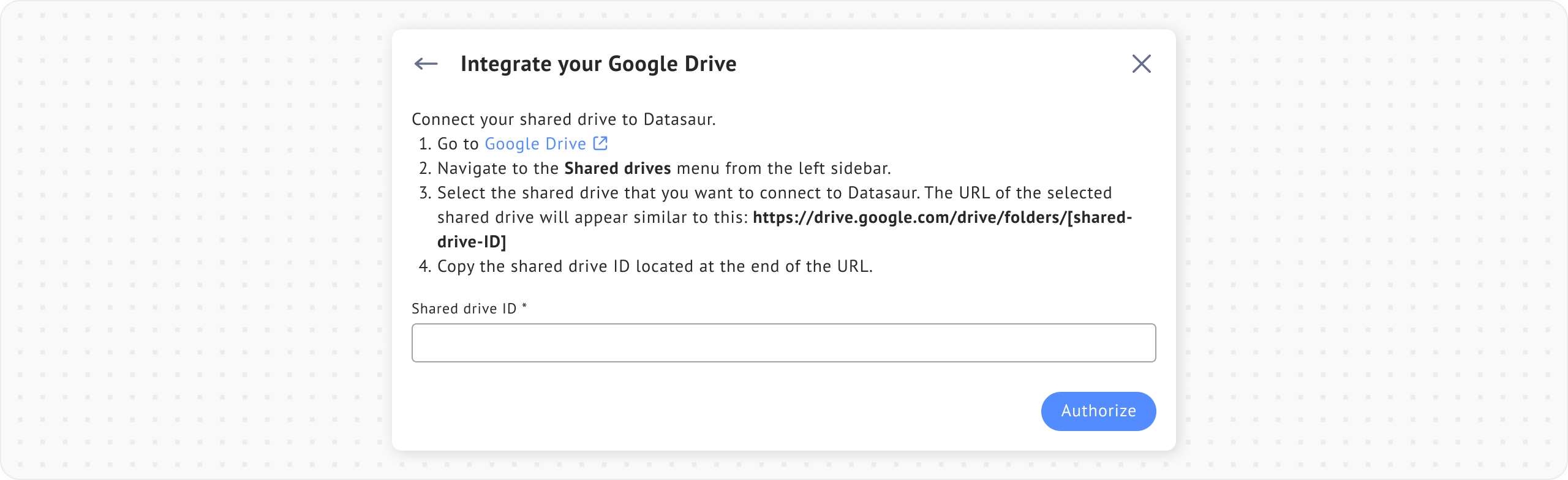
4. Paste the **Shared Drive ID** you copied earlier into the input field.

   <figure><img src="/files/TQBJ95IHRetIJuVUJgwM" alt=""><figcaption></figcaption></figure>
5. Click **Authorize**.
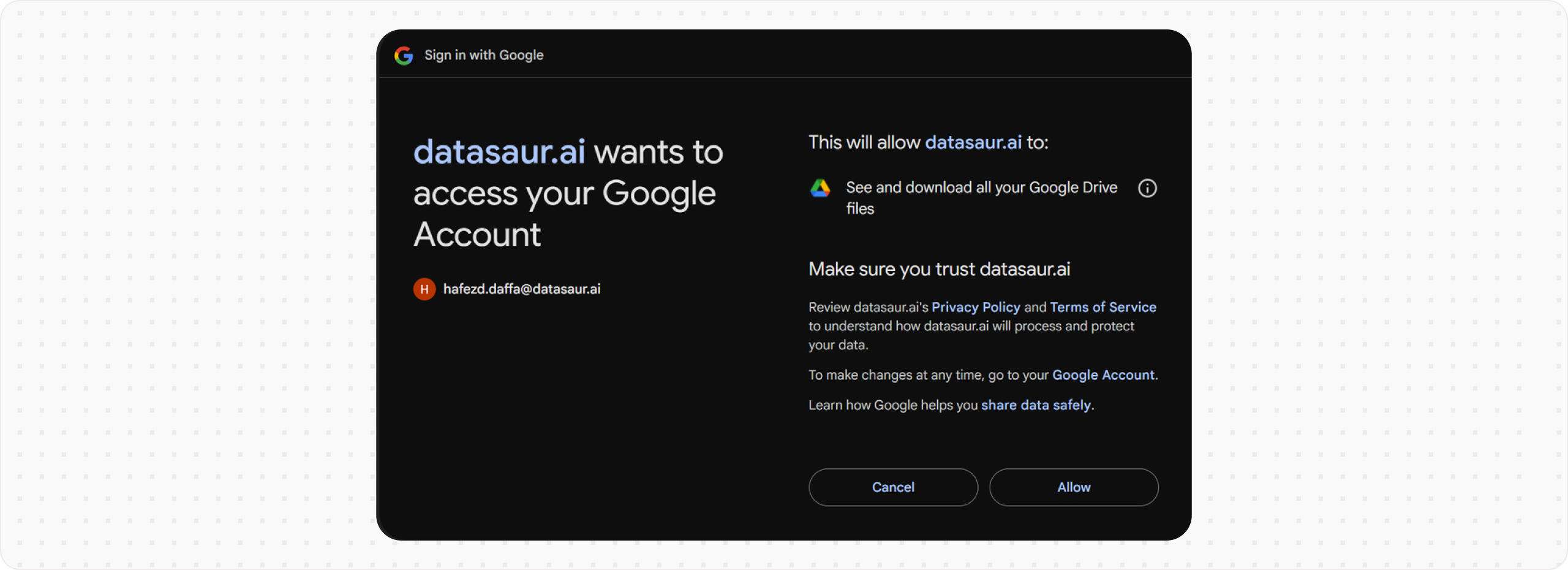
6. You will be redirected to Google’s account selection page. Select the Google account with access to the shared drive.

   <figure><img src="/files/xw06r3DokQf4eKHg1gU6" alt=""><figcaption></figcaption></figure>
7. Click **Allow** to grant Datasaur permission to access your files. This is necessary for our app to read the files from your drive and use them in LLM Labs.

   <figure><img src="/files/ERrrZqIqTMnYIQX0BRaz" alt=""><figcaption></figcaption></figure>
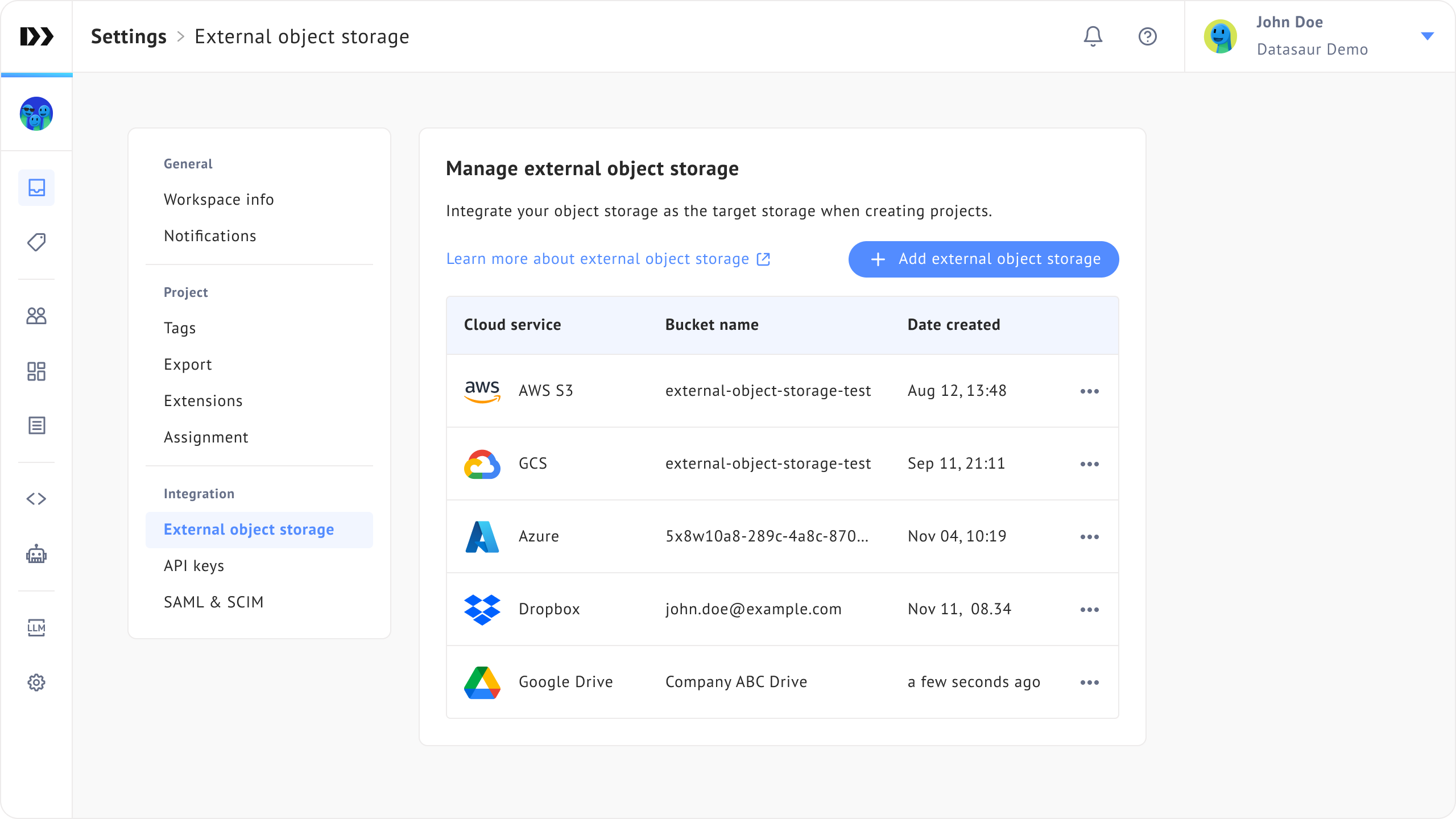
8. After authorization, you will be redirected back to Datasaur, and your Google Drive will appear in the list of connected storage.

   <figure><img src="/files/6qhxC3X7rgUfuHc2525F" alt=""><figcaption></figcaption></figure>

### "Unverified app" warning

If you see a message saying *“Google hasn’t verified this app”*, this is expected.

<figure><img src="/files/VejDGcVLDEV02OadJGdM" alt=""><figcaption></figcaption></figure>

To continue:

1. Click **Advanced**.
2. Click **Go to Datasaur (unsafe)**.

---

# Agent Instructions
This documentation is published with GitBook. GitBook is the documentation platform designed so that both humans and AI agents can read, navigate, and reason over technical content effectively. Learn more at gitbook.com.

## Querying This Documentation
If you need additional information that is not directly available in this page, you can query the documentation dynamically by asking a question.

Perform an HTTP GET request on the current page URL with the `ask` query parameter, and the optional `goal` query parameter:

```
GET https://docs.datasaur.ai/integrations/external-object-storage/google-drive.md?ask=<question>&goal=<endgoal>
```

`ask` is the immediate question: it should be specific, self-contained, and written in natural language.
`goal` is optional and describes the broader end goal you are ultimately trying to accomplish on behalf of the user. GitBook uses it to tailor the answer towards what is most useful for that goal.

The response will contain a direct answer to the question and relevant excerpts and sources from the documentation.

Use this mechanism when the answer is not explicitly present in the current page, you need clarification or additional context, or you want to retrieve related documentation sections.