> For the complete documentation index, see [llms.txt](https://docs.datasaur.ai/llms.txt). Markdown versions of documentation pages are available by appending `.md` to page URLs; this page is available as [Markdown](https://docs.datasaur.ai/assisted-review/label-error-detection.md).
# Label Error Detection
Automatically detect possible labeling mistakes in your dataset.
## Introduction
The **Label error detection** extension helps you identify possible labeling mistakes in your dataset automatically. It highlights rows that may contain incorrect labels and suggests alternative labels to help improve dataset quality and model performance.
## Key features
Reviewing labeled data manually can take time and may lead to missed errors. **Label error detection** helps by:
* **Improving efficiency:** Quickly identify possible label errors without reviewing the entire dataset manually.
* **Helping you focus reviews:** Use an error possibility threshold to prioritize rows that are more likely to contain incorrect labels.
* **Supporting faster corrections:** View suggested labels to make corrections more easily.
## Terminologies
* **Label errors**: Incorrect or inconsistent labels in the dataset that may affect model performance.
* **Error possibility**: A score that shows how likely a label is to be incorrect.
* **Label correction suggestions:** Alternative labels suggested by the model to help review and correct the dataset.
## Quick start guide
To use the extension:
1. Ensure all rows are labeled.
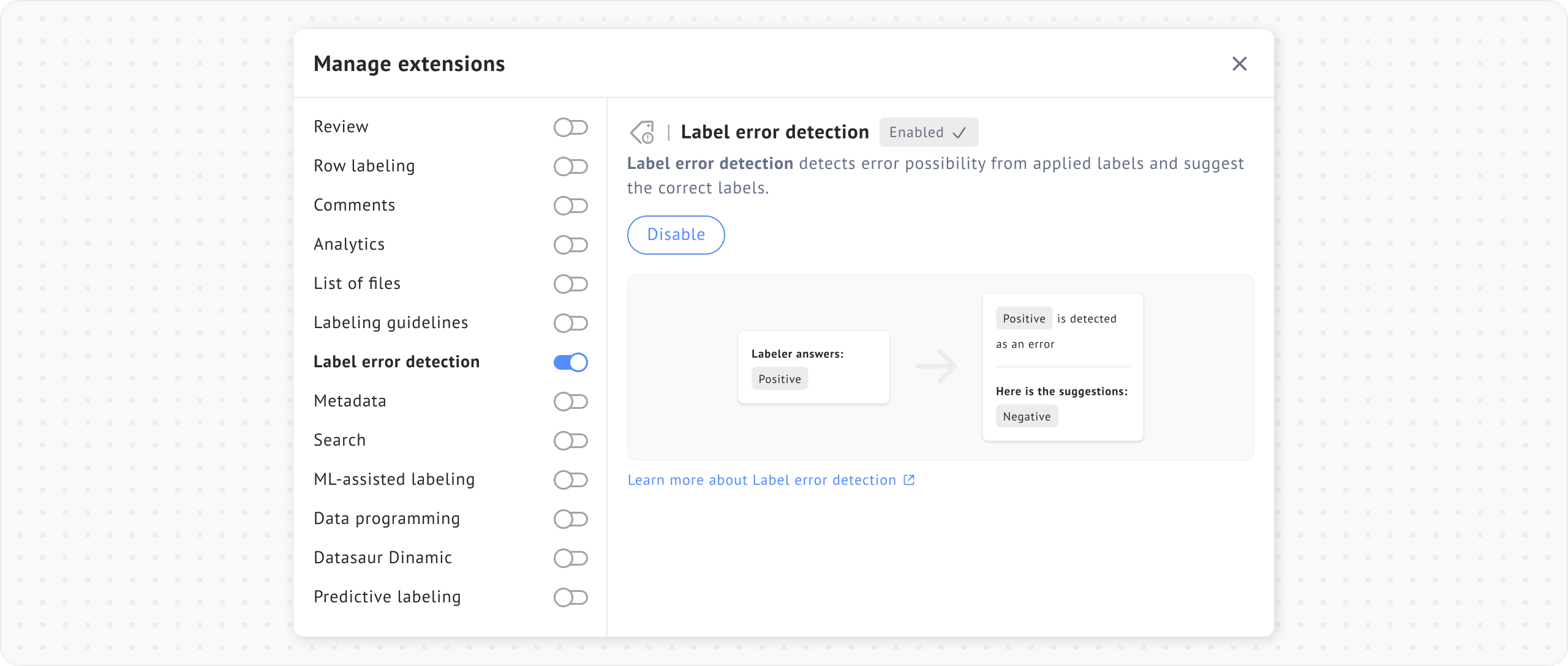
2. Activate the **Label error detection** extension from the **Manage extensions** dialog.
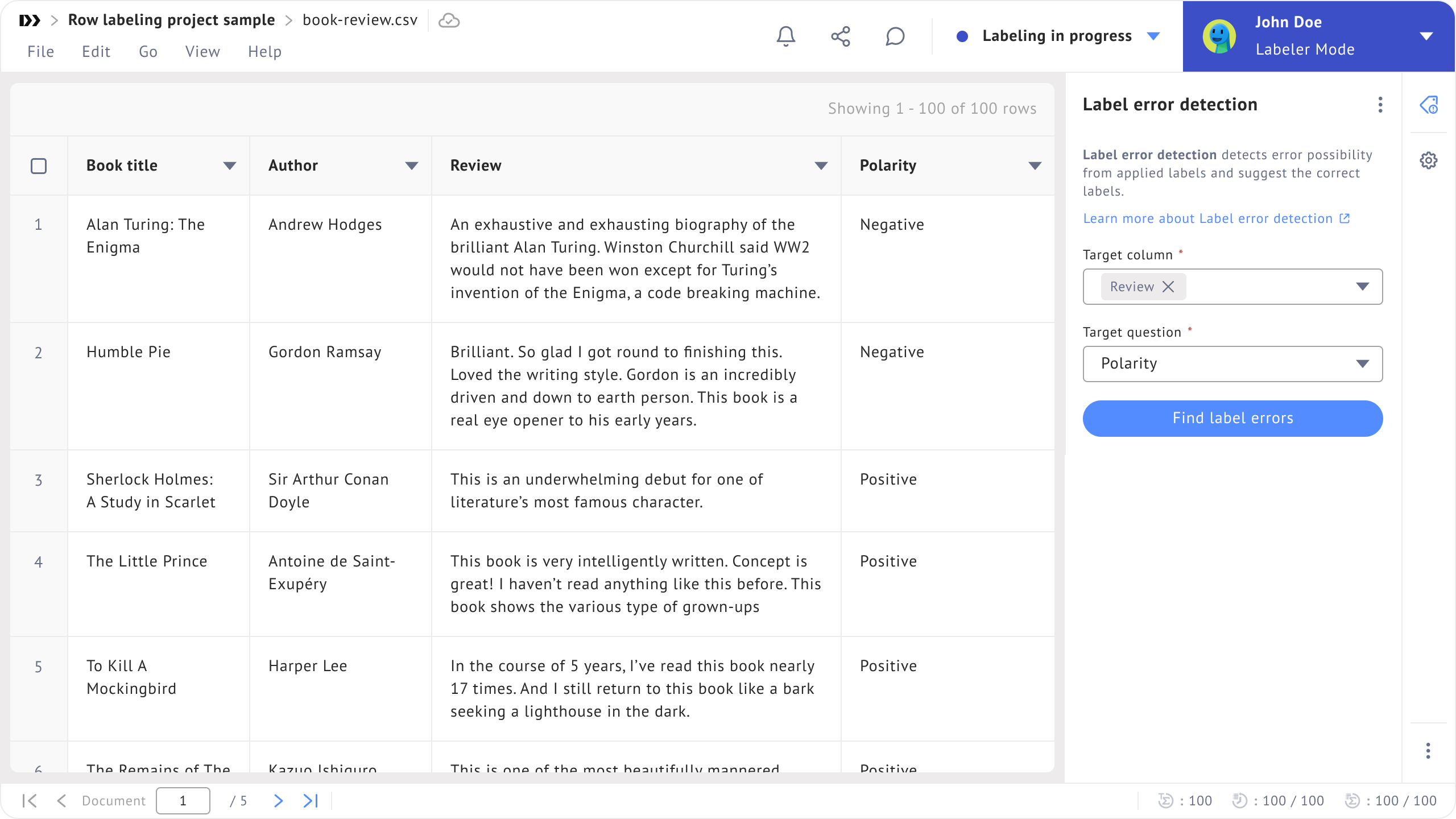
3. Configure the **Target column** to use as context and the **Target question** containing the answers to check.
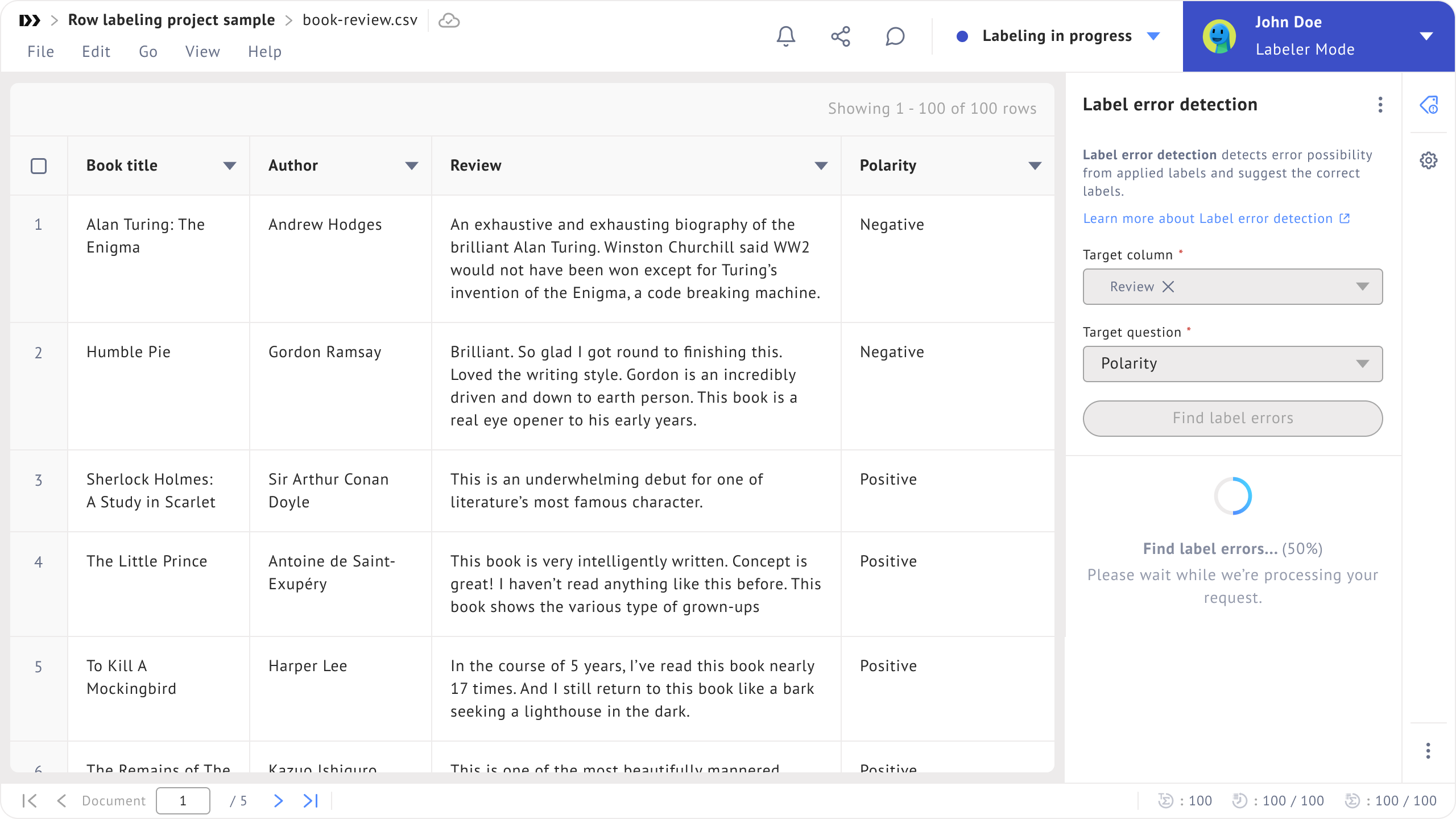
4. Click **Find label errors**. This might take a moment.
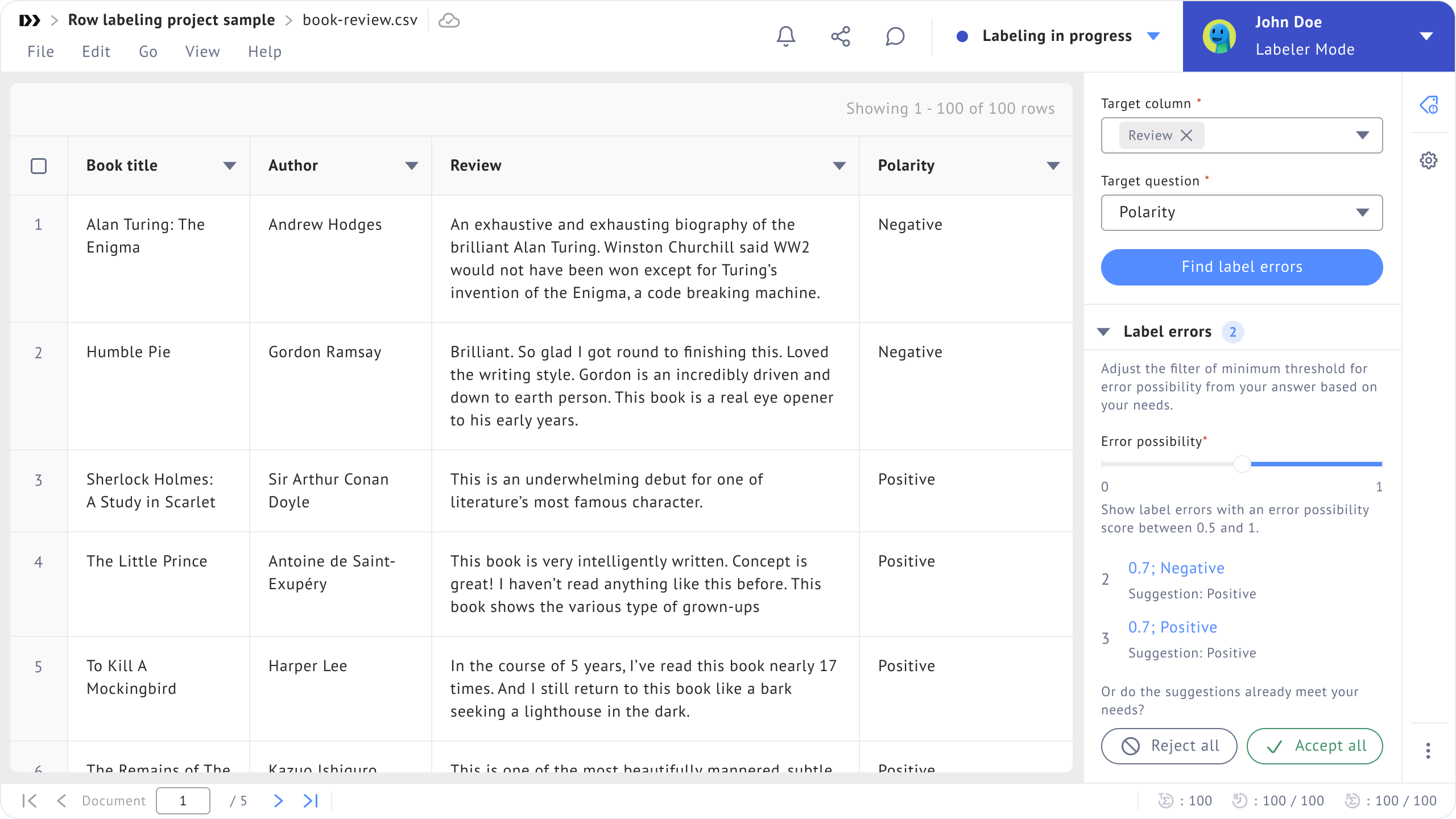
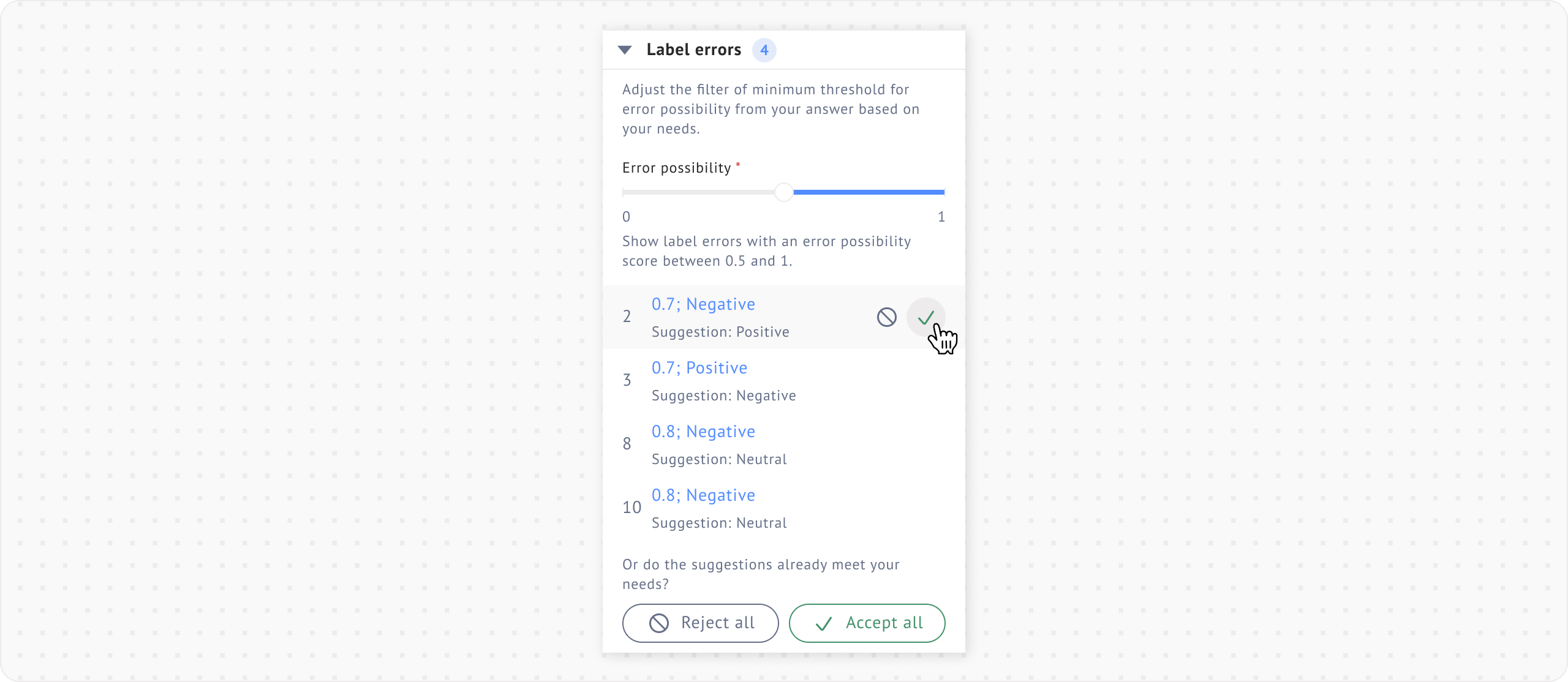
5. Detected rows appear in the **Label errors** section. You can adjust the error possibility threshold to control which rows are shown for review.
6. Open rows from the **Label errors** section and review the labels. You can reject or accept the suggestions.
## **Troubleshooting**
* **Feature not working:** Make sure all rows are labeled and the extension is enabled.
* **Suggestions seem inaccurate:** Adjust the error possibility threshold to refine the results.