> For the complete documentation index, see [llms.txt](https://docs.datasaur.ai/llms.txt). Markdown versions of documentation pages are available by appending `.md` to page URLs; this page is available as [Markdown](https://docs.datasaur.ai/assisted-labeling/ml-assisted-labeling/azure.md).
# Azure ML
{% hint style="info" %}
**Supported labeling types**: Row labeling.
{% endhint %}
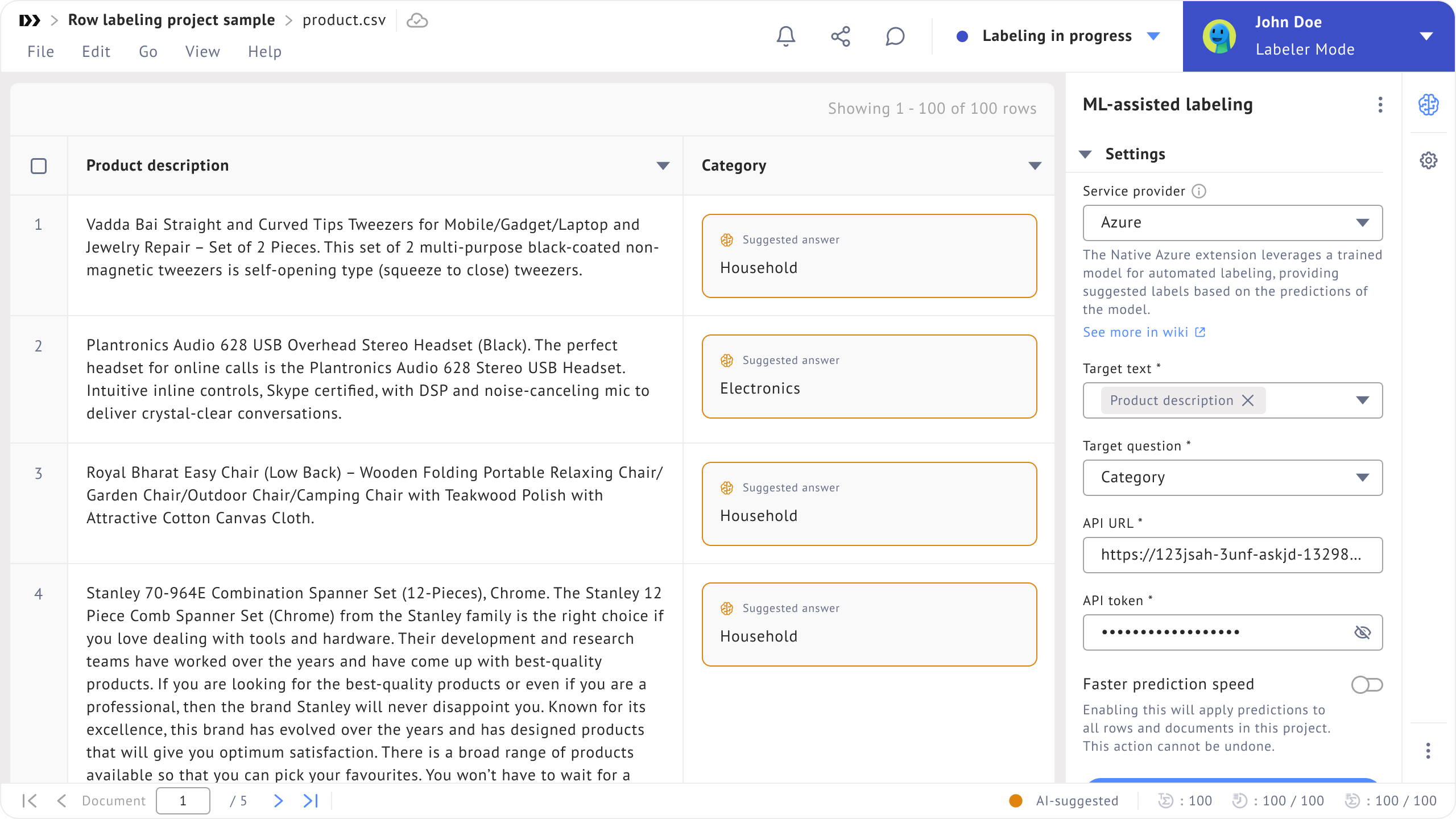
ML-assisted labeling supports models from Azure ML. If you already have data and training pipelines in Azure ML, you can utilize your trained models to enhance the performance.
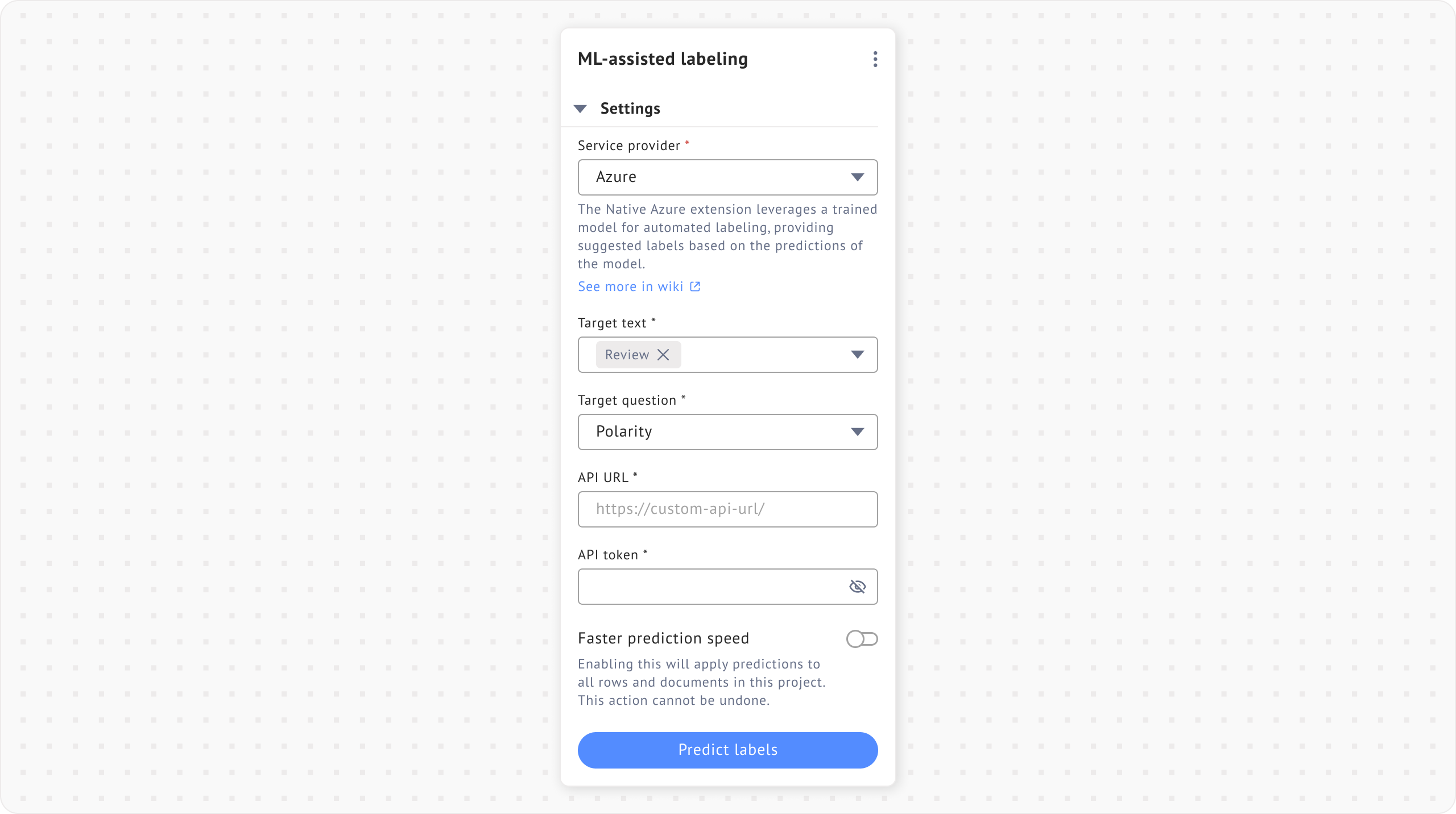
To use the Azure model, you need to select **Azure** as the service provider. Once selected, you will see the menu below:
* **Target text**: Select the input text used as reference.
* **Target question**: Select the output column to predict.
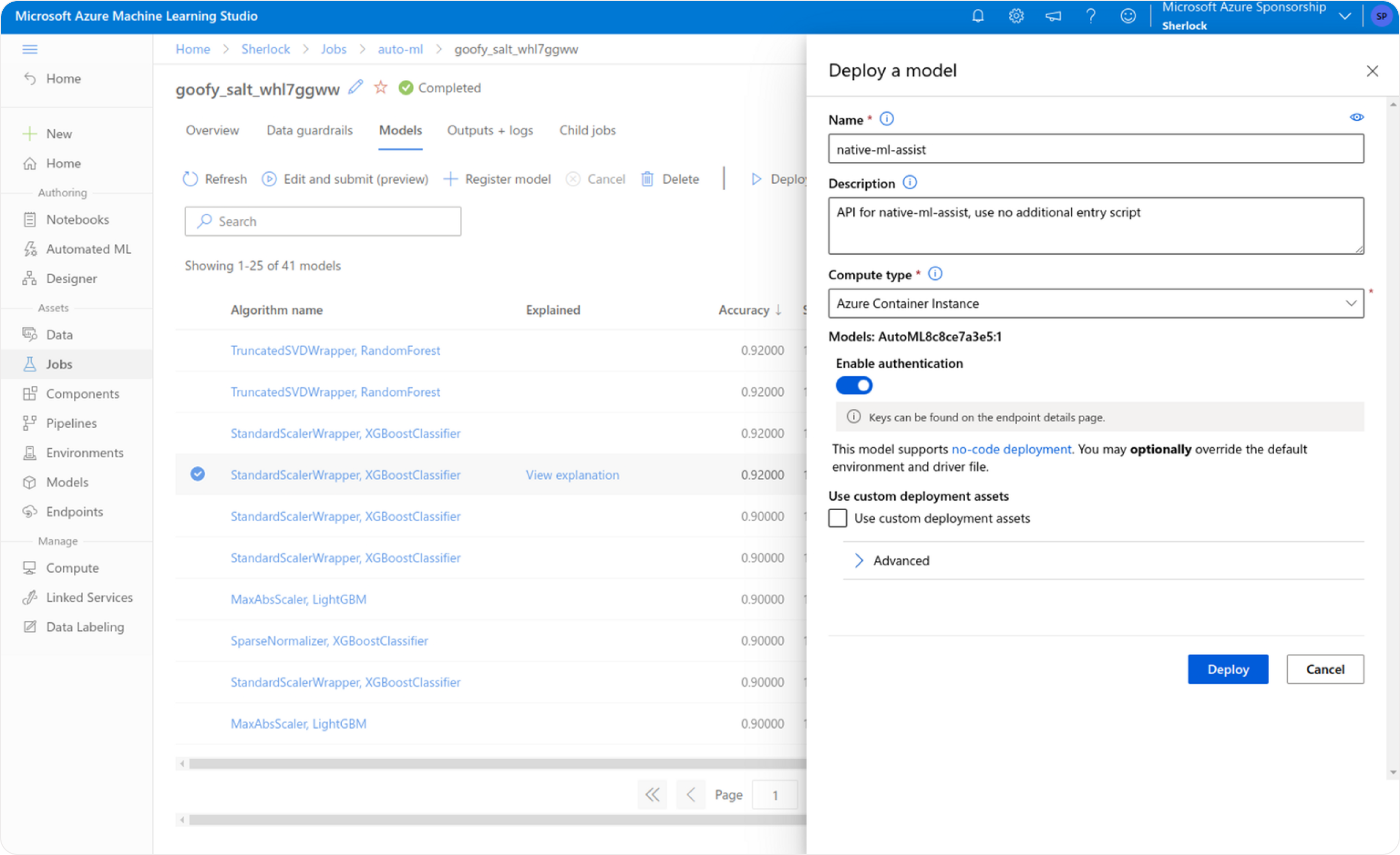
* **API URL**: The endpoint built in Azure AutoML.
* **API token**: The authentication token used to access the model from external applications.
* **Faster prediction speed**: Enables faster predictions by processing requests on the backend.
To obtain the API URL and API token, enable authentication when building the model. After deployment, you will receive the REST endpoint as the API URL and the authentication token as the API token.
Once you have configured the settings, click **Predict labels** to generate predictions from your model.