> For the complete documentation index, see [llms.txt](https://docs.datasaur.ai/llms.txt). Markdown versions of documentation pages are available by appending `.md` to page URLs; this page is available as [Markdown](https://docs.datasaur.ai/integrations/saml/okta.md).
# Okta
This guide assumes you have already clicked **Enable SAML** in Datasaur and the **Enable SAML 2.0** dialog is currently open.
## Okta integration
### Create an app integration
1. Login to your Okta Admin console.
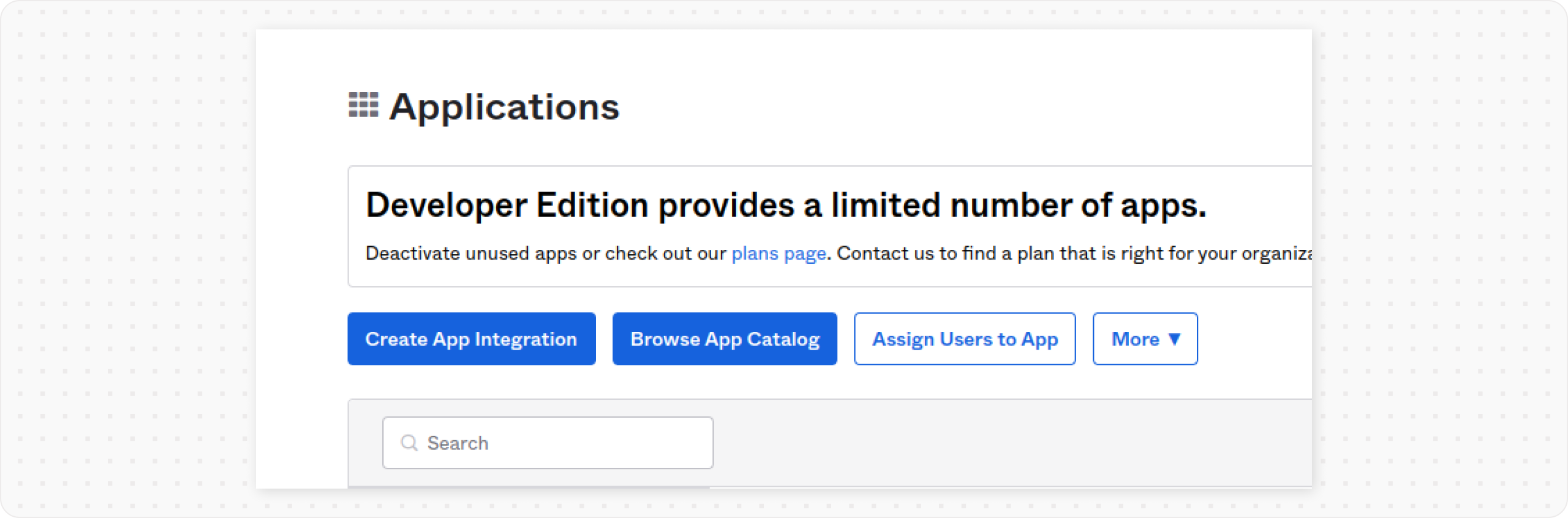
2. In the left sidebar, navigate to **Applications**.
3. Click **Create App Integration** and select **SAML 2.0**.
4. Enter any suitable app name, such as `Datasaur`, then, click **Next**.
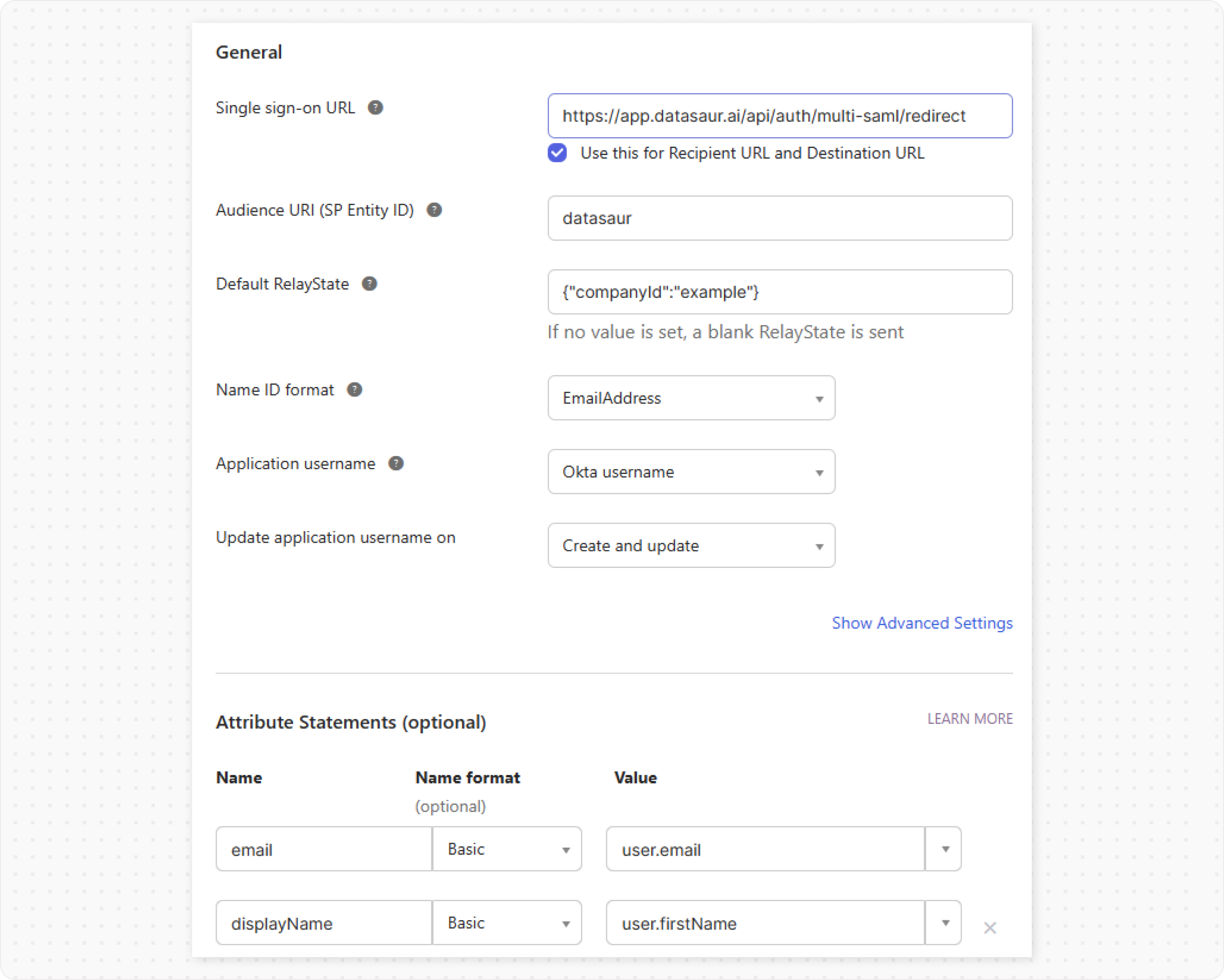
5. On the second page, enter the following values. Fields not mentioned below can be left unchanged.
1. **Single sign-on URL**: Enter the value from the **Service provider sign in URL** field in the **Enable SAML 2.0** dialog.
2. **Audience URI**: Use the value from the **Service provider issuer** field, which is `datasaur`.
3. **Default RelayState**: Use the Company ID value in this JSON format: `{"companyId": ""}` .
4. **Name ID format:** Select `EmailAddress`.
5. For the **Attribute Statements** section, follow these steps:
1. `email` **(required)** with `Basic` format (case-sensitive). Datasaur requires this attribute for SAML authentication. Make sure it contains a valid email address.
2. `displayName` **(optional)** with `Basic` format. This value will be displayed in the top-right corner of the Datasaur app. If not provided, the email address will be shown instead.
6. For the feedback step, you can select the customer option and leave the remaining fields empty since they are optional.
### Add users to the app integration
1. Open the newly created Okta app.
2. Go to the **Assignments** tab.
3. Assign the users who should be able to sign in to Datasaur using SAML.
## Complete the Datasaur SAML form
1. Open the newly created Okta app.
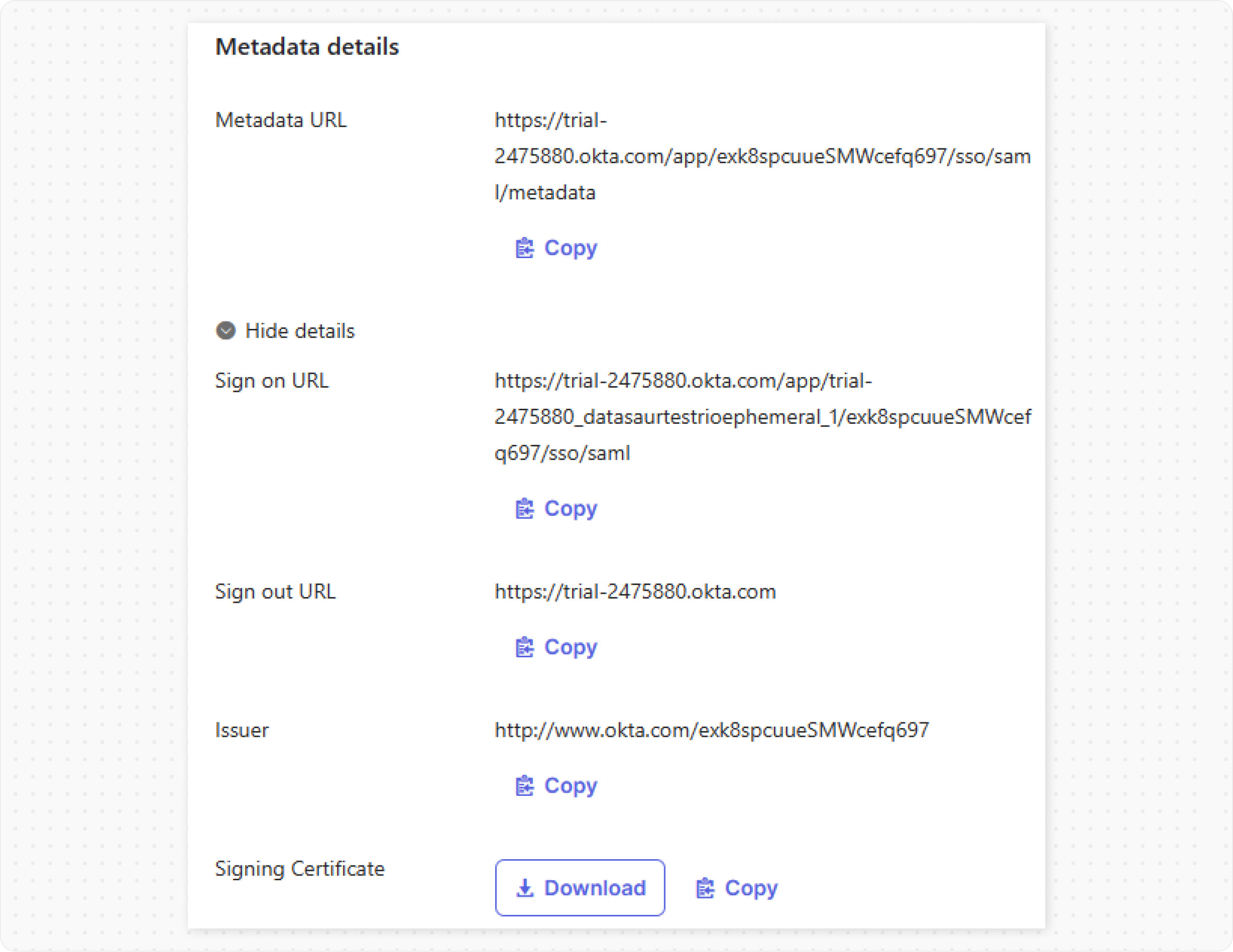
2. Go to the **Sign On** tab.
3. Expand **More details** under the **SAML 2.0** section.
4. Copy the **Sign on URL** value, then paste it into the **Identity provider sign in URL** field.
5. Copy the **Issuer** value, then paste it into the **Identity provider issuer** field.
6. Copy the **Signing Certificate** value using the copy button, then paste it into the **Public certificate** field. You can also download and save the certificate file.
7. Click **Enable SAML 2.0**.