> For the complete documentation index, see [llms.txt](https://docs.datasaur.ai/llms.txt). Markdown versions of documentation pages are available by appending `.md` to page URLs; this page is available as [Markdown](https://docs.datasaur.ai/llm-projects/evaluation/rating.md).
# Rating
## Overview
The **Rating** evaluation project helps you assess the quality of your LLM outputs using human judgment, by rating and correcting the generated completions.
## Prerequisites
In **Rating** projects, you can evaluate two types of completions:
* Pre-generated completions
* Completions generated by models from Sandbox
### Evaluate pre-generated completions
There are two CSV formats for pre-generated completions:
* Two column CSV format: `prompt` and `completion`.
* Four column CSV format: `prompt_template`, `prompt`, `sources`, `completion`.
{% file src="/files/5LBrx35IRg3uRUTNqQb8" %}
{% file src="/files/b1MYRvWGithOfwS7UVjZ" %}
### Evaluate models from Sandbox
1. Ensure the model is deployed or saved to library.
2. Prepare a dataset in a `.csv` file with one column: `prompt`.
{% file src="/files/kV4uhIM4zyuJmW3JWnav" %}
## Create a project
To create **Rating** evaluation projects:
1. Navigate to the **Evaluation** page from the sidebar.
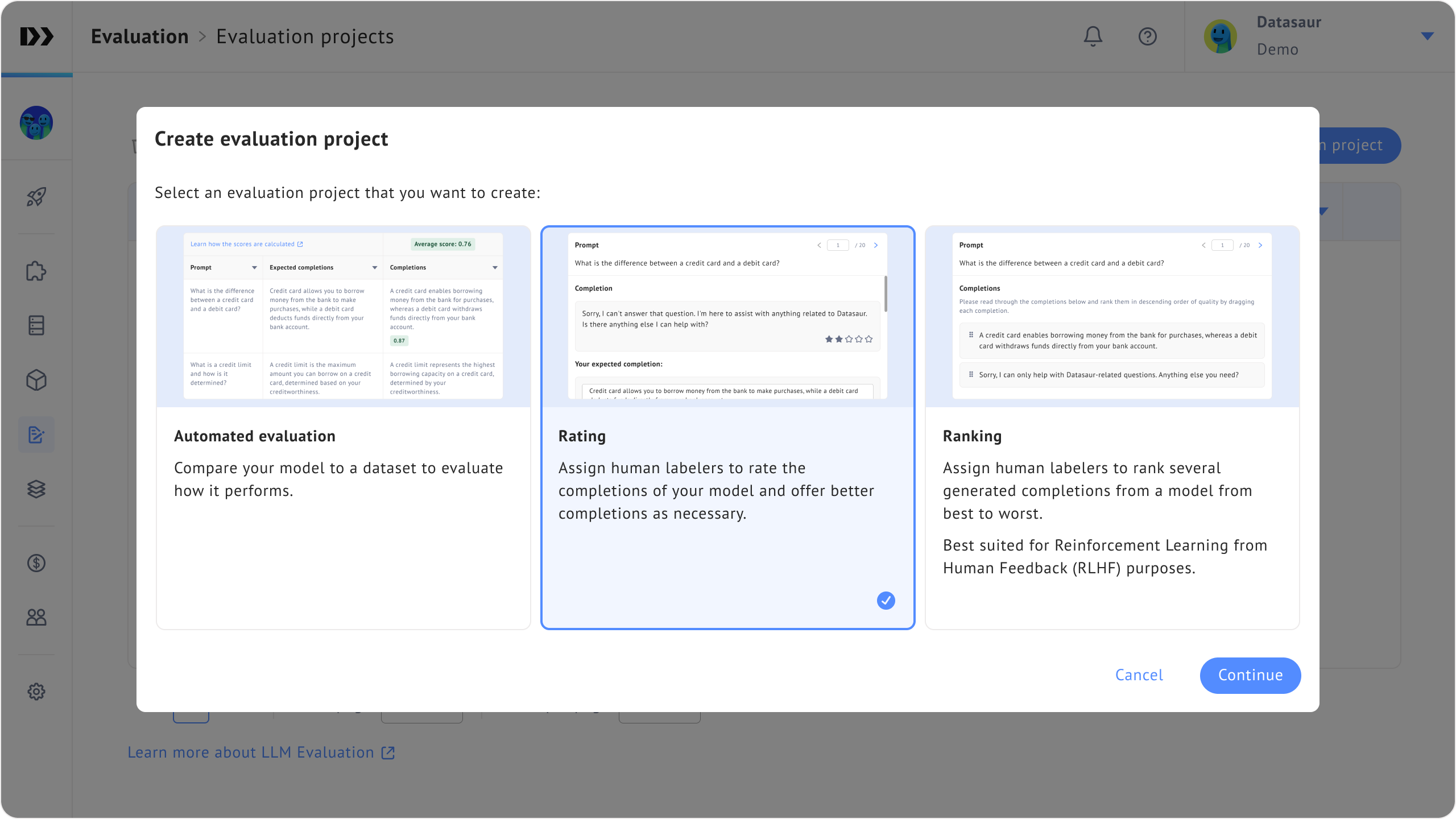
2. Click **Create evaluation project,** select **Rating,** then **Continue**.
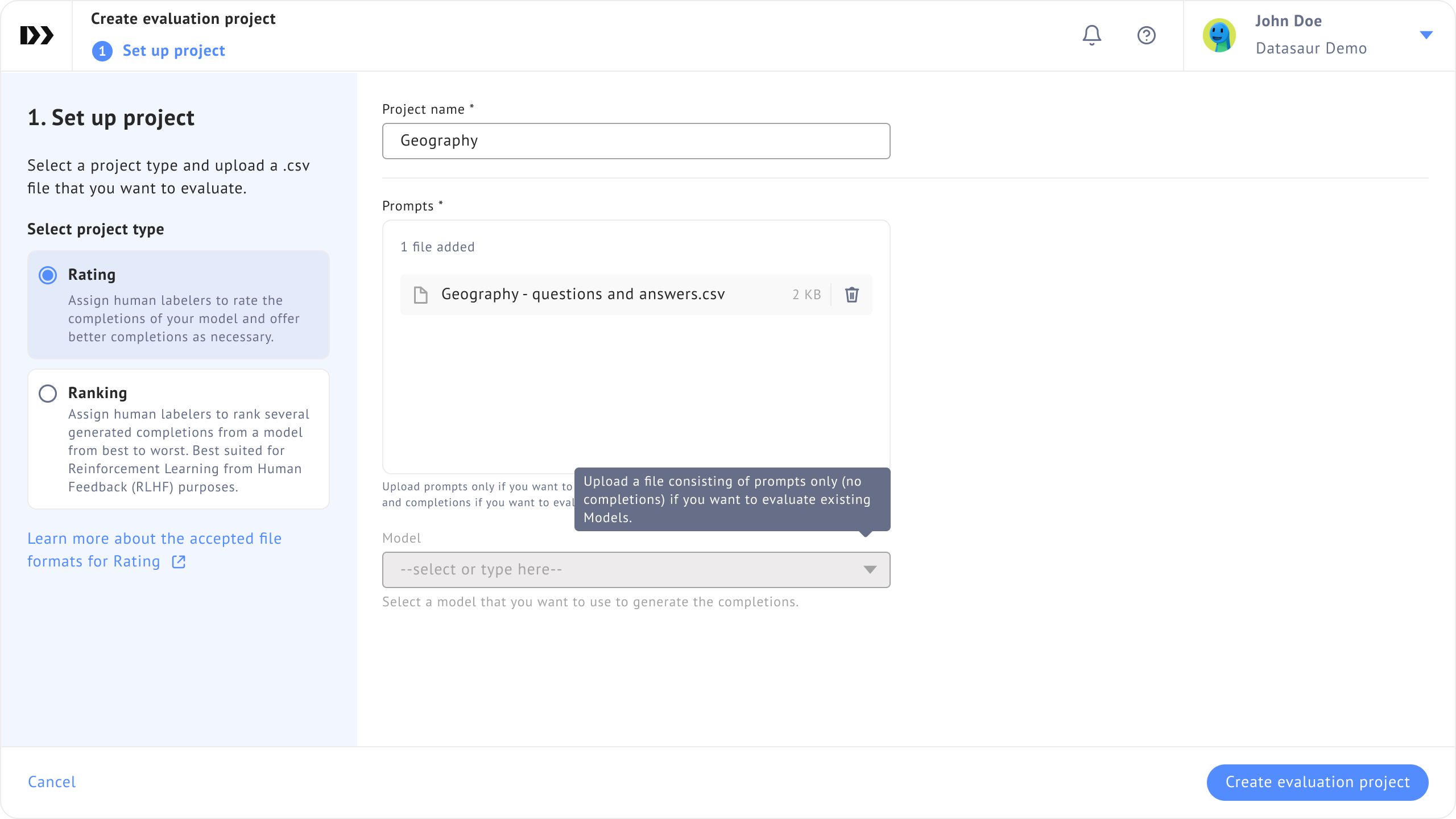
3. Set up your project. Choose what you want to evaluate with:
1. **Evaluate pre-generated completions**
1. Upload the dataset in a `.csv` file with at least two columns: `prompt` and `completion`.
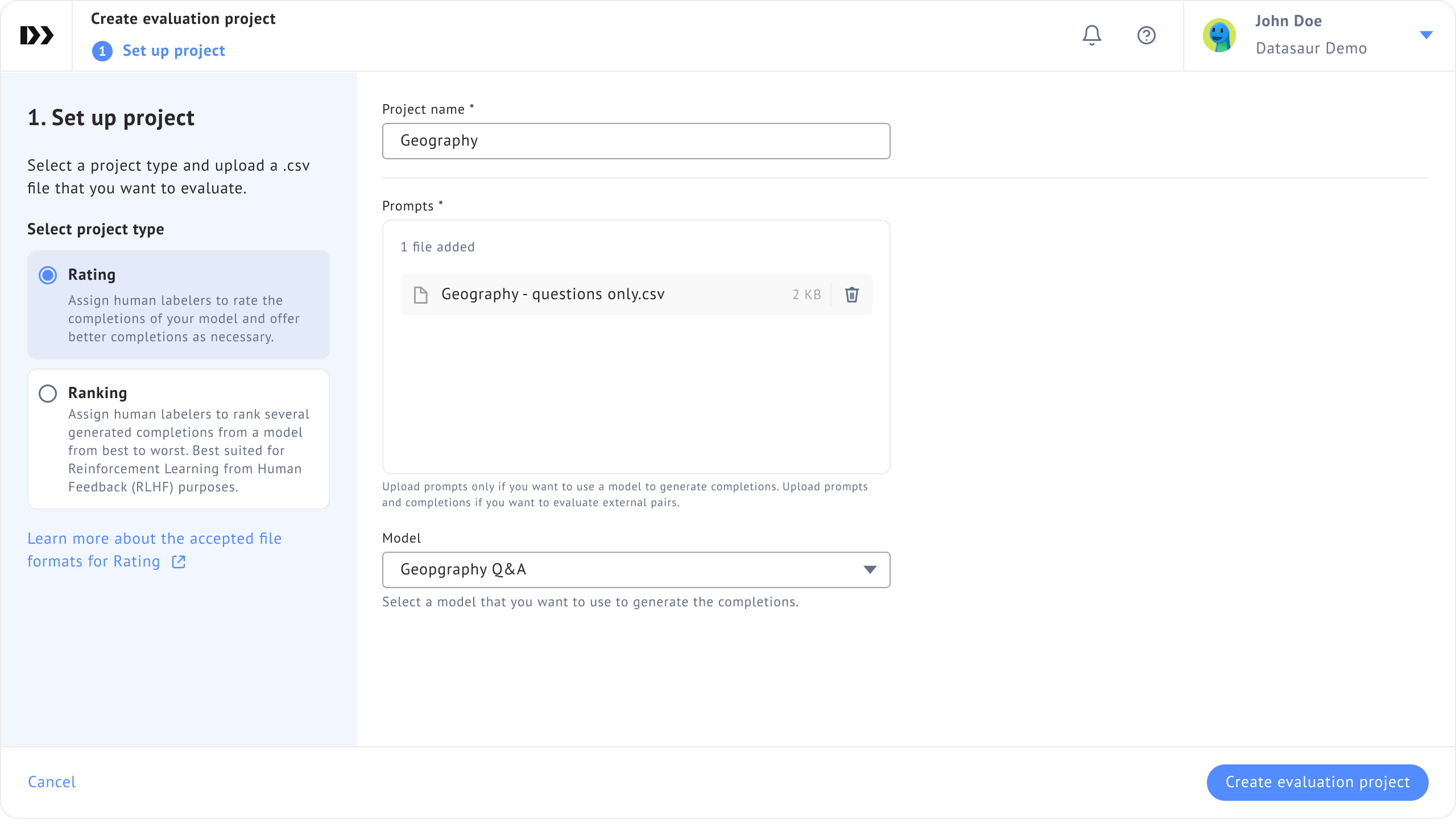
2. **Evaluate models from Sandbox**
1. Upload the dataset in a `.csv` file with one column: `prompt`.
2. Select the model that you want to use to generate completions. If you can’t find your model in the list, go to the [Sandbox](/llm-projects/sandbox.md) where your model is created, and [deploy](/llm-projects/sandbox.md#deploy-models) or save to library. You can only evaluate deployed or saved models.
4. Click **Create evaluation project**.
## Evaluate completions
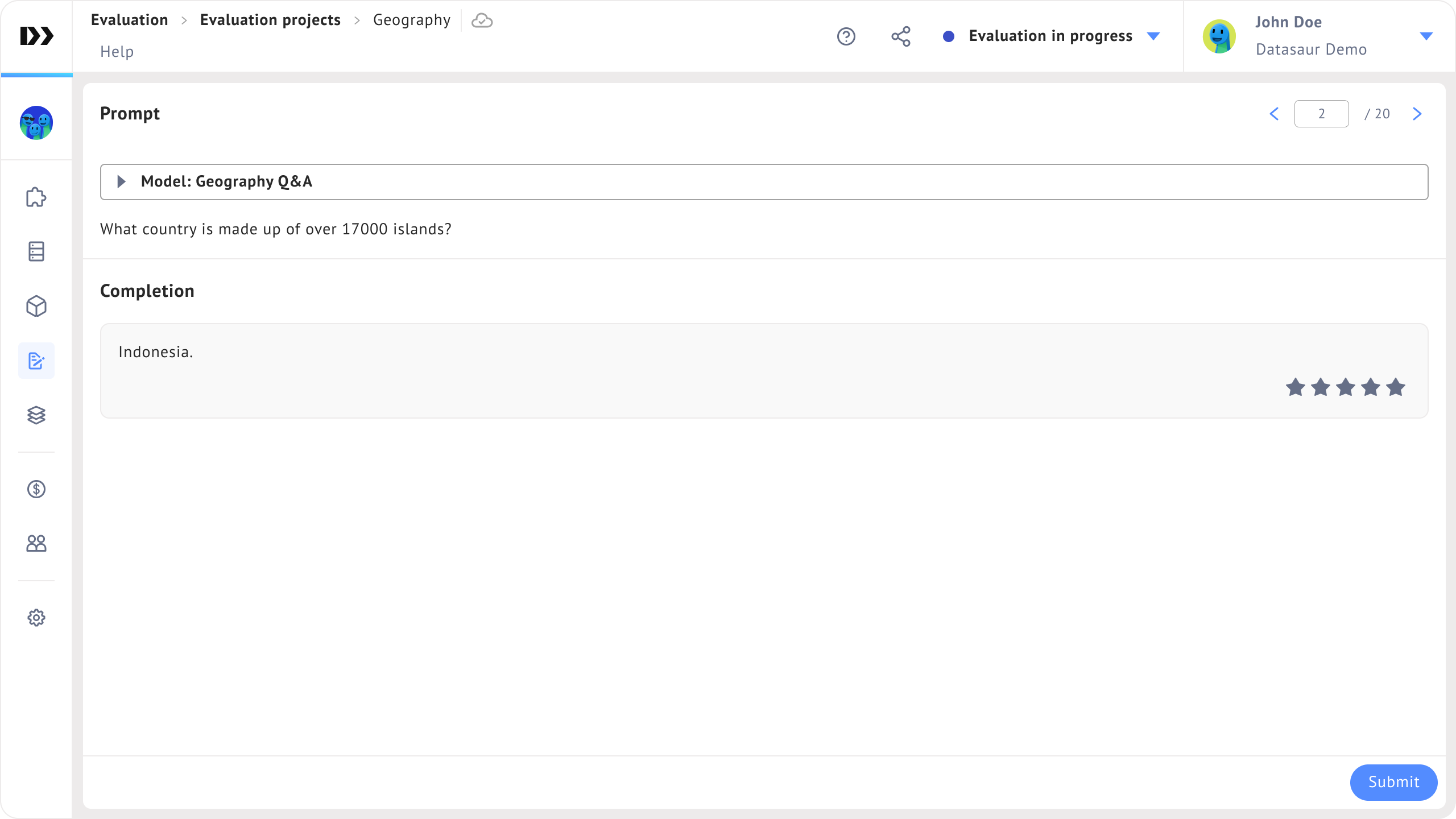
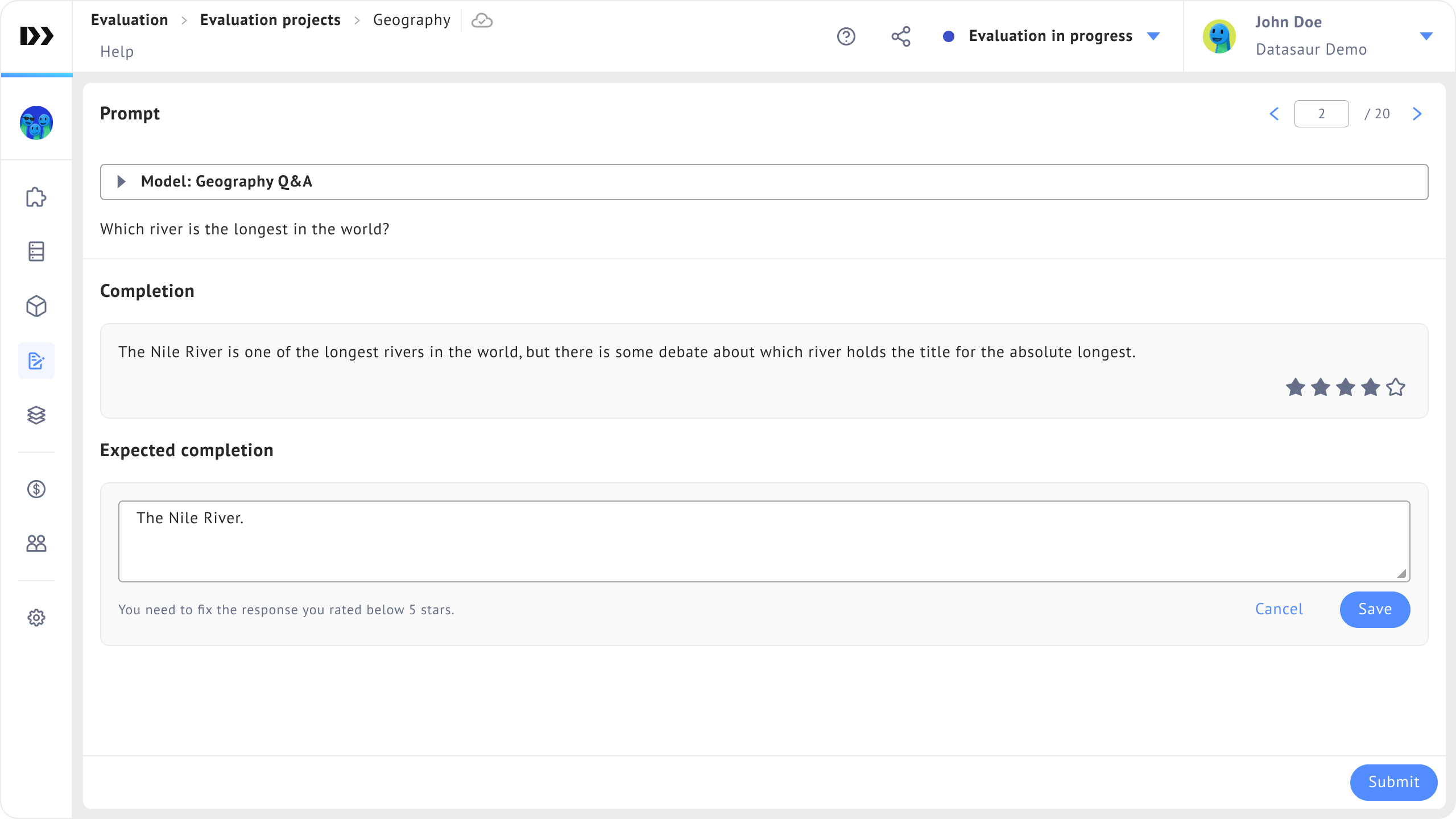
Open the project to evaluate the generated completions. You should rate each completion of a prompt from 1 to 5 stars. A 5-star rating means the completion is already perfect, so there is no need to provide feedback or edit the completion.
Labeler mode
When the rating is below 5 stars, you have to refine the completion by providing your expected completion. After that, submit the answer to move to the next prompt.
## View evaluation results
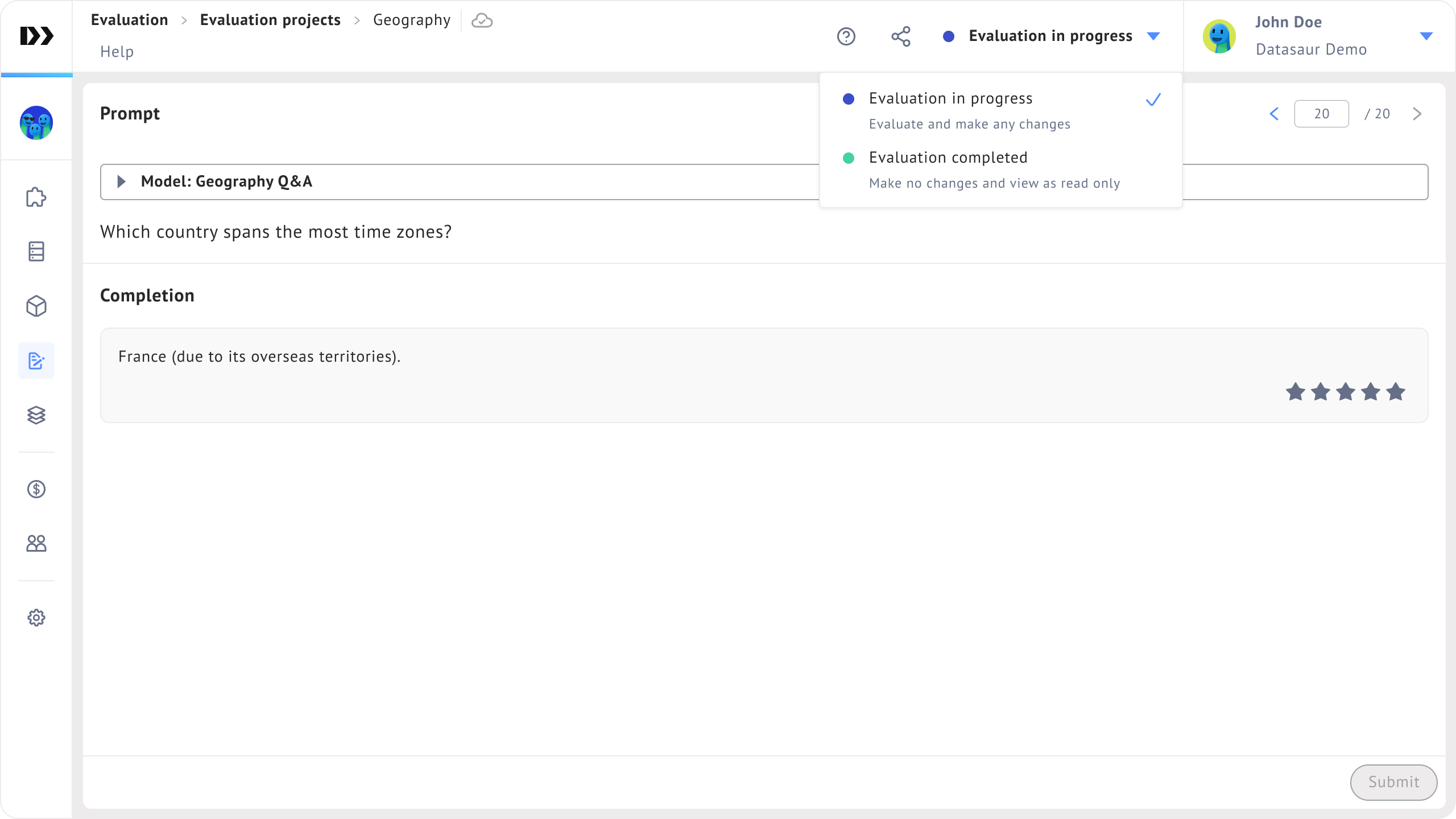
After evaluating all completions, mark the evaluation as complete from the app bar. Click the current status **Evaluation in progress** and change it to **Evaluation completed**.
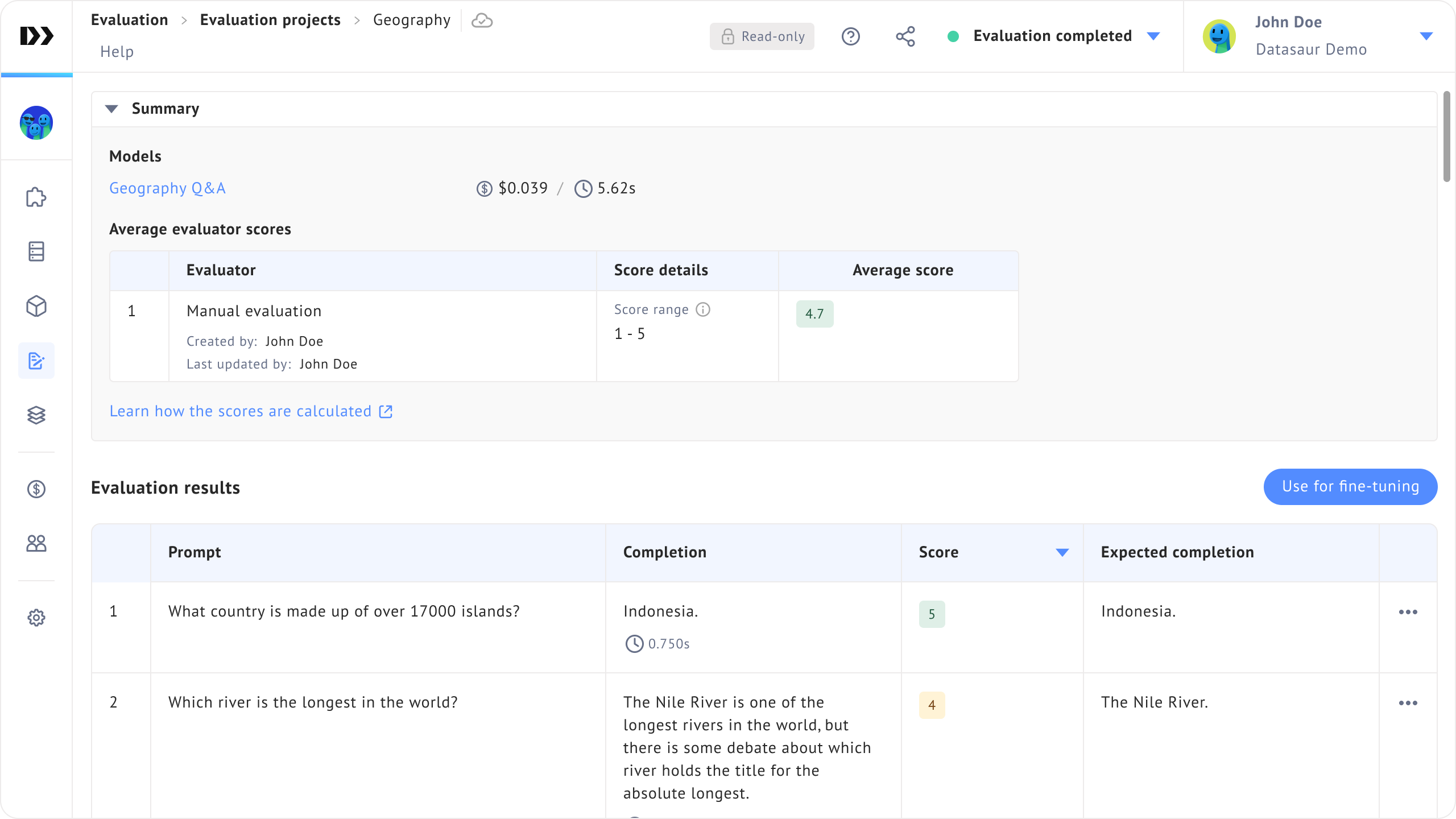
After the evaluation is marked as complete, you can view the summary of the evaluation. For evaluating models from Sandbox, you can see:
* Average cost and processing time for generating completions.
* Average evaluation score.
* Evaluation results in a table view.
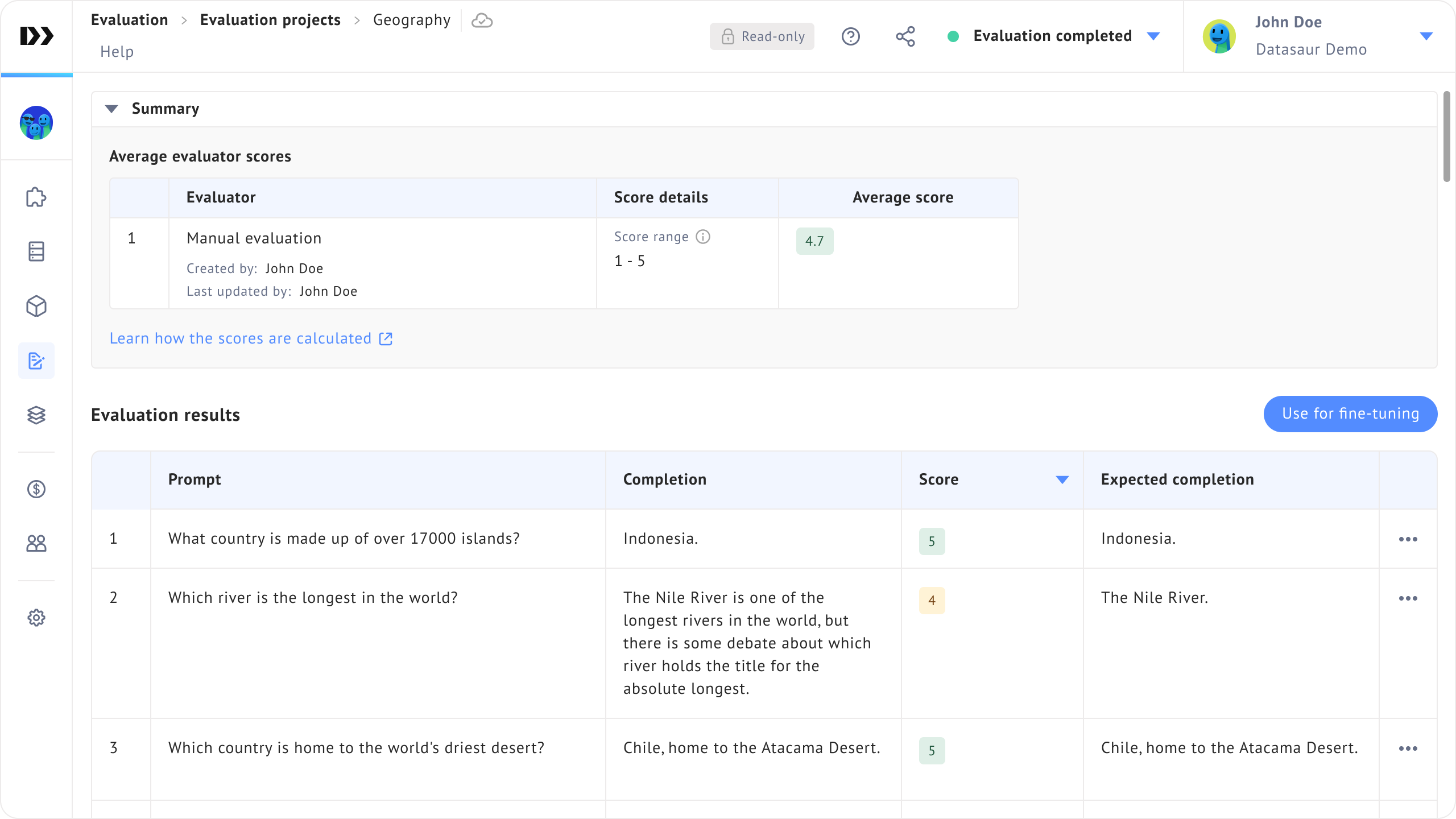
For evaluating pre-generated completions, you can see:
* Average evaluation score.
* Evaluation results in a table view.