> For the complete documentation index, see [llms.txt](https://docs.datasaur.ai/llms.txt). Markdown versions of documentation pages are available by appending `.md` to page URLs; this page is available as [Markdown](https://docs.datasaur.ai/advanced/extensions/datasaur-dinamic.md).
# Datasaur Dinamic
Train and deploy models from your labeled data.
## Overview
**Datasaur Dinamic** lets you train and deploy models directly from your labeled data. The trained model can be used in your applications or as a provider in the **ML-assisted labeling** extension for future projects. Because the model is trained on your dataset, it can generate more accurate predictions for similar labeling tasks.
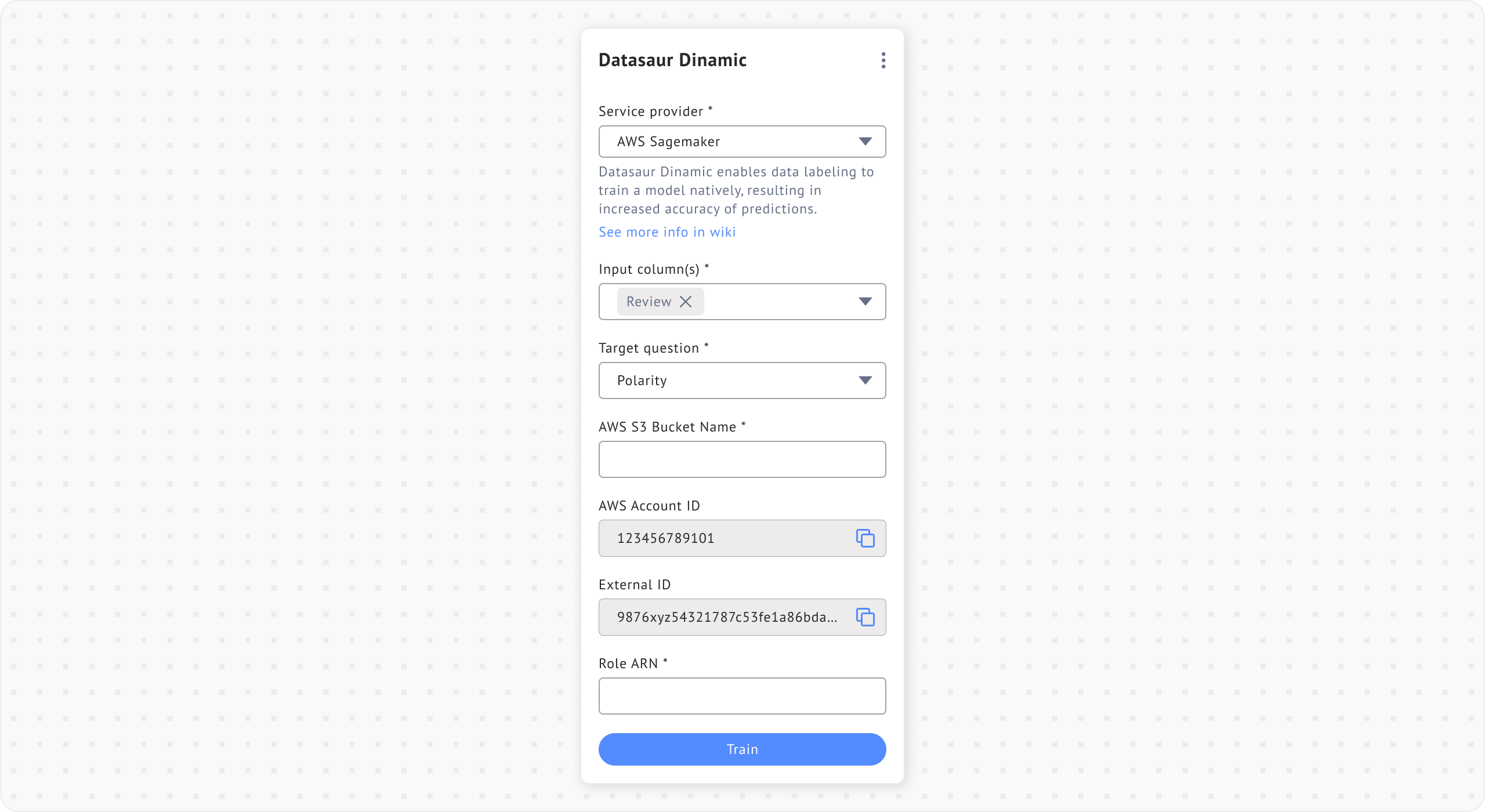
Datasaur Dinamic extension with AWS SageMaker
## Quick guide
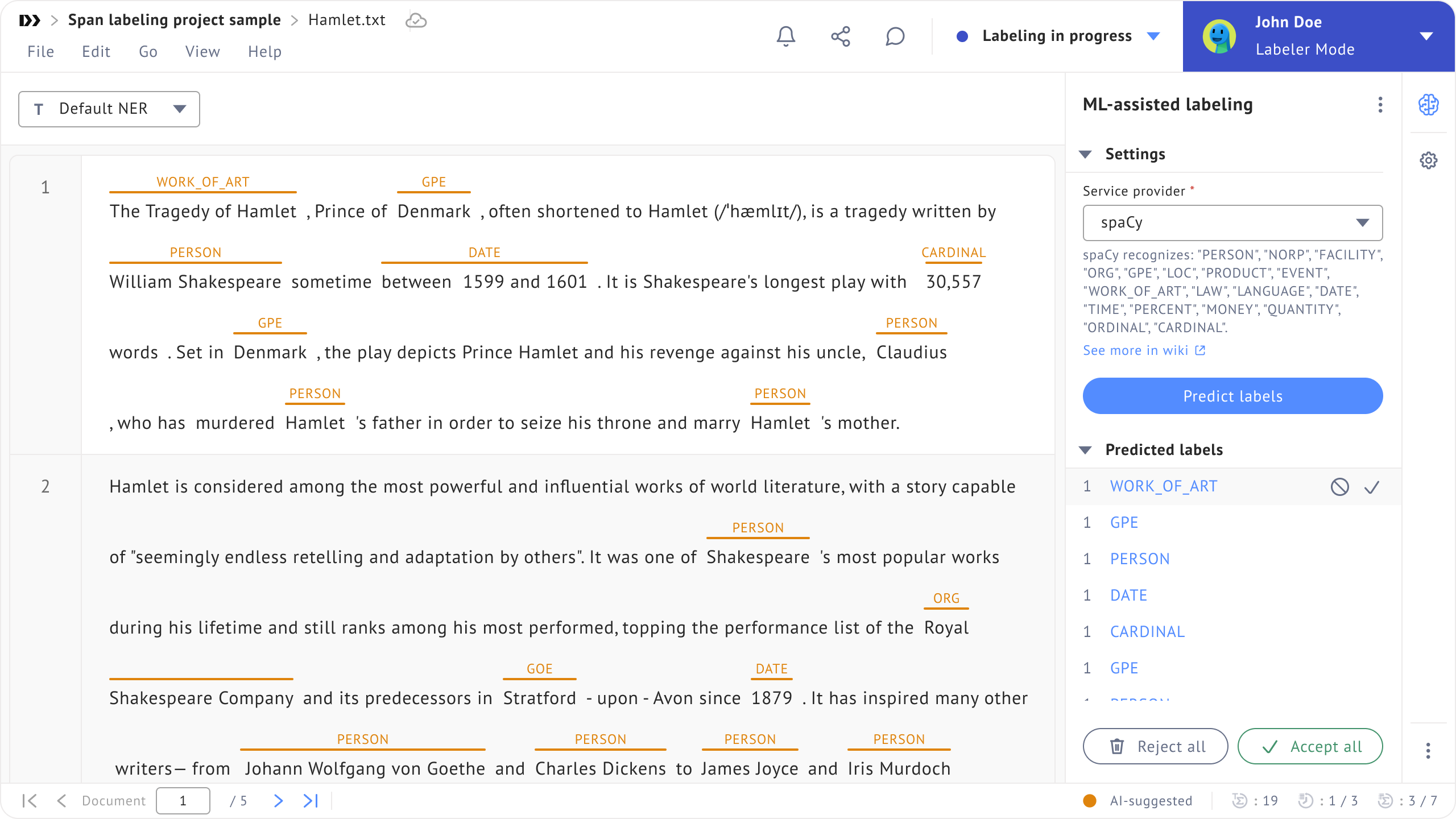
This example uses **Datasaur Dinamic** to train an NER model with a text-based dataset.
1. Label your dataset manually or using assisted labeling features such as **ML-assisted labeling** or **Predictive labeling**.
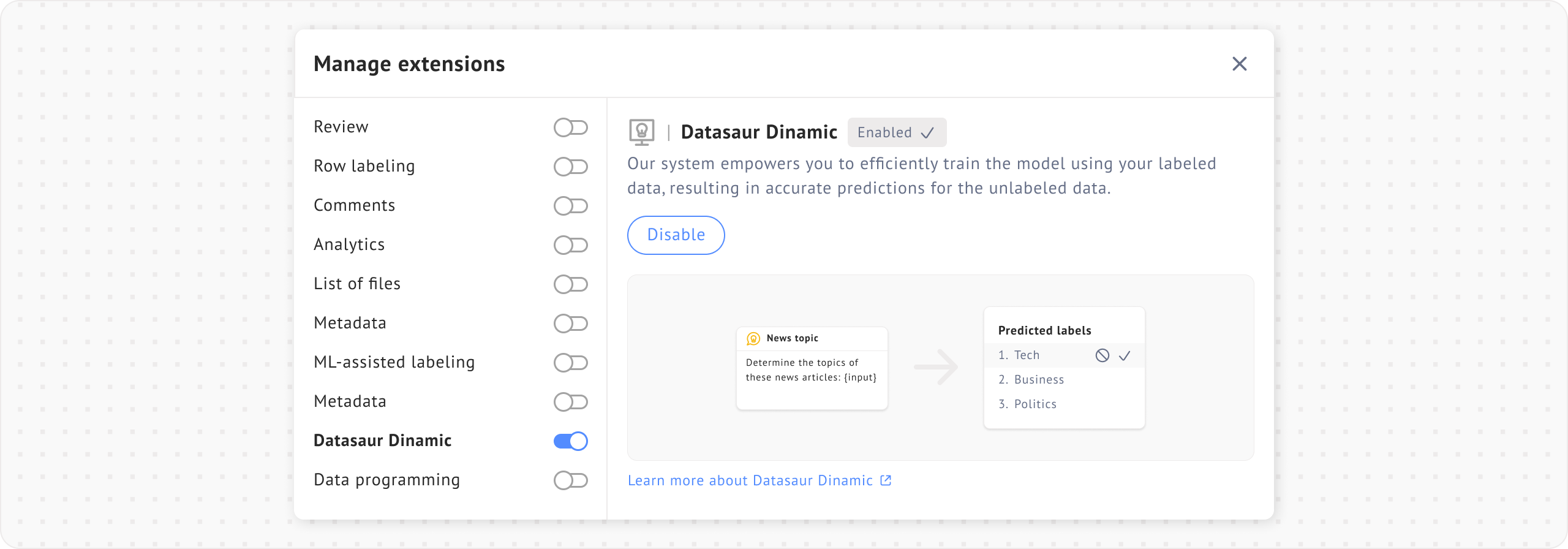
2. Click the gear icon in the extension panel on the right to open the **Manage extensions** dialog, then enable the **Datasaur Dinamic** extension.
3. Select a service provider in the extension. In this example, use **Hugging Face AutoTrain** for a span labeling task.
1. Enter your Hugging Face username from [Account settings](https://huggingface.co/settings/account).
2. Provide a [Hugging Face token](https://huggingface.co/settings/tokens) or create a new access token.
{% hint style="info" %}
For more information and supported providers, see [Datasaur Dinamic](/build-model/datasaur-dinamic.md).
{% endhint %}