> For the complete documentation index, see [llms.txt](https://docs.datasaur.ai/llms.txt). Markdown versions of documentation pages are available by appending `.md` to page URLs; this page is available as [Markdown](https://docs.datasaur.ai/workspace-management/analytics/custom-report-builder.md).
# Custom Report Builder
Build your own report using a group table, metrics, and segments.
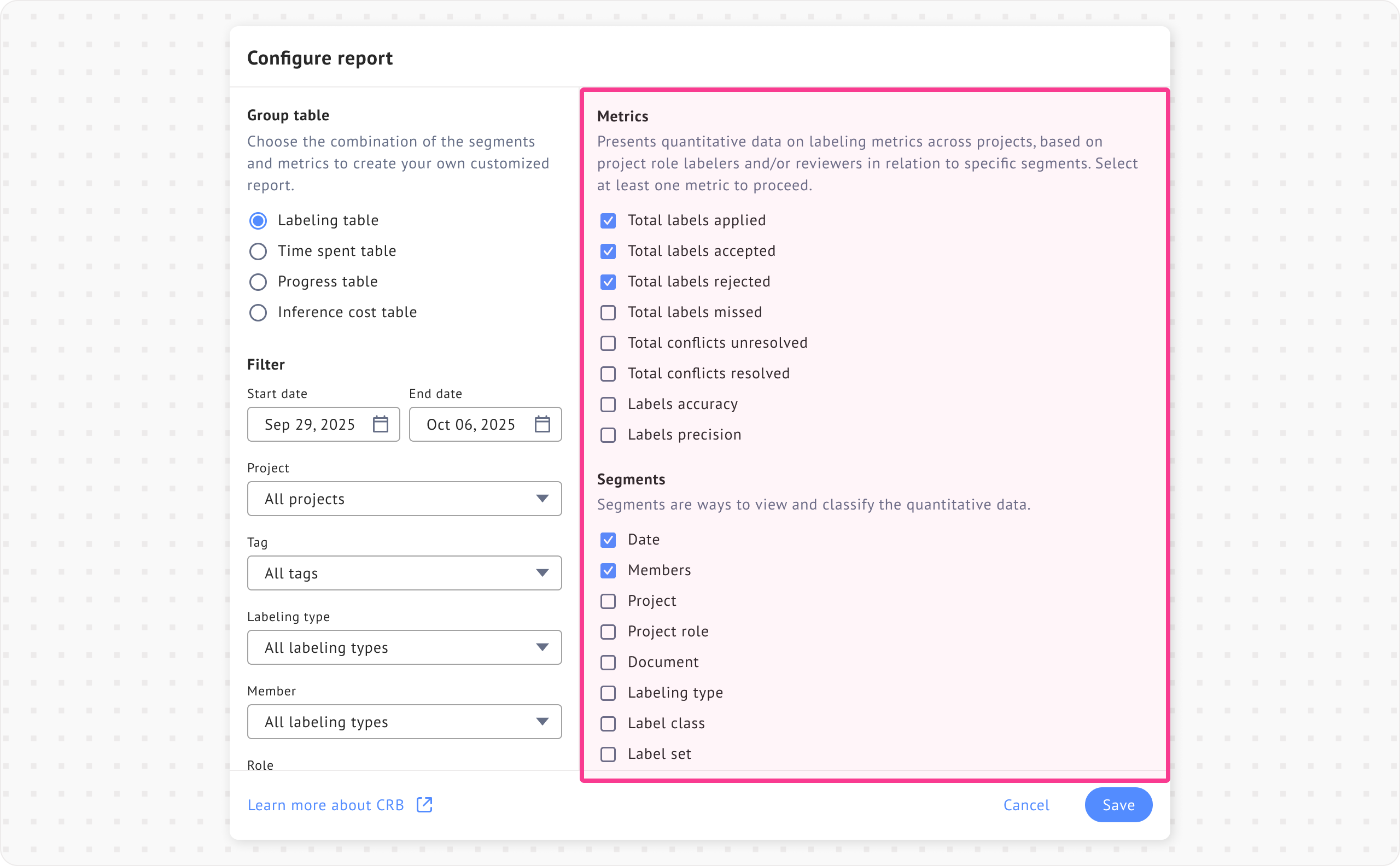
You can generate a customized CSV report by selecting which data columns to include and filtering out unnecessary data.
{% hint style="info" %}
Exporting a report may take time and depends heavily on the amount of data generated.
{% endhint %}
## Terms and definitions
### Group table
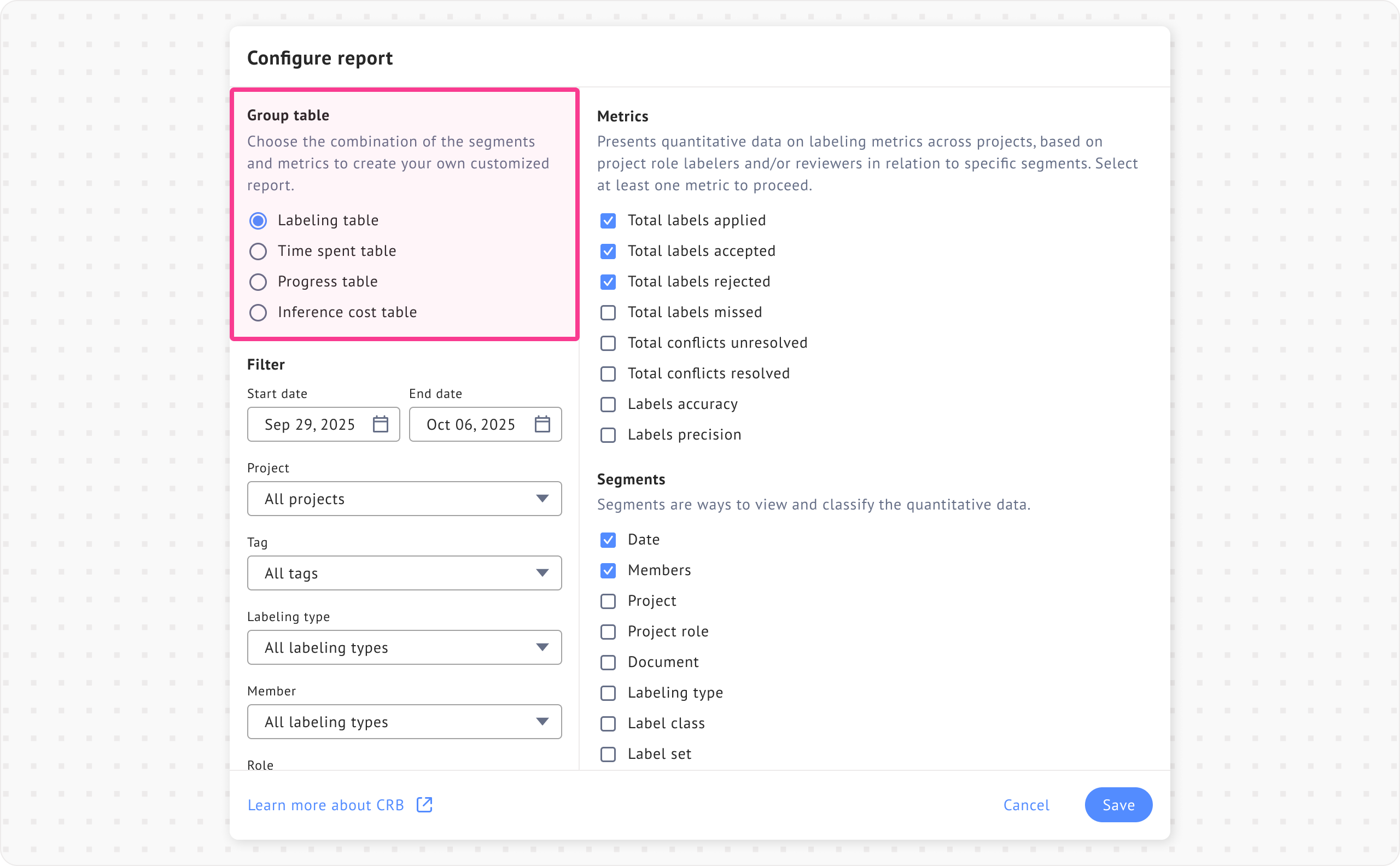
A group table is a way to categorize combinations of metrics and segments. There are 4 group tables:
* **Labeling table**: Reports labeling activity and performance, including label counts, conflicts, and quality measures.
* **Time spent table**: Reports time spent across documents, labels, or rows.
* **Progress table**: Reports completion progress.
* **Inference cost table**: Reports the cost of AI inference incurred during automated labeling.
Not every metric can be combined with every segment. Each metric has a scope, such as document-level or label-level. In most cases, it only makes sense to combine attributes that share the same scope. For example, **Time spent** metric (in **Time spent table** group) is a document-level metric, so it can only be used up to document-level granularity segments, such as **Document name***.* It is not meaningful to combine it with label-level segments.
### Metrics
Metrics are quantitative measurements associated with specific segments. You can hover over each metric to see a detailed explanation. In the report, metric columns are placed after segment columns.
### Segments
Segments are used to view and classify quantitative data. They act as the base columns for calculating metrics. You can hover over each segment to see a more detailed explanation. In the report, segment columns appear before metric columns.
#### Team member
In most cases, the email field represents a specific user. However, this value may sometimes be empty due to the following reasons:
* Consensus-based labeling in reviewer mode: The labels or answers were automatically applied based on consensus.
* Unresolved conflicts in reviewer mode: The labels are still in conflict and have not yet been accepted or rejected, so no user is attributed.
### Filter
Filters are optional but highly recommended to remove unnecessary data and improve report generation speed. You can filter data using segments only. Regardless of which segments you include in the report, you can still use any segment as a filter.
## Generate a report
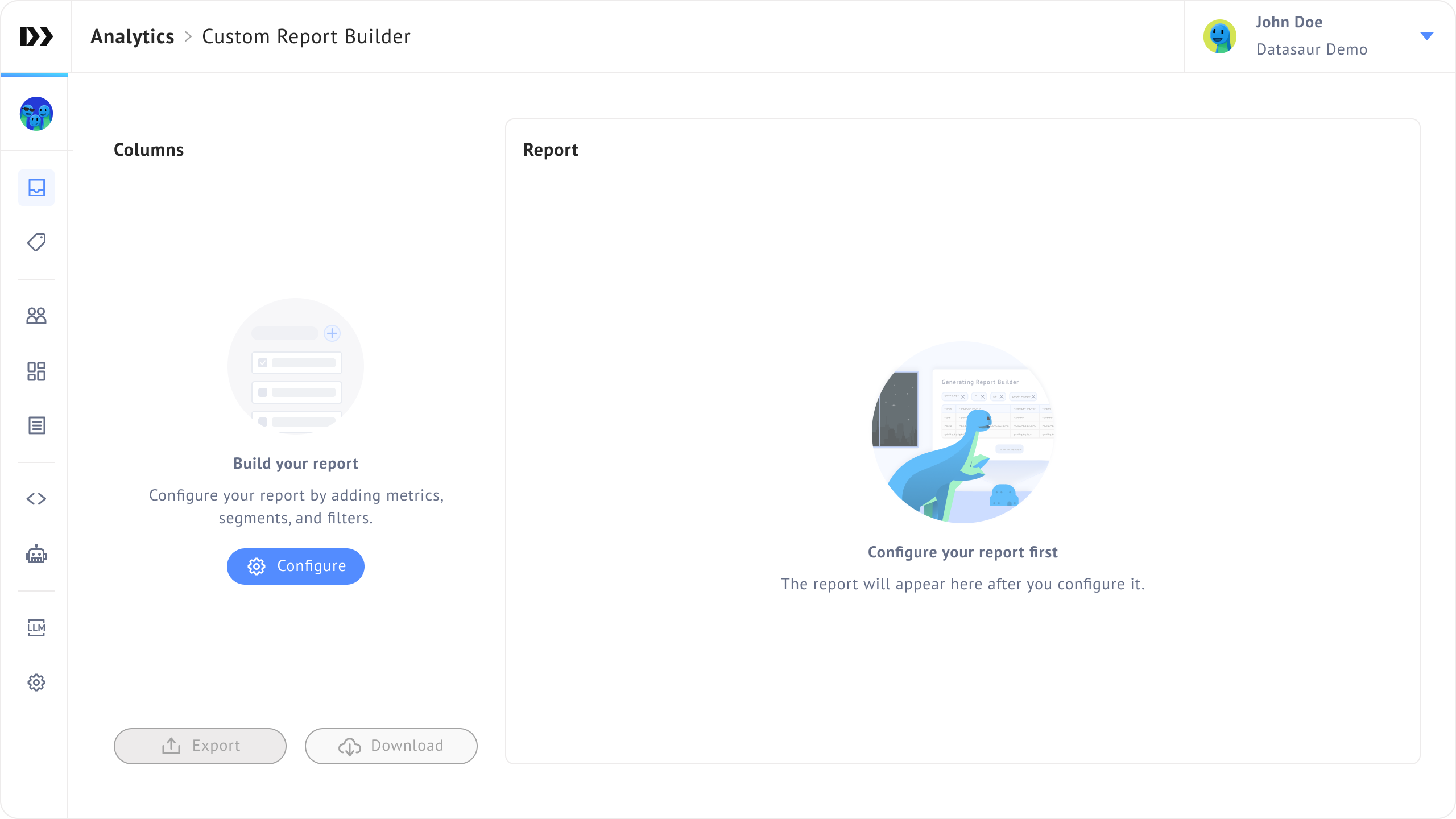
1. Click the **Configure** button.
2. Select a group table.
3. Select columns for both metrics and segments.
4. Filter by dates, projects, tags, labeling types, and members as needed.
5. Click **Save**.
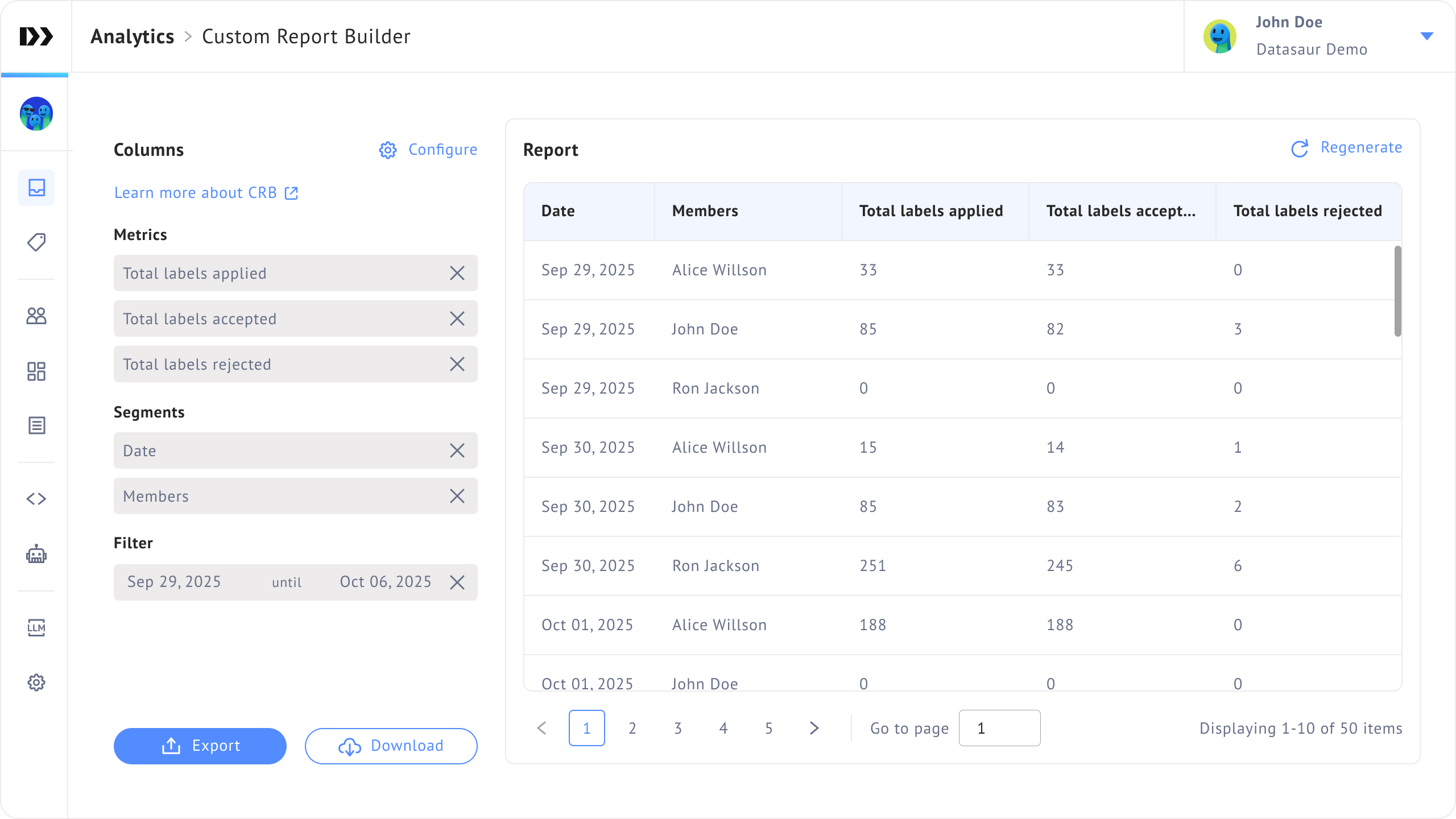
6. A preview of the data will be generated for you. Use this preview to see and make sure you have the correct table structure of your report.
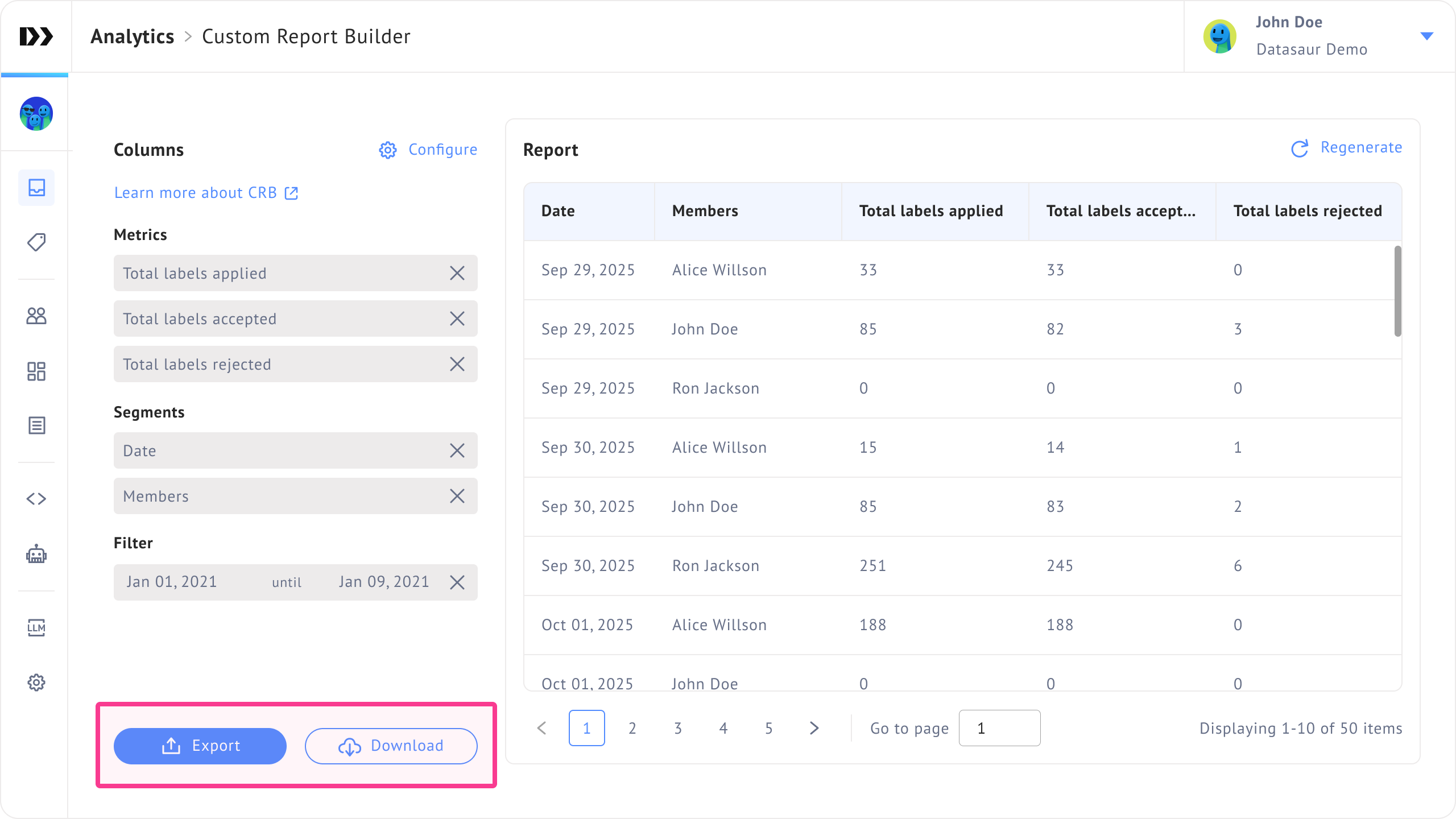
7. Click **Export** to send the report to your email inbox. Alternatively, click **Download** to obtain the report directly to your device.
.png?alt=media)