> For the complete documentation index, see [llms.txt](https://docs.datasaur.ai/llms.txt). Markdown versions of documentation pages are available by appending `.md` to page URLs; this page is available as [Markdown](https://docs.datasaur.ai/data-studio-projects/nlp-task-types/project-templates.md).
# Project Templates
Exploring Datasaur's pre-built project templates
Datasaur has project templates that help you get started quickly with preconfigured settings. Let's explore each one.
## Named entity recognition
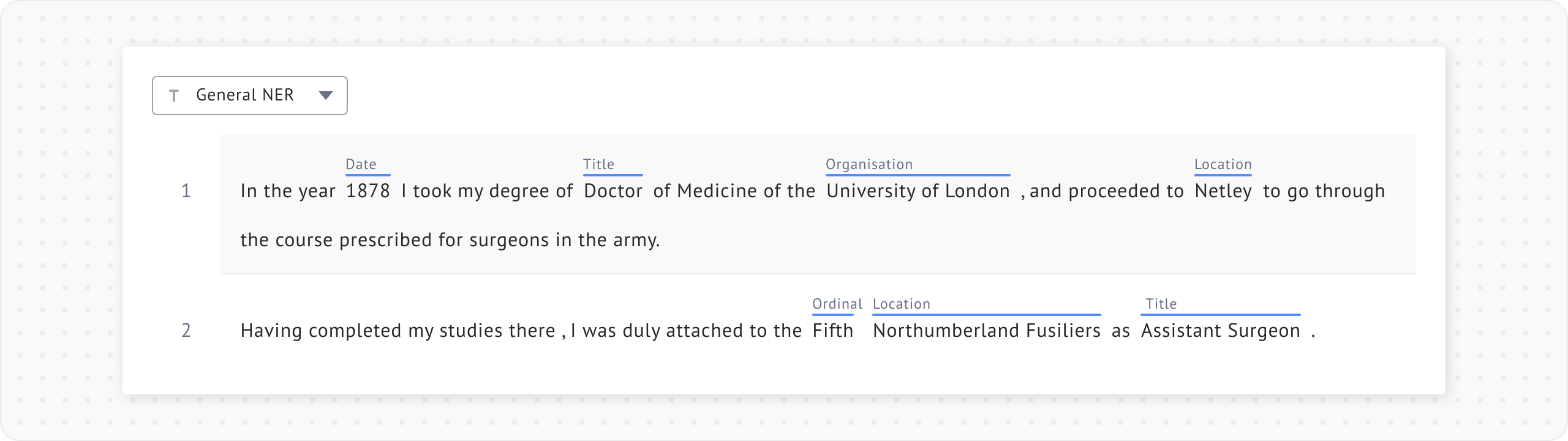
Named entity recognition (NER), also referred to as named entity extraction, is the process of identifying and extracting entities within text. These entities are classified into predefined categories representing real-world concepts, such as people, organizations, and locations.
Named entities are not always single tokens. In the example above, `University of London` is an entity that has three tokens. Multi-token entities are common in NER.
{% file src="/files/w2CjJprHOVI559OMuqmF" %}
## Part-of-speech
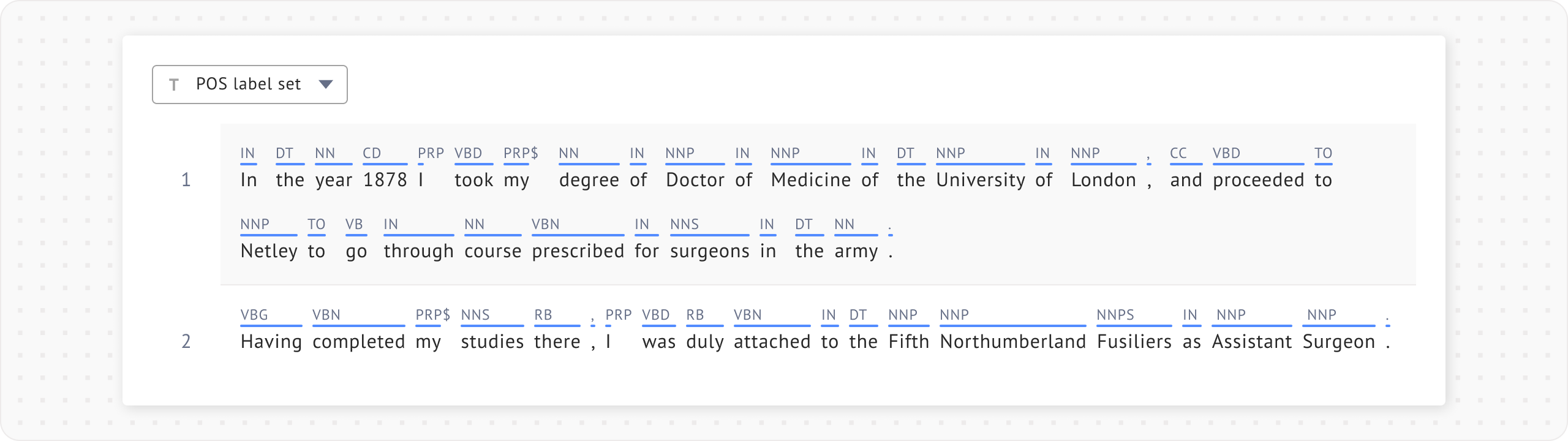
Part-of-speech (POS) tagging is the process of labeling each word in a text with its grammatical role based on the sentence context. Identifying the role of each word helps models understand sentence structure and meaning.
You can define custom parts of speech for labeling.
{% hint style="info" %}
Note: A common industry standard for **English** **POS tagging** is based on the parts of speech defined by the [Penn Treebank Project](https://www.ling.upenn.edu/courses/Fall_2003/ling001/penn_treebank_pos.html).
{% endhint %}
{% file src="/files/-MbjYIJ7VYQd0FobOuB9" %}
## Coreference
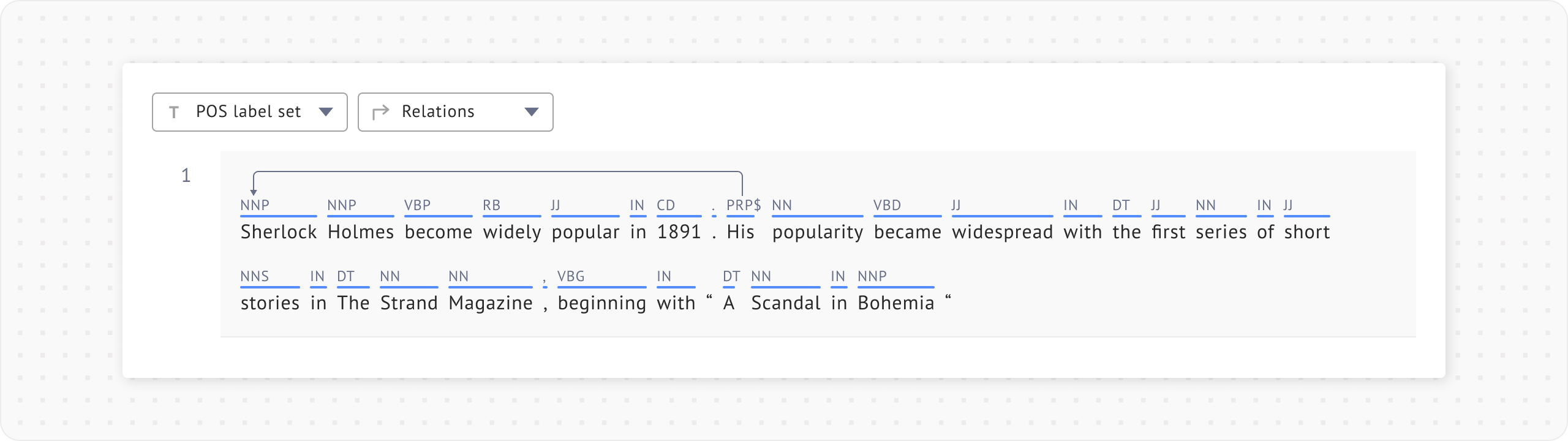
Coreference resolution is the task of identifying all expressions in a text that refer to the same entity. It is widely used in applications such as information extraction, text summarization, question answering, and machine translation.
Coreference can include nouns, noun phrases, proper nouns, and pronouns. For example, `his` is a pronoun that refers to `Sherlock`*,* a noun phrase. Coreference resolution reduces ambiguity in a document by linking related expressions. It typically involves labeling relevant phrases first, then drawing arrows to connect them.
{% file src="/files/SwORAeTeV8ss0aZpkKMn" %}
## Dependency
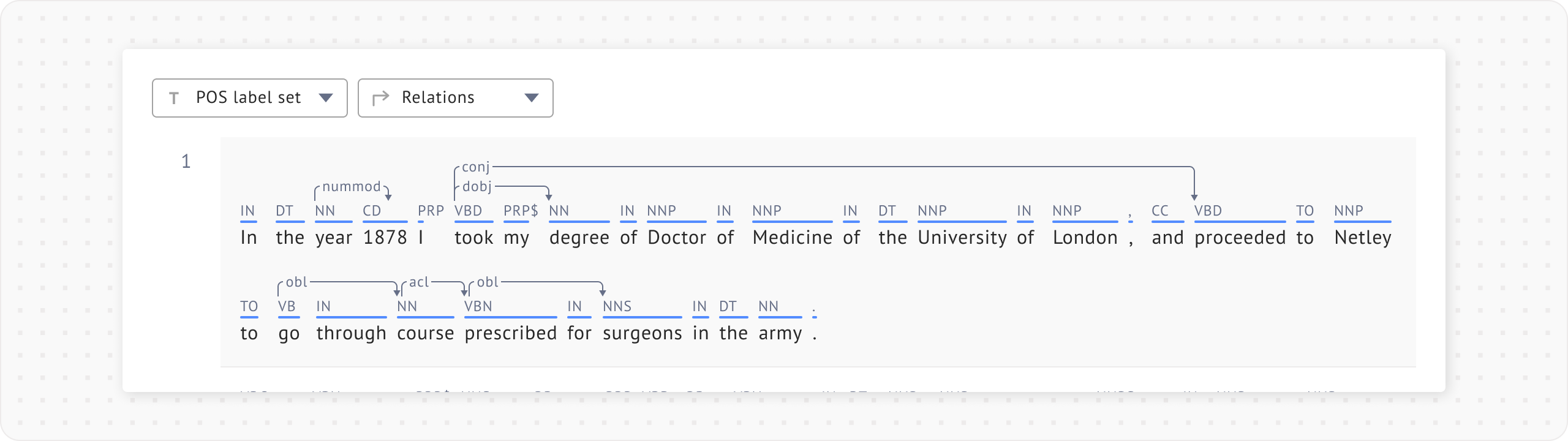
Dependency parsing is the task of identifying and labeling grammatical relationships between words in a sentence. These relations consist of a head and a dependent. In the example below `Sherlock` is the subject of the verb `became`.
{% hint style="info" %}
For **Dependency** labeling, common industry standards include [Universal Dependencies](https://en.wikipedia.org/wiki/Universal_Dependencies) and the [Stanford typed dependencies Manual](https://nlp.stanford.edu/software/dependencies_manual.pdf).
{% endhint %}
{% file src="/files/TUFbUBPUXjow4XzEcxSD" %}
## Document labeling
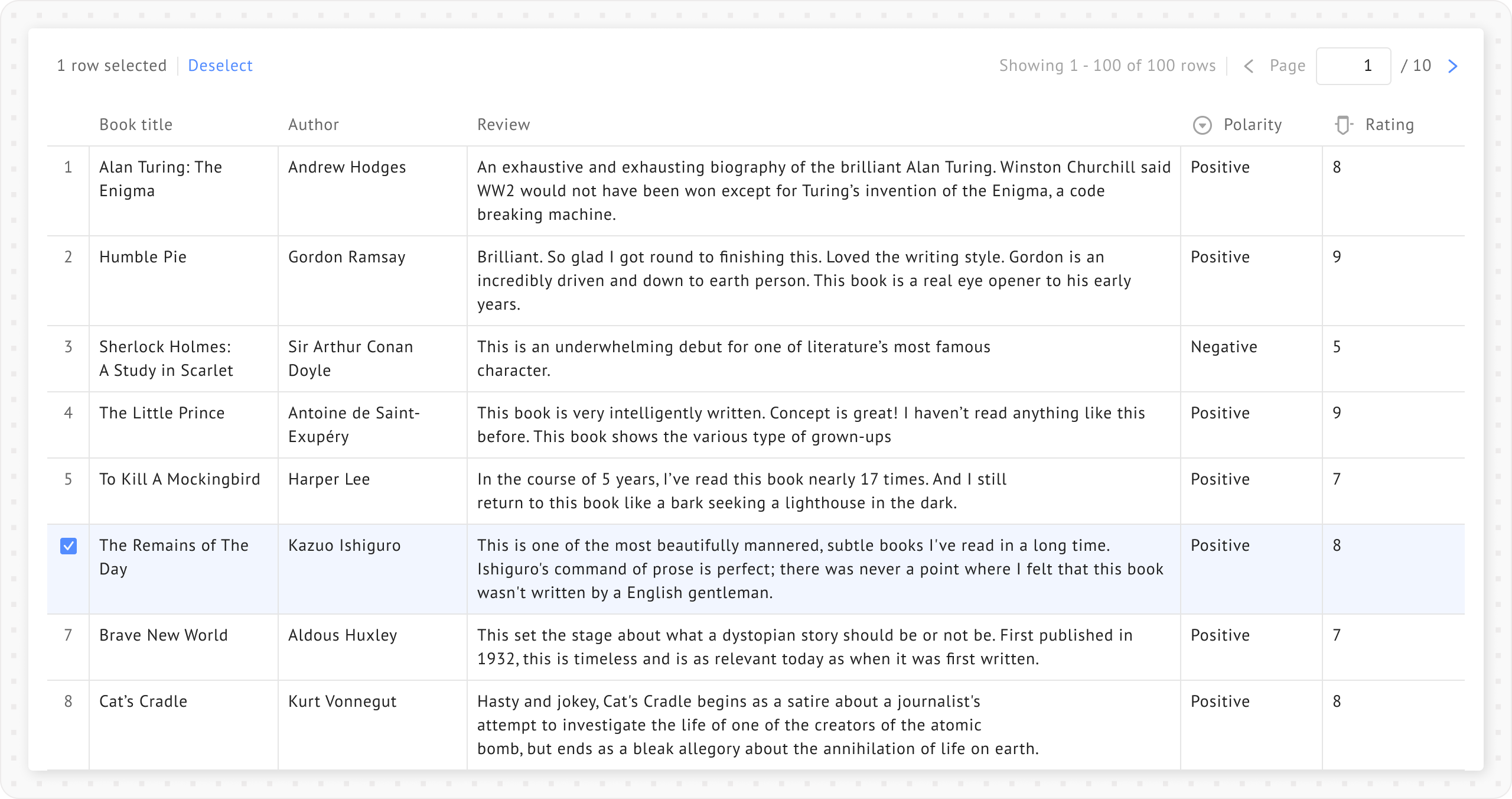
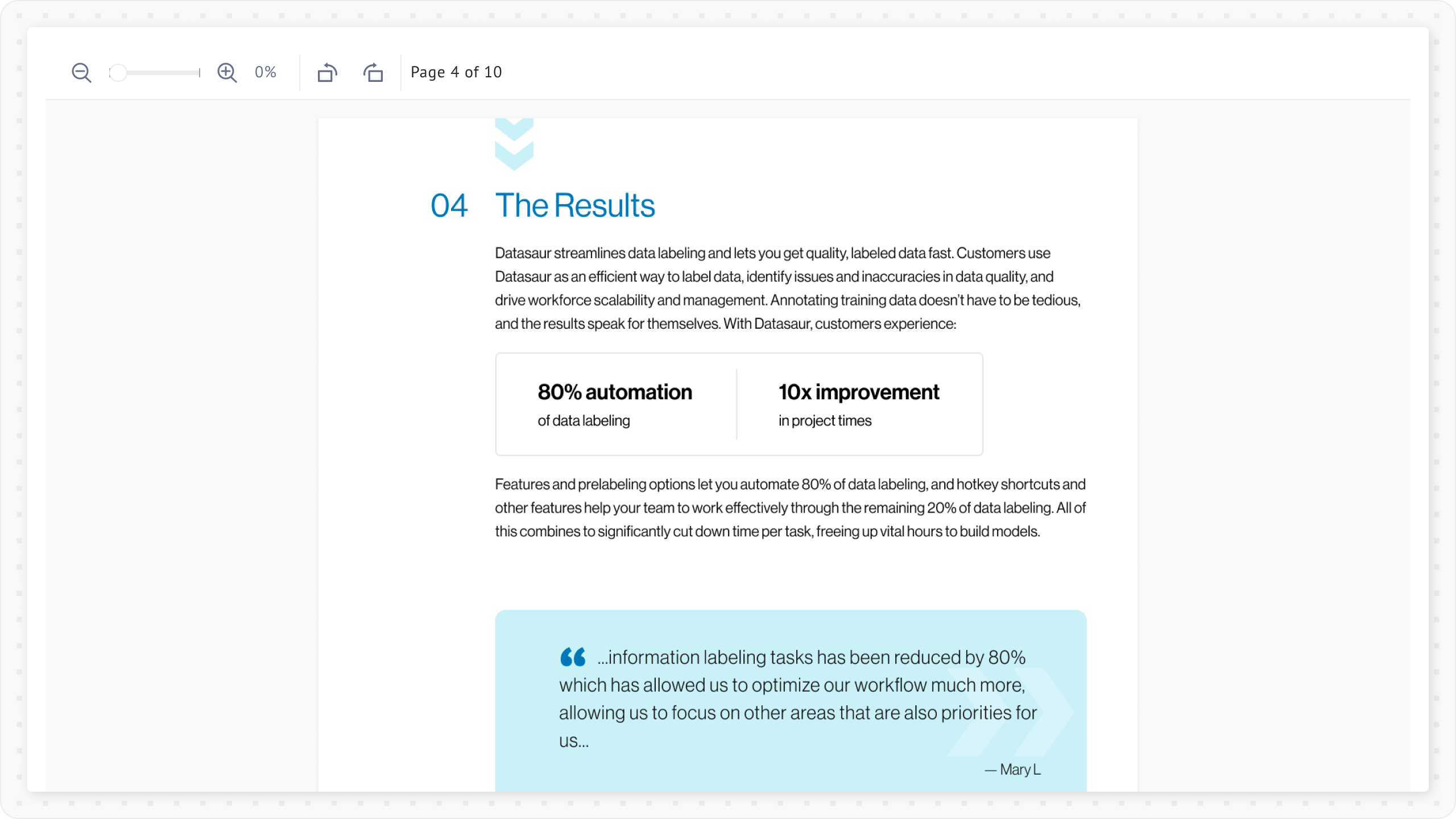
Document labeling is the task of classifying and categorizing data. Unlike span labeling, the labeler answers questions about the text instead of labeling specific spans within it. This approach is commonly used for tasks such as sentiment analysis or applying metadata to a document.
In Datasaur, document labeling can be done at the row level or the document level. The row-level approach uses the row labeling project type.
In document labeling, you can label images, `.pdf` files, and even `.gif` files.
{% file src="/files/AeQPSXcH95fZsFCNmT6x" %}
When creating projects via the **Document labeling** project template, the following settings are applied by default.
* Any uploaded questions are set as `required`.
* Answer sets can be edited. If a labeler types an answer that doesn't match an existing label, she can click **Add `` as a new answer**.

## Optical Character Recognition (OCR)
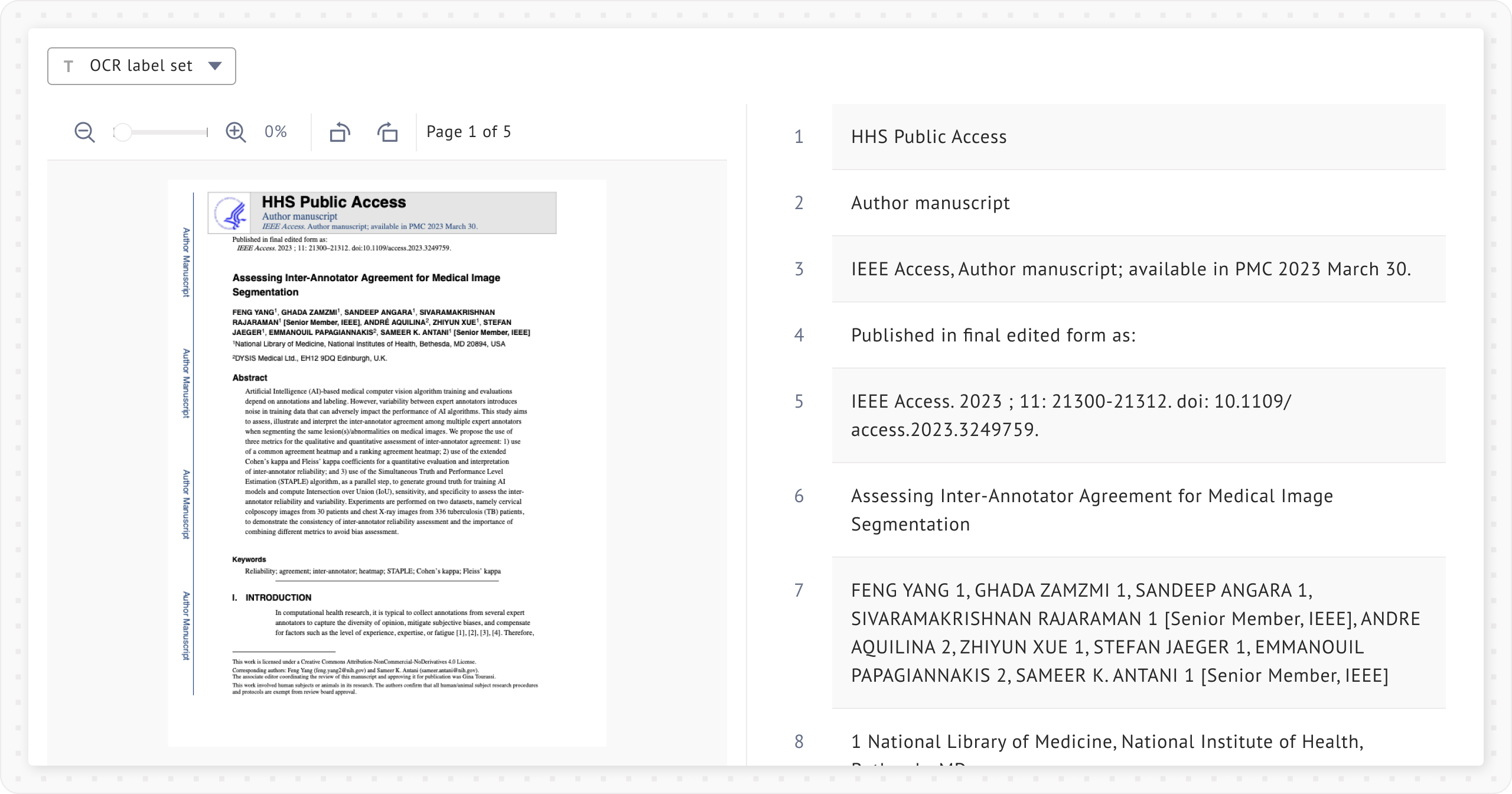
Optical Character Recognition (OCR) is the task of converting text in images or scanned documents into machine-readable text. Common OCR use cases include invoices, receipts, and legal documents. [Watch this Youtube video for instructions on creating an OCR project](https://youtu.be/YsObDLKsewY).\
\
In the video, the user creates an OCR project by uploading the original document with its corresponding transcription as a `.txt` file. Alternatively, your workspace can integrate with an OCR provider of your choice.
Datasaur works with any OCR provider you choose. To let us know which provider you want to use, contact us at . Once integrated, the OCR technology will generate transcriptions automatically during project creation, specifically in step 2.
{% hint style="info" %}
Note: when uploading OCR document pairs, ensure that each image file and its corresponding transcription have the same file name. For example, `SEC.pdf` and `SEC.txt`.
{% endhint %}
## How to use a template
1. Open the Projects page.
2. Click **templates** beside the **Create project** button.
3. Select the desired template to start creating a project from it.
4. You can also open **View all templates** to see the complete list of available built-in templates and templates you have created yourself.

## Create your own template
You can create your own reusable project templates by saving an existing project as a template. This allows you to quickly reuse the same label setup, project configuration, and other supported settings for future projects.
You can create your own template by following these steps:
1. Create a project with all the desired settings and configurations.
2. On the Projects page, click the triple-dot menu on the project and select **Save as template**.
3. Rename the template as desired and optionally upload an icon.

The template will save supported project configurations from the selected project, including:
* Project labeling type.
* The project labeling type is saved as part of the template. However, if the uploaded data is incompatible with the labeling type, project creation will still proceed without blocking the user.
* Label sets and questions.
* Project settings (task settings and administrator settings).
* Selected file transformer (if a file transformer was used during project creation).
* Tokenizer configuration (for span labeling projects only).
* OCR/ASR method configuration (if OCR/ASR was used during project creation).
* Enabled extensions.
Once saved, templates can help standardize project setup and reduce repetitive configuration work.