> For the complete documentation index, see [llms.txt](https://docs.datasaur.ai/llms.txt). Markdown versions of documentation pages are available by appending `.md` to page URLs; this page is available as [Markdown](https://docs.datasaur.ai/advanced/extensions/review.md).
# Review
Review and resolve labeling conflicts while tracking review progress and quality.
The **Review** extension helps streamline the review process by making it easier to identify conflicts, track progress, and maintain labeling quality and consistency.
## Enable the extension
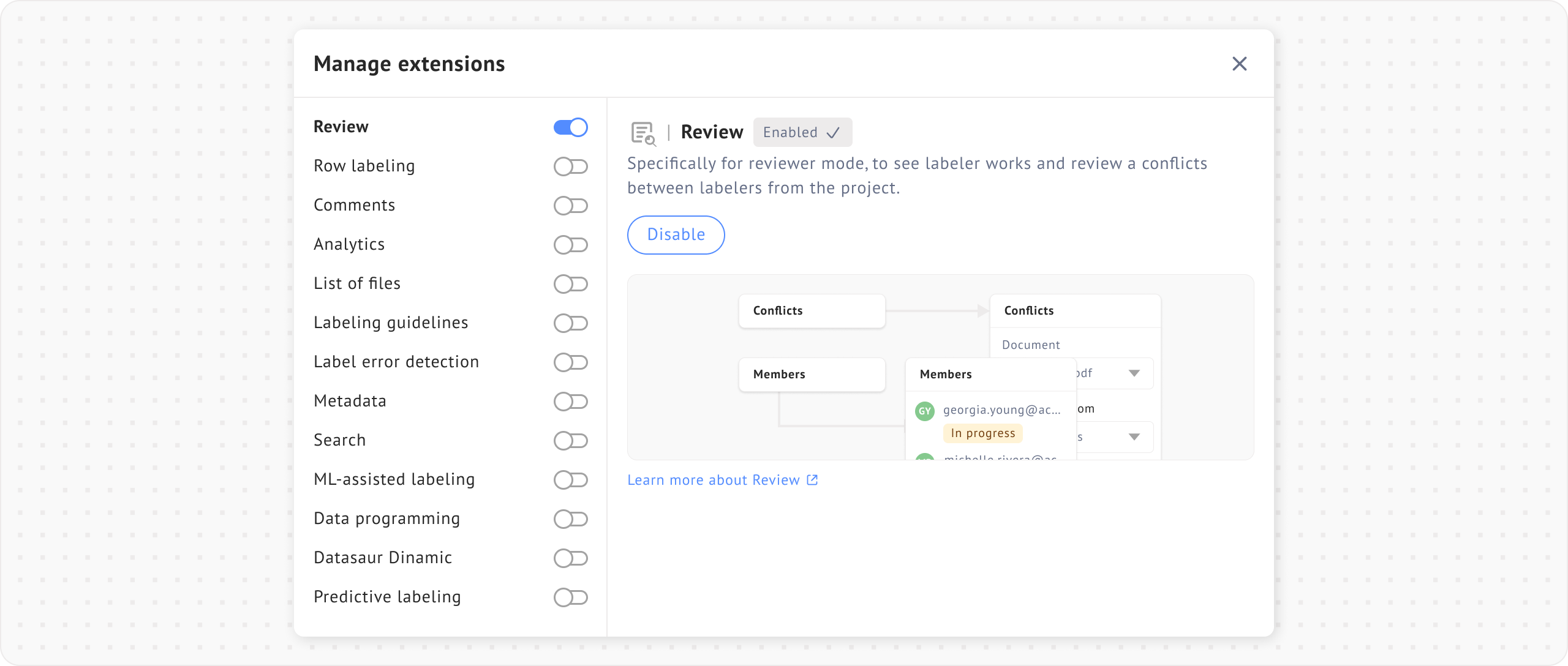
Click the gear icon in the extension panel on the right to open the **Manage extensions** dialog. Then, enable the **Review** extension.
## How it works?
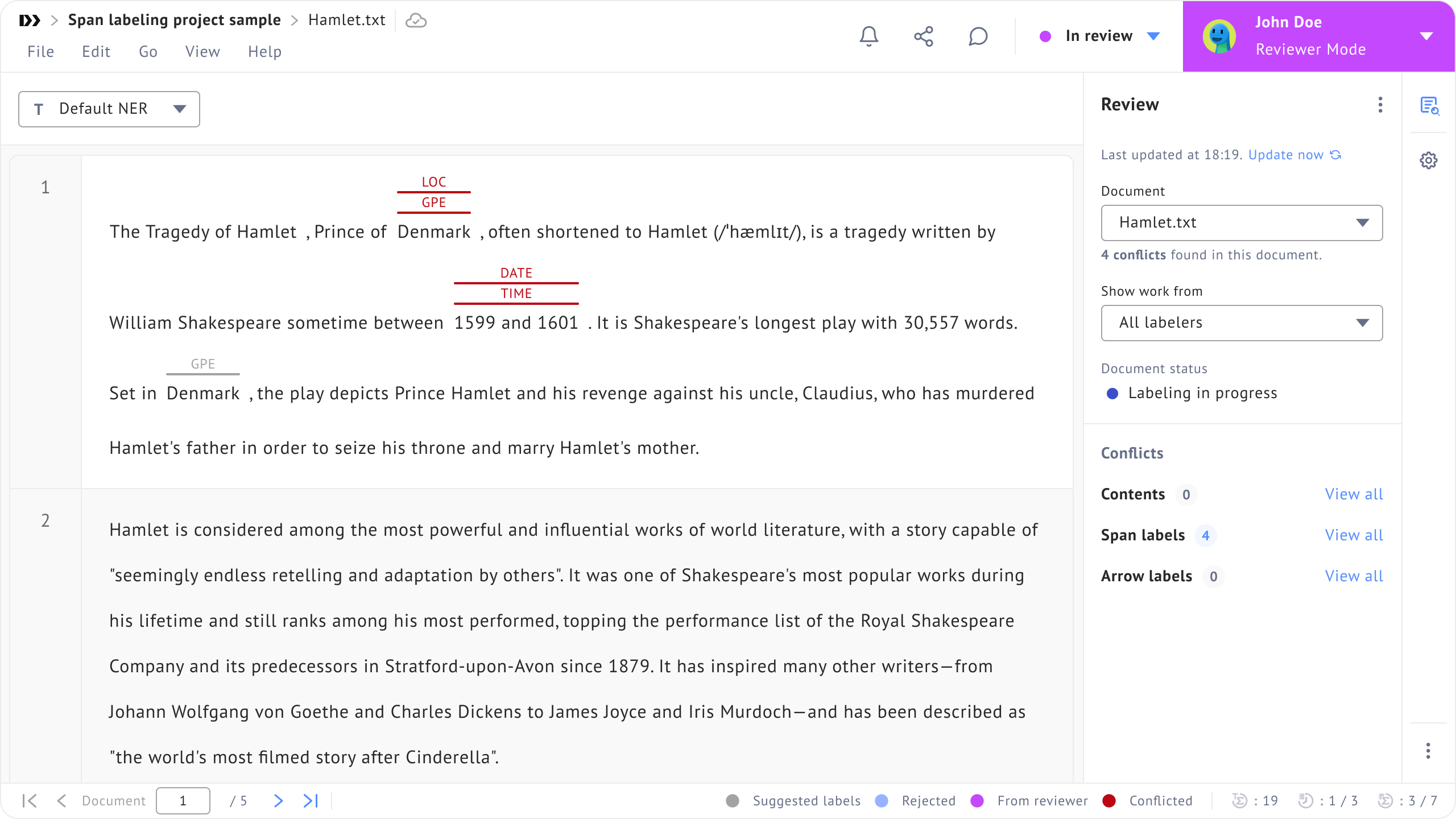
The extension helps you review labeling work by showing:
* Labeler information.
* Conflicting labels or answers.
* Review progress.
### Conflicts
Find and resolve disagreements between labelers.
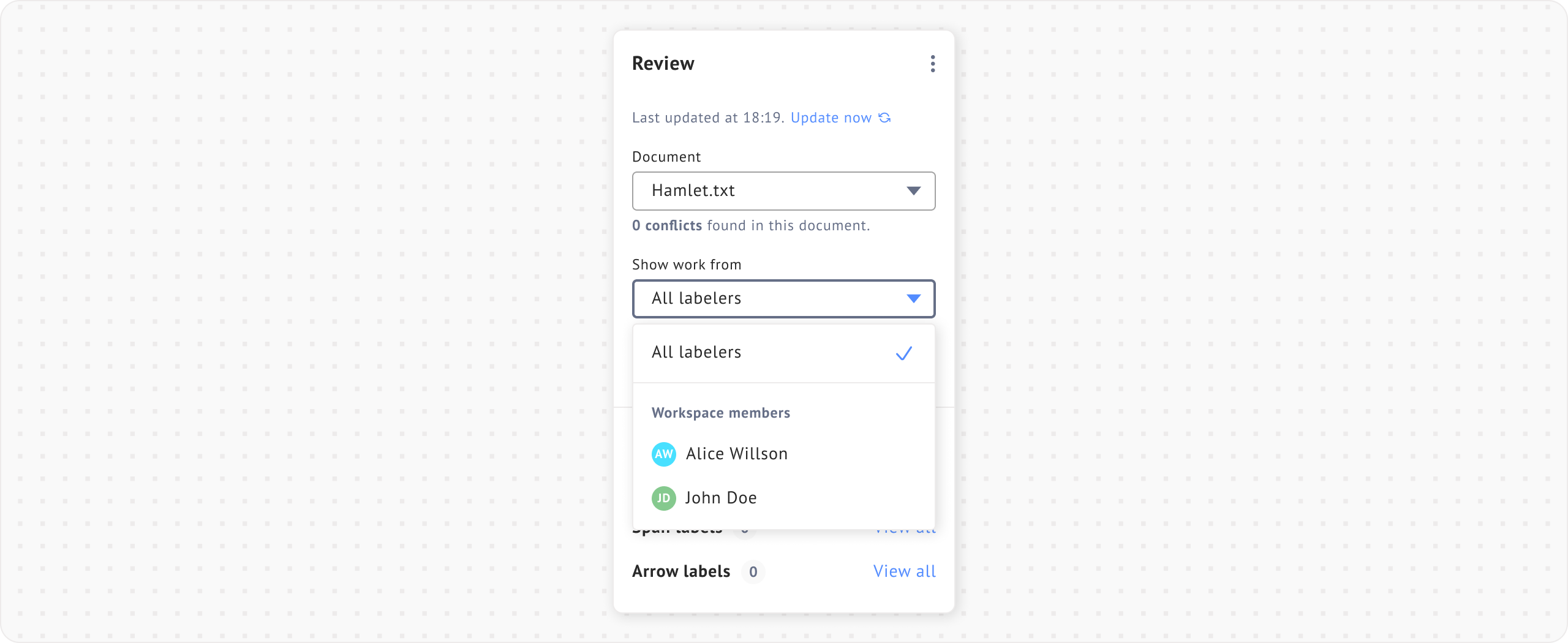
* The **Document** field allows you to view conflicts in a specific document.
* The **Show work from** field allows you view conflicts made by a specific labeler.
* **Conflicts** section allows you to identify all conflicting answers provided by different labelers. The displayed information varies depending on the project type.
### Progress
This tab is only visible when the **Set review sampling rate** setting is enabled. Reviewers can use it to track their review progress and see whether they have met the configured sampling rate.
Read more information about review sampling [here](/data-studio-projects/reviewing-nlp-projects/review-sampling.md).
## Span labeling
{% hint style="info" %}
For the full review workflow, see [Reviewer mode](/data-studio-projects/reviewing-nlp-projects.md).
{% endhint %}
### Conflicts
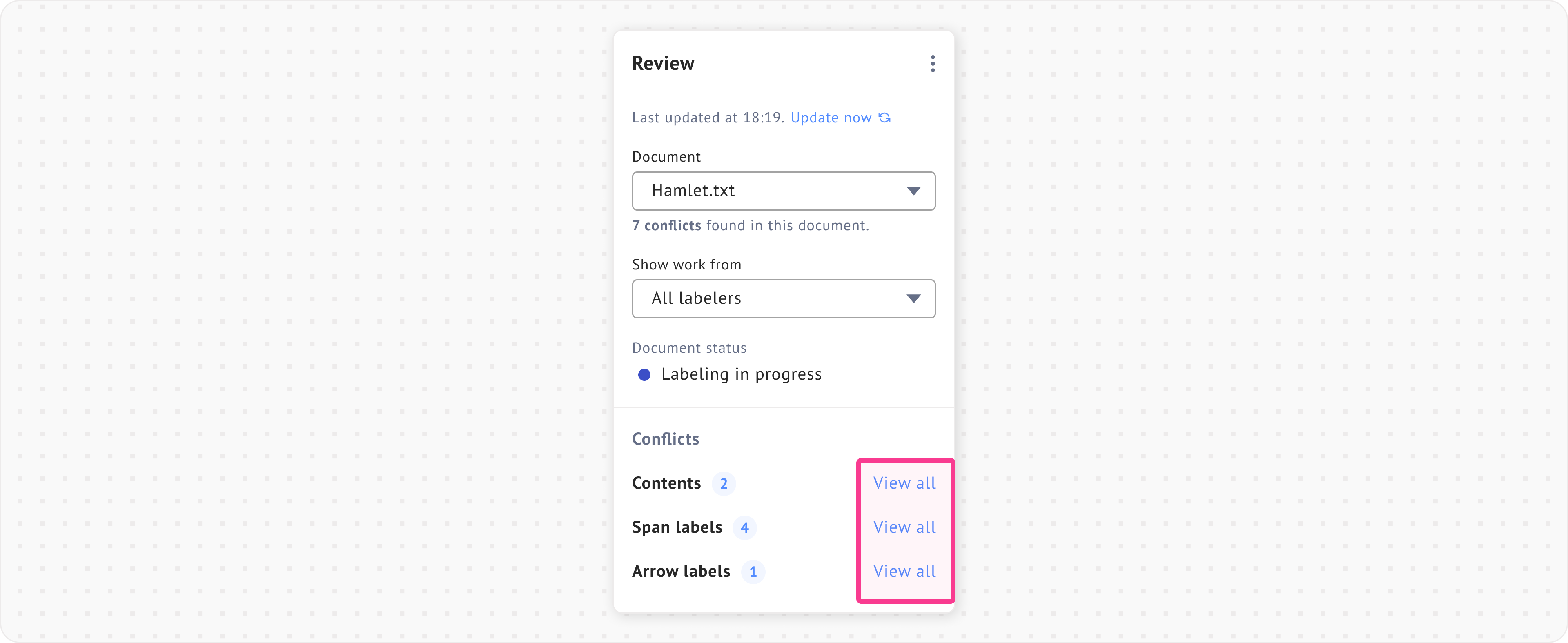
In span labeling, there are three types of conflicts. Click **View all** in each section to see the full list of conflicts.
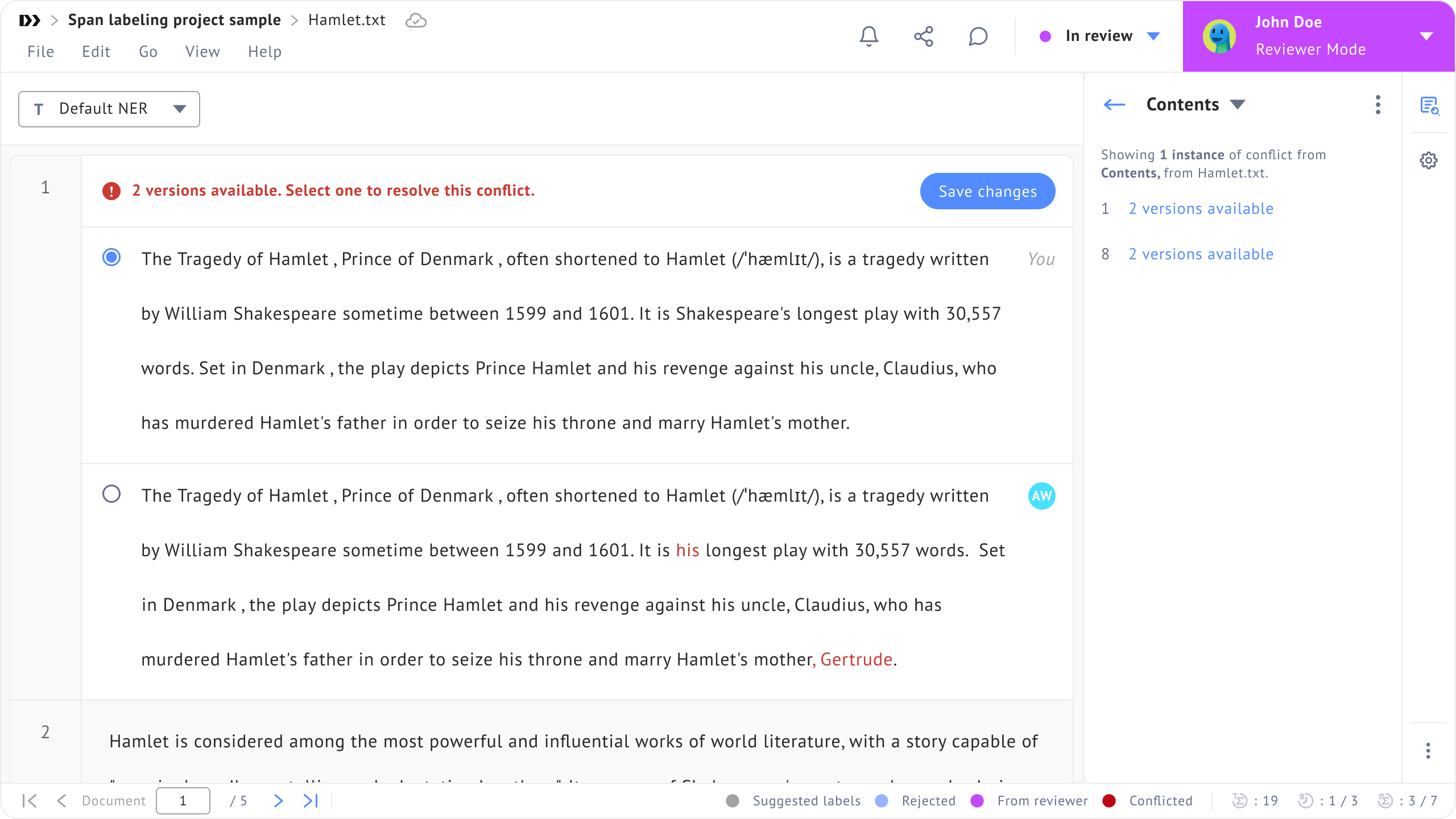
* **Contents:** Shows text conflicts caused by edits made by labelers. For example:
* Original text: `It is Shakespeare's longest...`
* Edited text: `It is his longest...`
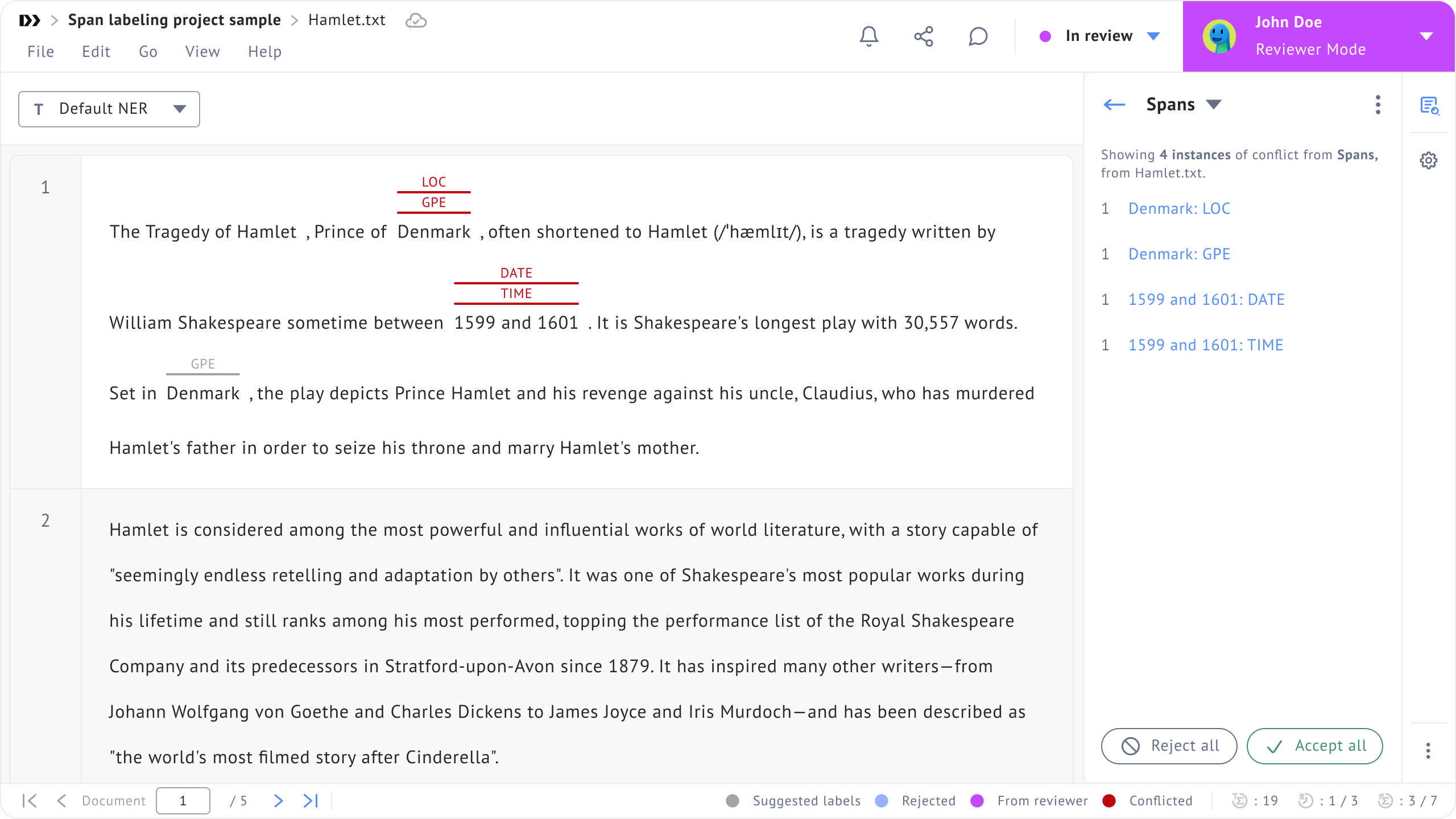
* **Spans:** Shows conflicting span labels created by different labelers.
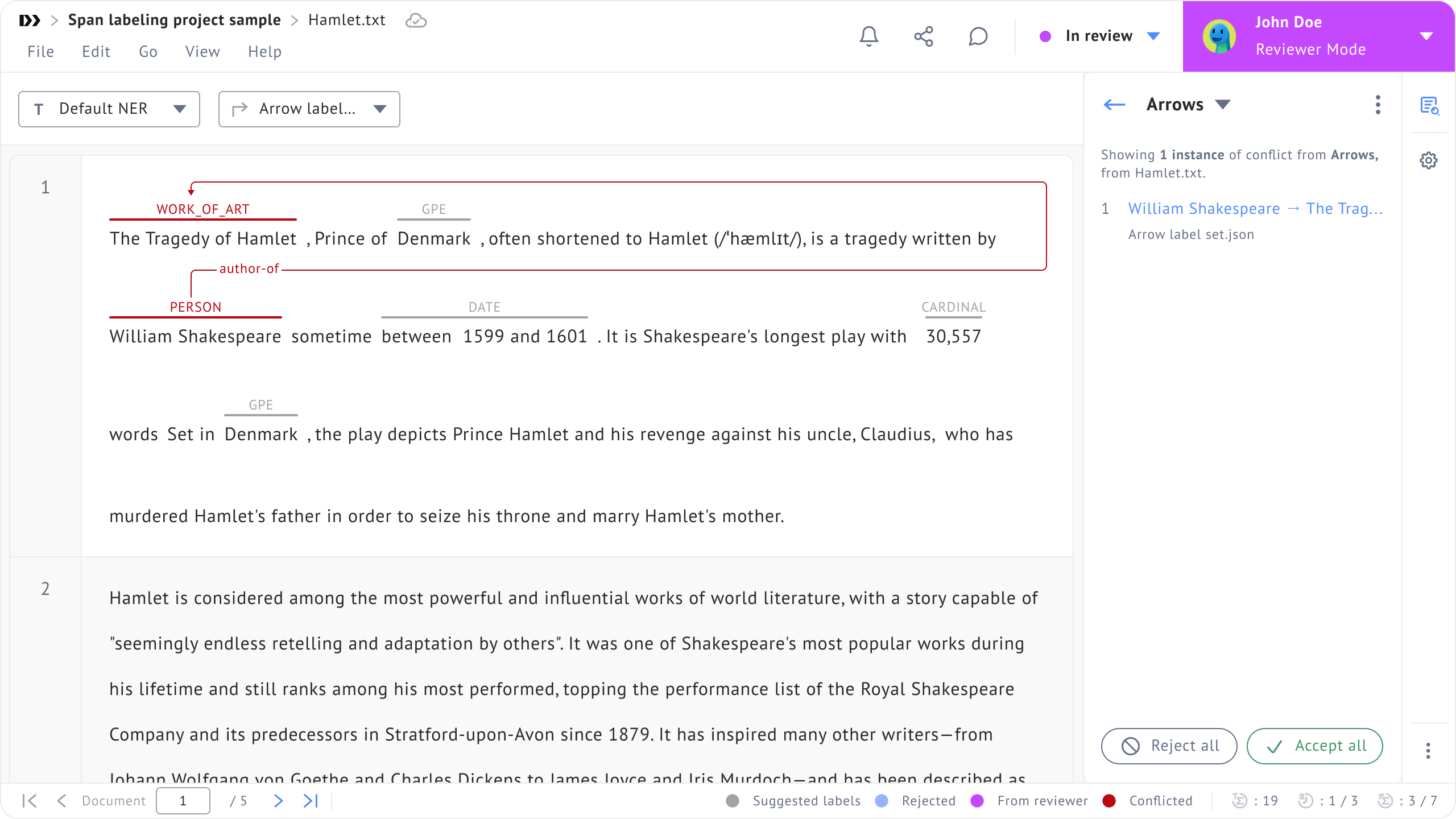
* **Arrows:** Shows conflicting arrow relationships created by different labelers.
### Accept or reject all conflicted labels
Reviewers can resolve multiple remaining conflicts at once instead of reviewing each label individually. This action is available for both span and arrow conflicts.
#### Quick guide
1. Open the **Review** extension and click **View all** in **Span labels** or **Arrow labels** section.
2. Click **Accept all** or **Reject all**.
{% hint style="info" %}
**Important notes**
* These actions cannot be undone.
* Only currently visible labels are affected.
* Labels connected to a sentence conflict will not be affected until the sentence conflict is resolved first.
{% endhint %}
#### Accept all conflicted labels
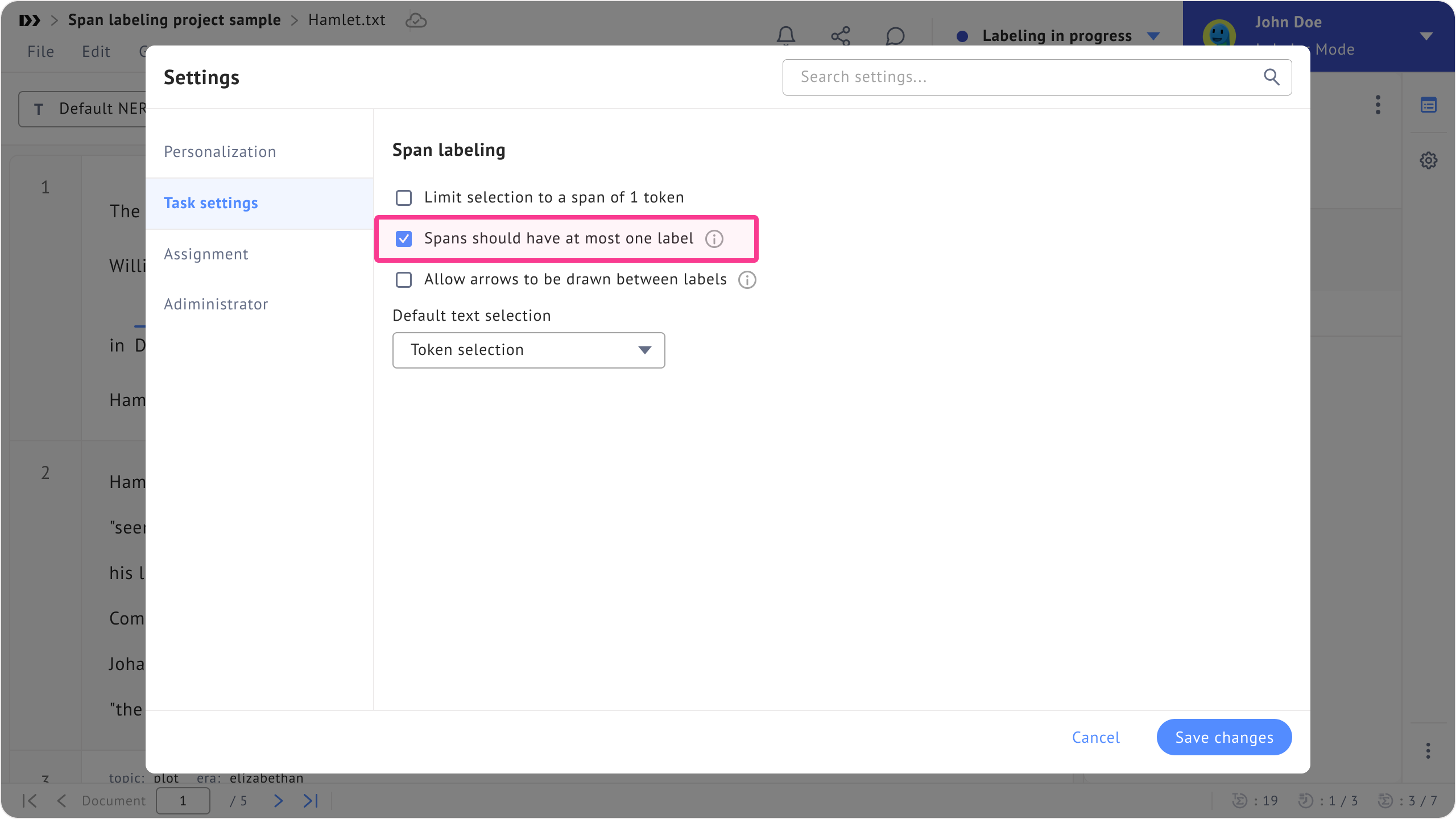
* If the **Spans should have at most one label** setting is **unchecked**, all conflicted labels will be accepted.
* If the **Spans should have at most one label** setting is **checked**:
* Labels remain conflicted if another different label exists on the same span or arrow. This requires manual review.
* Labels are accepted only if no other different labels exist on the same span or arrow.
#### Reject all conflicted labels
All conflicted labels will be rejected.
## Row labeling
{% hint style="info" %}
For the full review workflow, see [Reviewer Mode](/data-studio-projects/reviewing-nlp-projects.md).
{% endhint %}
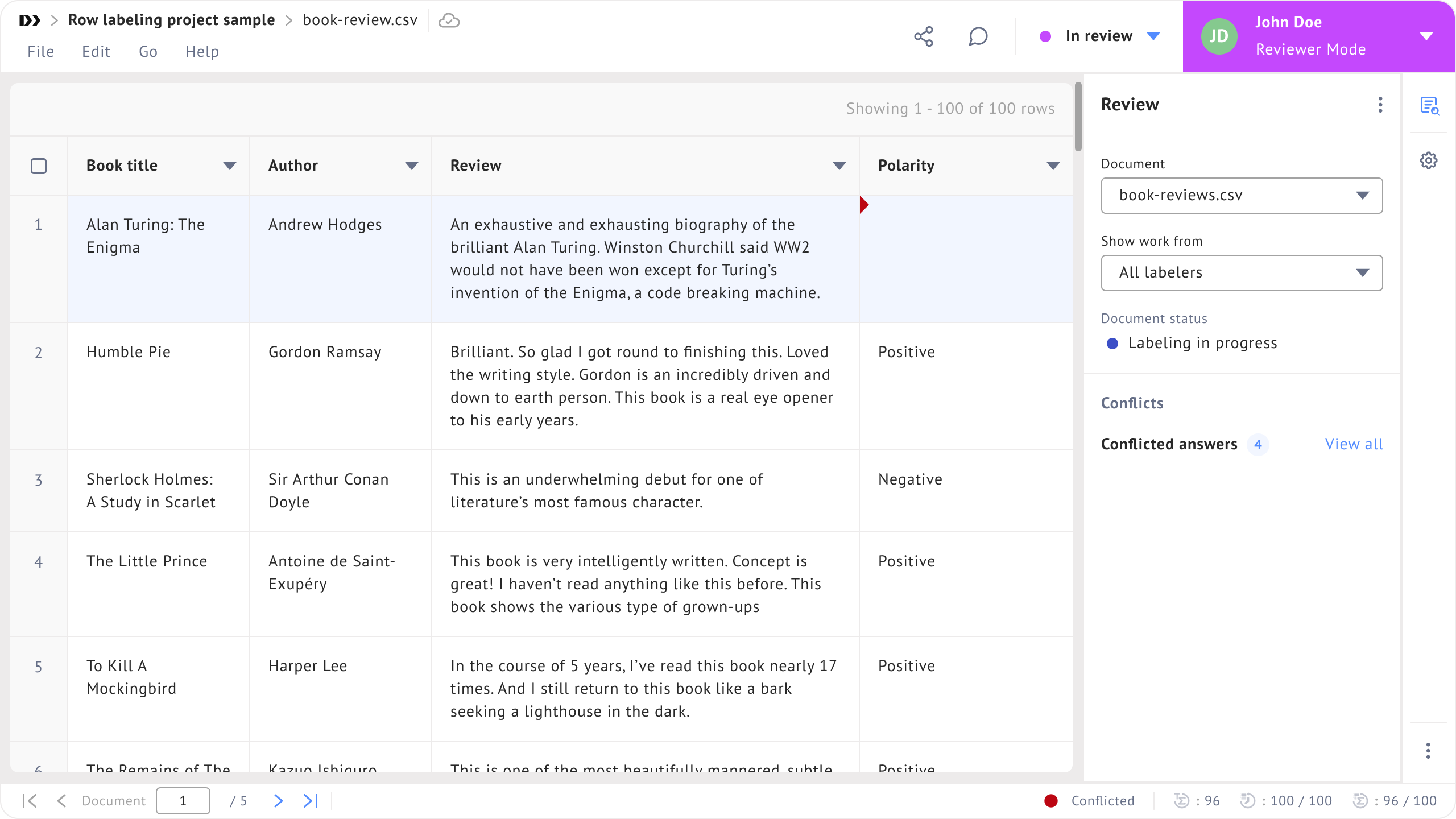
### Conflicts
In row labeling, there is only 1 type of conflicts.
Click **View all** in the **Conflicted answers** section to see the full list of conflicts.
You can also filter conflicts by labeler by selecting a labeler from the **Show work from** dropdown. This displays only the conflicts associated with that labeler.
## Document labeling
{% hint style="info" %}
For the full review workflow, see [Reviewer Mode](/data-studio-projects/reviewing-nlp-projects.md).
{% endhint %}
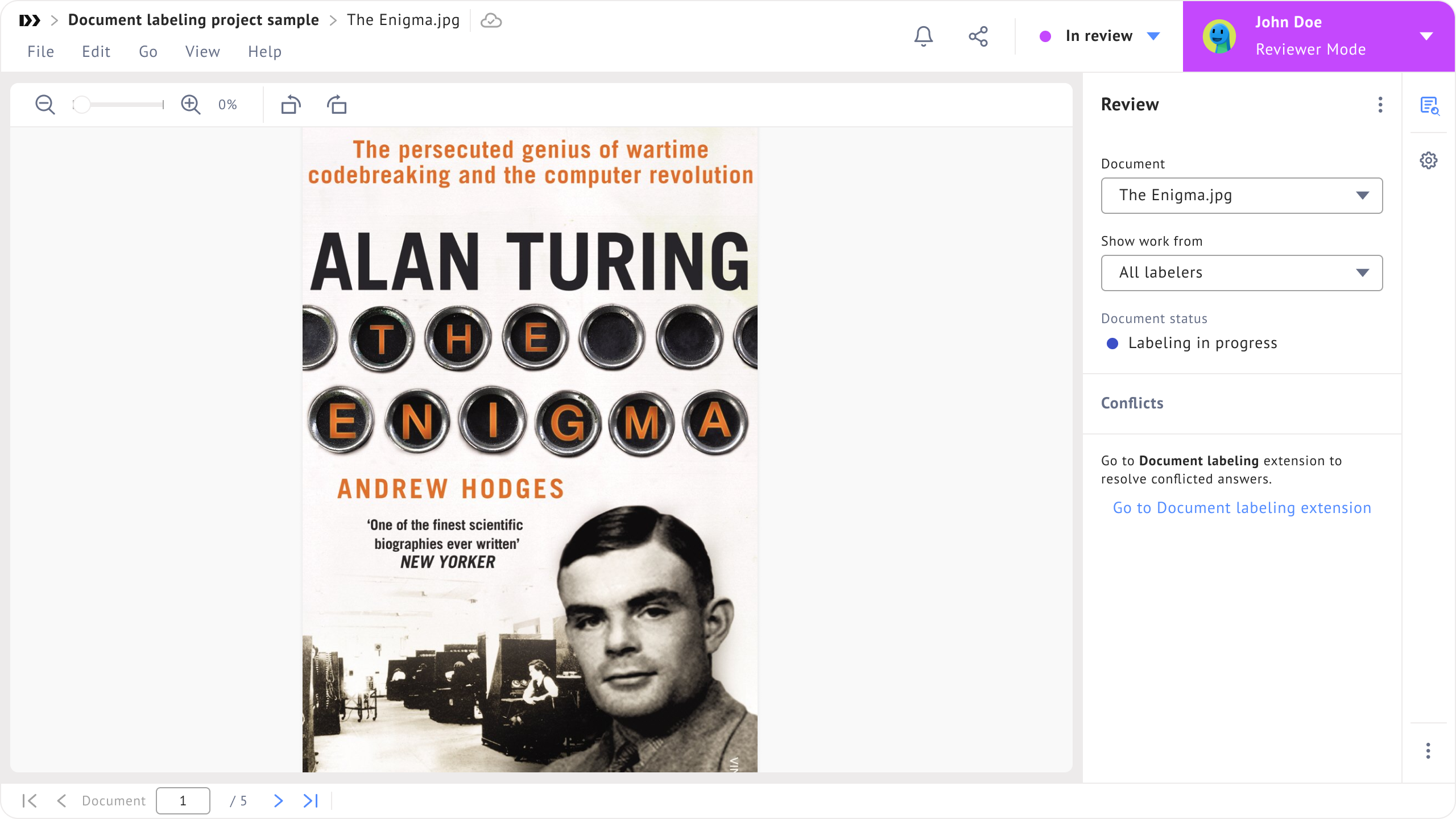
### Conflicts
To resolve conflicts in document labeling projects, use the **Document labeling** extension.
You can view answers from all labelers and resolve conflicts by selecting and submitting the best answer.