> For the complete documentation index, see [llms.txt](https://docs.datasaur.ai/llms.txt). Markdown versions of documentation pages are available by appending `.md` to page URLs; this page is available as [Markdown](https://docs.datasaur.ai/llm-projects/models/amazon-sagemaker-jumpstart.md).
# Amazon SageMaker JumpStart
## Overview
Amazon SageMaker JumpStart integration in LLM Labs lets you connect and manage your own models and deployed new ones in Datasaur, making them available for evaluation and deployment within LLM Labs.
## Setup
### Connect to Amazon SageMaker Jumpstart
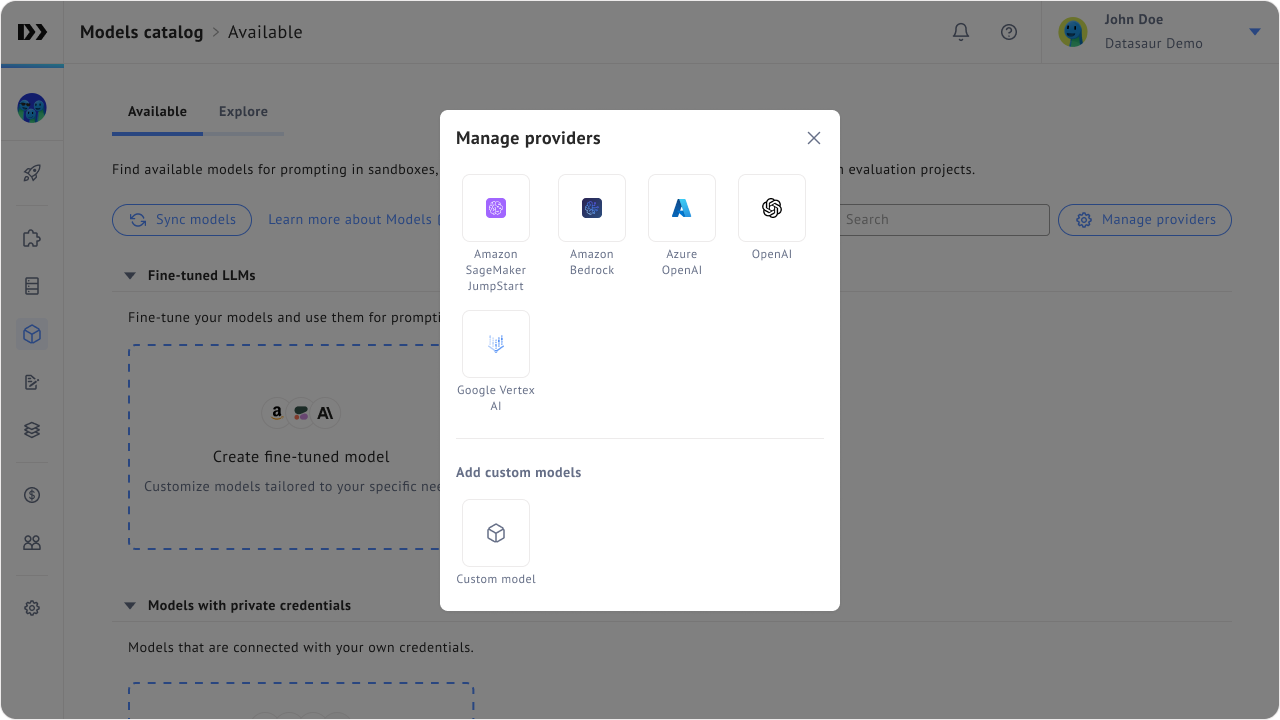
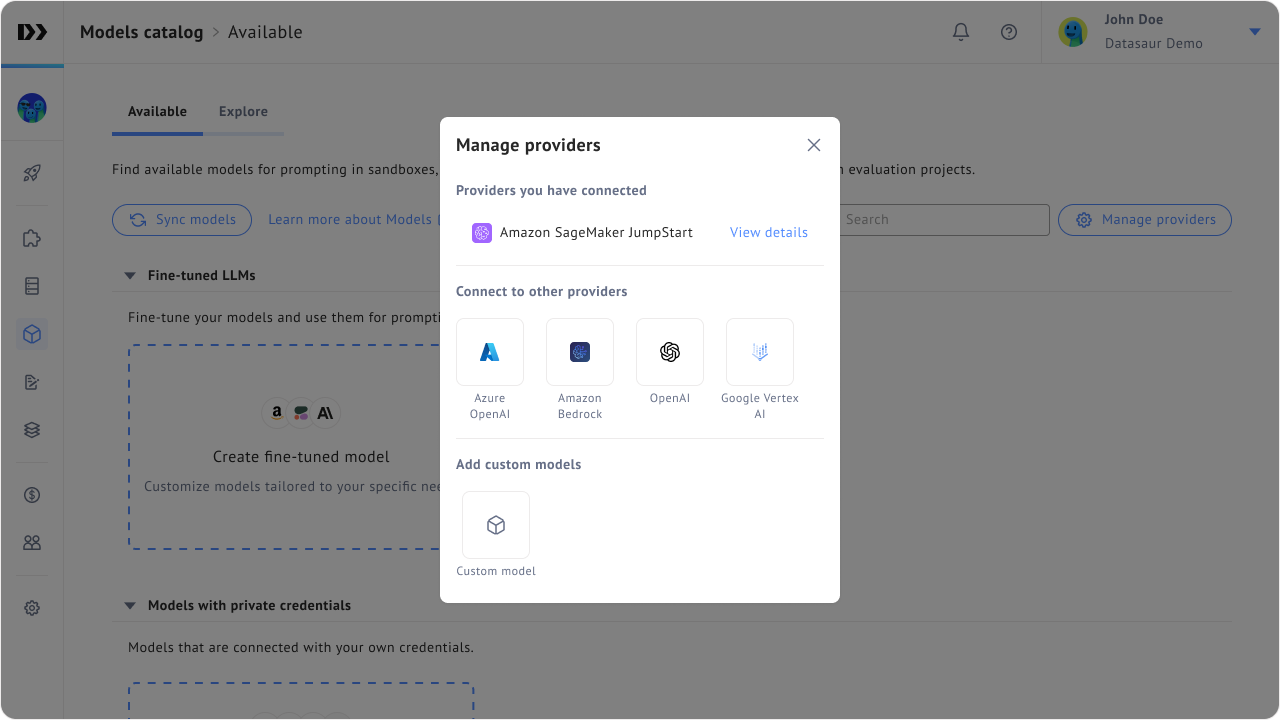
1. Select **Amazon SageMaker JumpStart.**
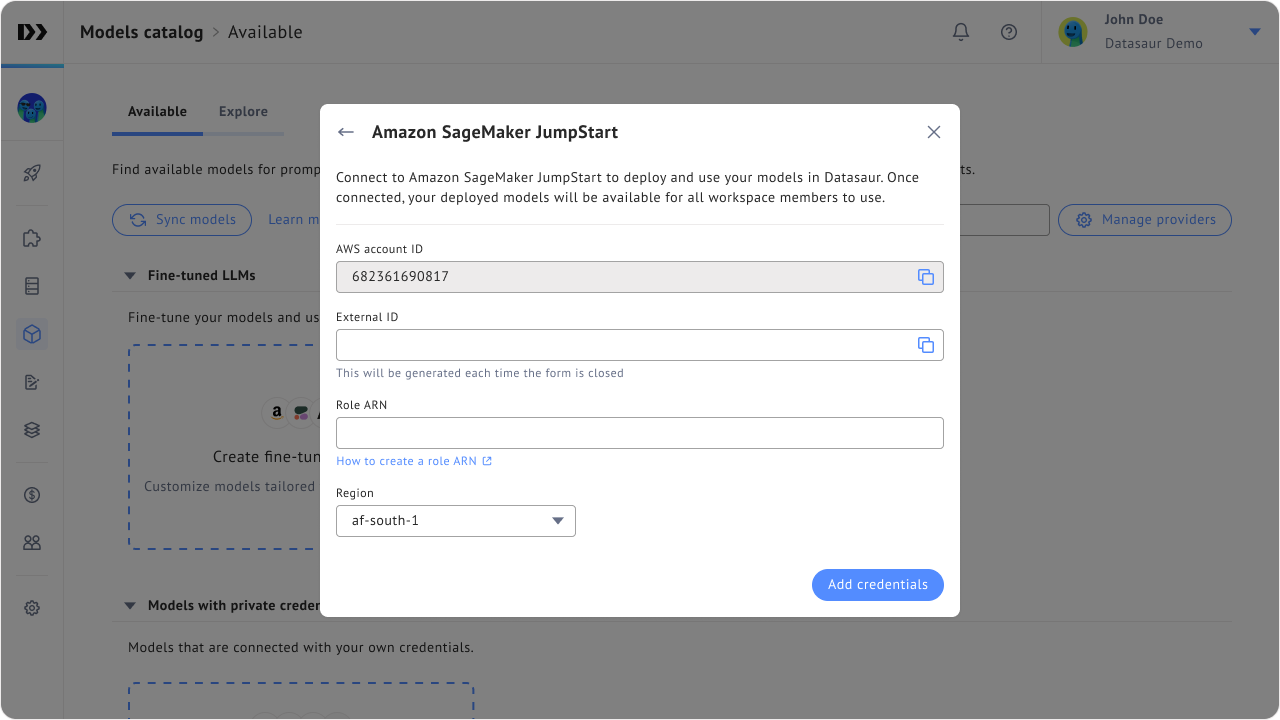
2. An External ID is generated each time the dialog is opened. This ID will be used later when creating the role ARN. To avoid regenerating a new External ID, **do not close the dialog during setup**. Otherwise, you'll need to create the Role ARN with a different External ID.
3. You can start by selecting the **Region** attribute. We'll get back to this window later. Let's leave it for now.
### Create a role ARN
Create a role which will be assumed by Datasaur to access your Amazon SageMaker Jumpstart.
1. Open the [IAM console](https://console.aws.amazon.com/iam/).
2. Go to **Roles** and then click **Create role**.
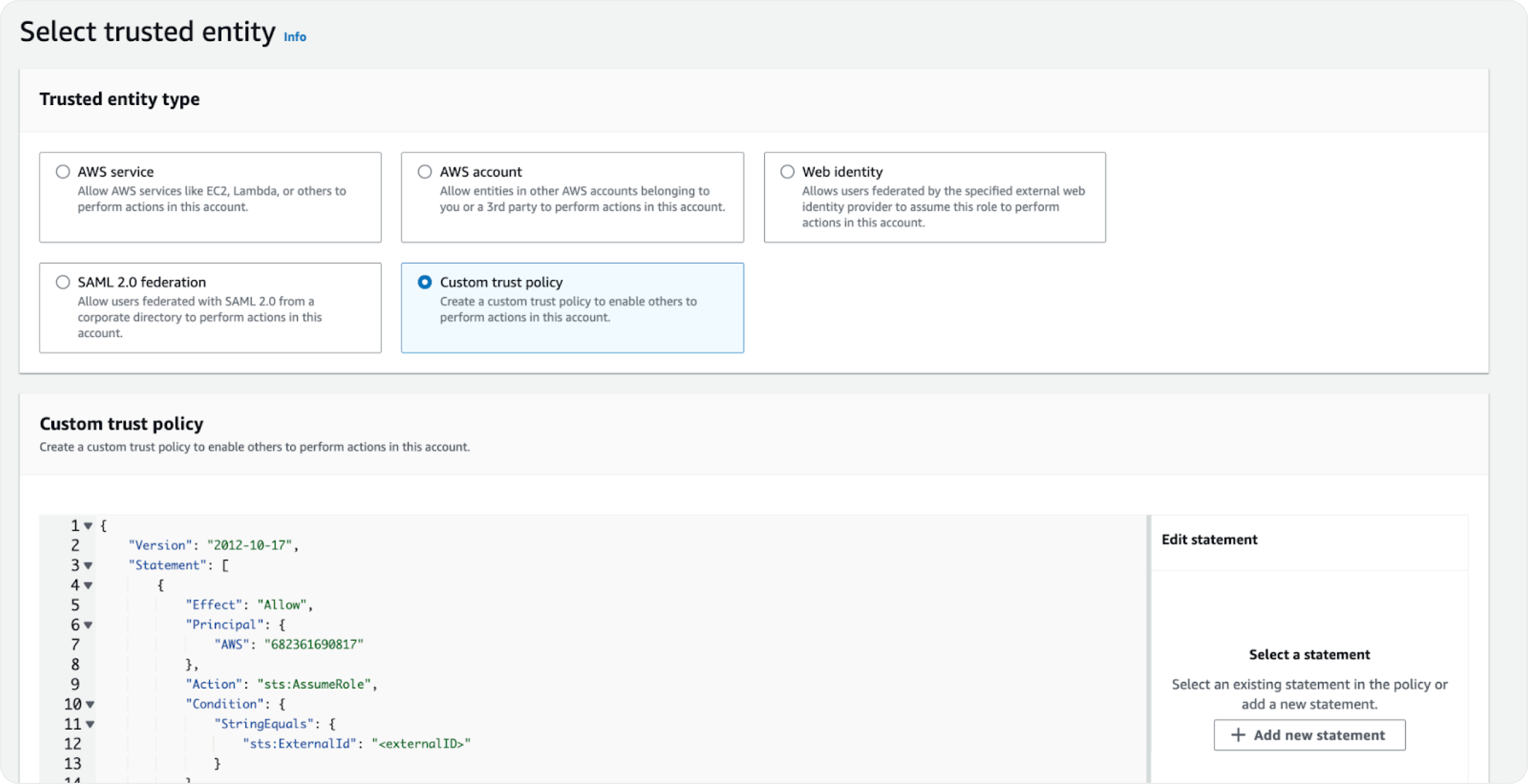
3. Choose **Custom trust policy** in the trusted entity type section.
Custom Trust Policy
4. Paste the following configurations in custom trust policy. Don't forget to replace the **ExternalID.** After that, click **Next**.
```
{
"Version": "2012-10-17",
"Statement": [
{
"Effect": "Allow",
"Principal": {
"AWS": "682361690817"
},
"Action": "sts:AssumeRole",
"Condition": {
"StringEquals": {
"sts:ExternalId": ""
}
}
},
{
"Effect": "Allow",
"Principal": {
"Service": "sagemaker.amazonaws.com"
},
"Action": "sts:AssumeRole"
}
]
}
```
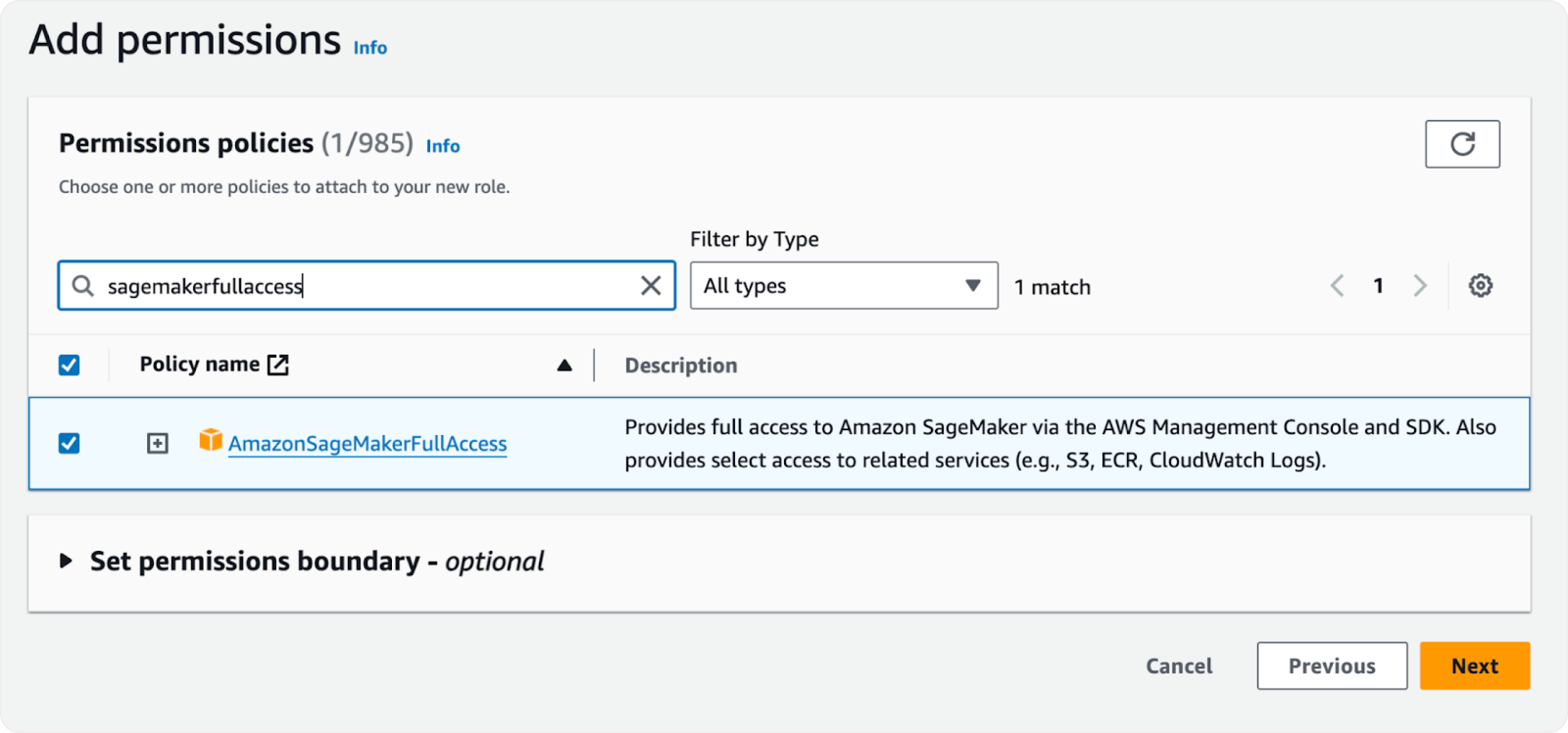
5. In the **Add permissions** section, select the **AmazonSageMakerFullAccess** policy. Then, click **Next**.
6. Enter a **Role name** and a **Description** (optional).
7. Click **Create role**.
8. After that, back on the **Roles** page, click your newly created role.
9. Copy the **Role ARN** from the page and paste it in the **Amazon SageMaker Jumpstart** dialog in Datasaur. Then, click **Add Credentials** to connect.
## **Disconnect**
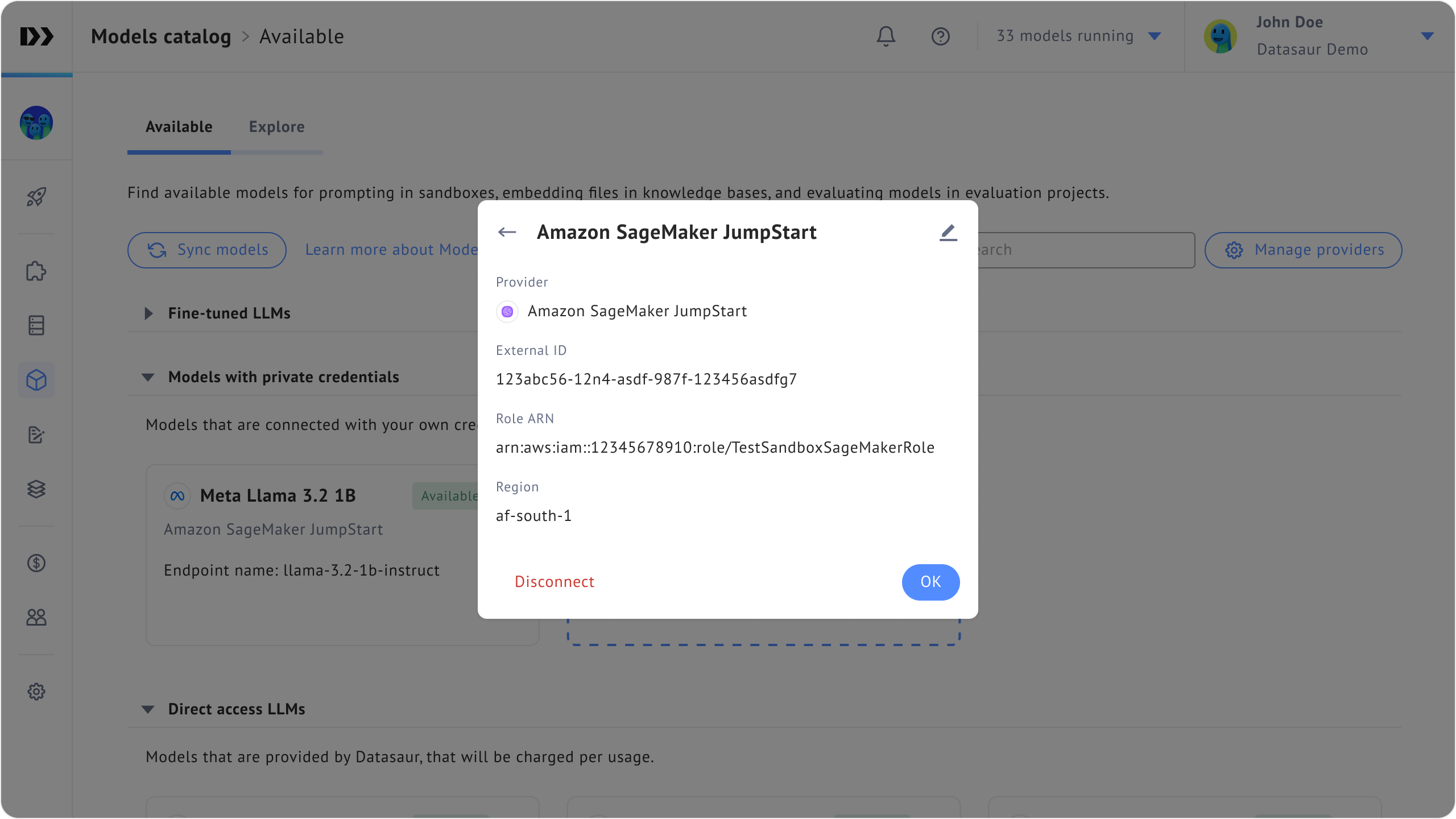
1. Click **Manage providers**, then click **View details** on Amazon SageMaker JumpStart provider.
2. In the dialog that opens, click **Disconnect** at the bottom left.
3. All Amazon SageMaker JumpStart models linked to that credentials will be removed from the workspace.